July 27, 2026
Two Industrials That Look Underestimated
The real debate is power and uptime, not GDP.
First a message from Weiss Ratings
Dear Reader,
Starting as soon as a few months from now, the United States government will make a sweeping change to bank accounts nationwide.
It will give them unprecedented powers to control your bank account.
They could closely track every transaction.
They could even freeze it.
Unless you protect yourself today. Fortunately, there are 4 simple steps you can take to safeguard your savings.
Discover these 4 simple steps here.
Good luck and God bless!

Martin Weiss
Dr. Martin D. Weiss, Founder
Two Industrials That Look Underestimated
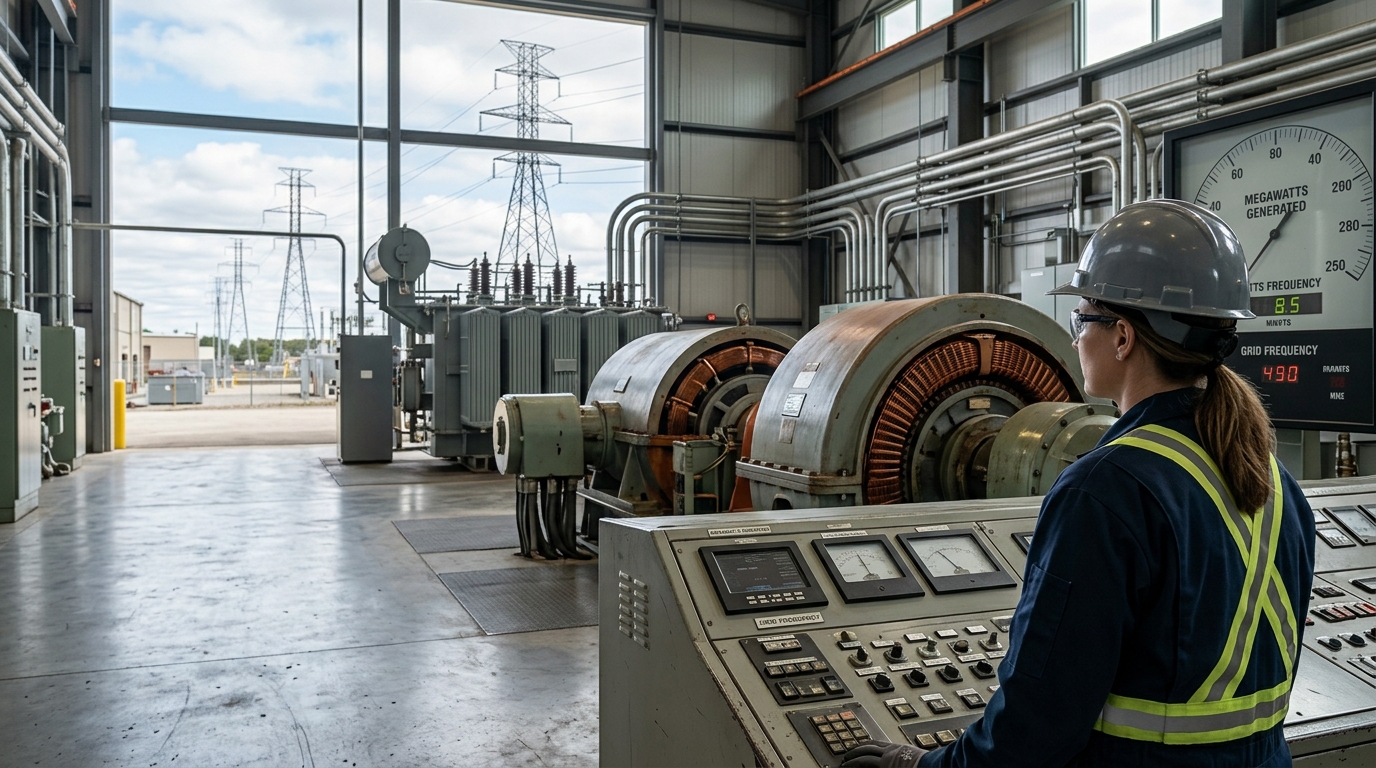
The big question in industrials right now is not “Is manufacturing back?” It’s whether the next capex cycle is being pulled forward by one constraint: power.
Data centers and electrification are turning electricity from a background input into the gating factor for growth. When that happens, the winners are not always the companies with the flashiest AI branding. They are the ones that can help customers get capacity connected, protected, and kept online.
Why Wall Street cares: in committee rooms, this is getting treated as a multi-year infrastructure build that sits awkwardly between “utility upgrade cycle” and “tech capex boom.” If you are wrong on duration, you overpay for cyclicals. If you are wrong on the bottleneck, you miss the toll collectors.
The bull case is straightforward. Grid upgrades, switchgear, breakers, transformers, power quality, and factory automation are all getting demand tailwinds at the same time. Eaton has been explicit about data center momentum, including commentary around order acceleration and raising its 2026 organic growth guidance to 10% at the midpoint in its Q1 2026 release. The company has also highlighted that Electrical Americas data center orders were up about 240% in Q1 2026 in its analyst materials. That is the kind of demand signal institutions latch onto because it is an orders story, not a “maybe next year” story.
Elon Musk: Buy Alert
The world’s richest man just launched a new $480 trillion disruption, which could make you massive gains this summer. It has nothing to do with space, robots or AI. It’s much, much bigger.
Rockwell’s bull case is different, and that matters. When customers add capacity, they also harden operations. Rockwell has leaned into OT cybersecurity, announcing expanded SecureOT offerings in June 2026. Security spend is often treated as discretionary, until it suddenly isn’t. In a world where downtime risk scales with complexity, that line item can behave less cyclically than traditional automation orders.
The bear case: some investors think the data center build is already too consensus. Interconnection queues, transformer availability, and permitting can delay projects. And if the macro slows, traditional industrial demand can roll over even as the grid theme stays intact. There is also a real “timing mismatch” risk where orders show up before margins do, especially when factories are ramping. Eaton itself has discussed temporary headwinds tied to ramp and costs in the context of 2026 expectations.
The evidence institutions keep coming back to is not one quarter of revenue, it is the load growth math. Eaton points to outside estimates that U.S. data center electricity use rose from 58 TWh in 2014 to 176 TWh in 2023, with a wide range of projections for 2028 (325 to 580 TWh). That spread is exactly why the debate is so heated. The direction is clear, the slope is the argument.
The mavens’ view, as it shows up in positioning and management language, is basically this: you want exposure to the constraint, not just the cycle. That is why “electrification” and “uptime” language is creeping into industrial investment cases that used to be framed around PMI and GDP. Slight tangent, but it matters: the more the world talks about AI models, the more the real fight looks like a physical one. Where does the power come from, and who guarantees reliability when it arrives?
What investors are missing is the second-order effect. As data centers become system-defining loads, buyers care less about unit price and more about delivery certainty, service coverage, and integration. That tends to concentrate share toward a few scaled providers. In that kind of environment, “good enough” competitors can get squeezed quietly, even if overall demand is rising.
Two industrials that can make you richer than you think, in that context:
- Eaton (ETN): A direct lever on data center electrical infrastructure plus broader grid and aerospace exposure, with management pointing to accelerating orders and higher 2026 organic growth guidance.
- Rockwell Automation (ROK): A way to express “uptime and resilience” via automation, software, and the emerging spend bucket around OT cybersecurity and managed services.
Stocks to watch around the same debate (not recommendations, just the chessboard): Honeywell Technologies (automation focus post-separation), Siemens and Schneider Electric as global peers, and the utilities and equipment complex tied to transmission and distribution. Honeywell’s separation and rebrand details have been a live topic this summer, and that kind of corporate reshaping often changes who ends up in the “automation winners” basket.
Porter Stansberry’s Critical New Warning: Trump Is Replacing The U.S. Dollar
“The last time America reset its money, it created 1,300 millionaires every day. This could be bigger.”
If I were sitting in that investment committee today, I’d spend less time debating “industrial cycle” and more time asking a blunt question: where is the bottleneck shifting next, and which management teams are already selling into it?