July 29, 2026
Tesla at $100B Revenue. Profit Is Shrinking
Wall Street is split on whether this is a temporary dip or the new baseline.
First a note from Weiss Ratings
Dear Reader,
IPO mania has reached new heights …
There’s a crazy story coming out of Silicon Valley …
A few home sellers are now asking for pre-IPO shares instead of cash.
They’re specifically asking for a stake in AI companies like Anthropic, the maker of ClaudeAI …
It is expected go public any day now.
Perhaps as soon as October.
Revenue grew by 80 times in the first quarter …
Many experts think Anthropic could be worth $3 trillion by IPO day.
Anyone invested in Anthropic before the IPO … could see a huge return.
The problem is … unless you have a house for sale in Silicon Valley … you have very little chance of buying private shares.
That’s reserved for insiders. Friends and family, employees, big Wall Street banks.
But I’ve found a way for you to get a stake in Anthropic’s IPO …
Before they go public.
You could be looking at a double on day one.
I’ll show you exactly what to do in this video.
All the best,

Michael Robinson
Director of Tech Strategies
Weiss Ratings
Tesla at $100B Revenue. Profit Is Shrinking
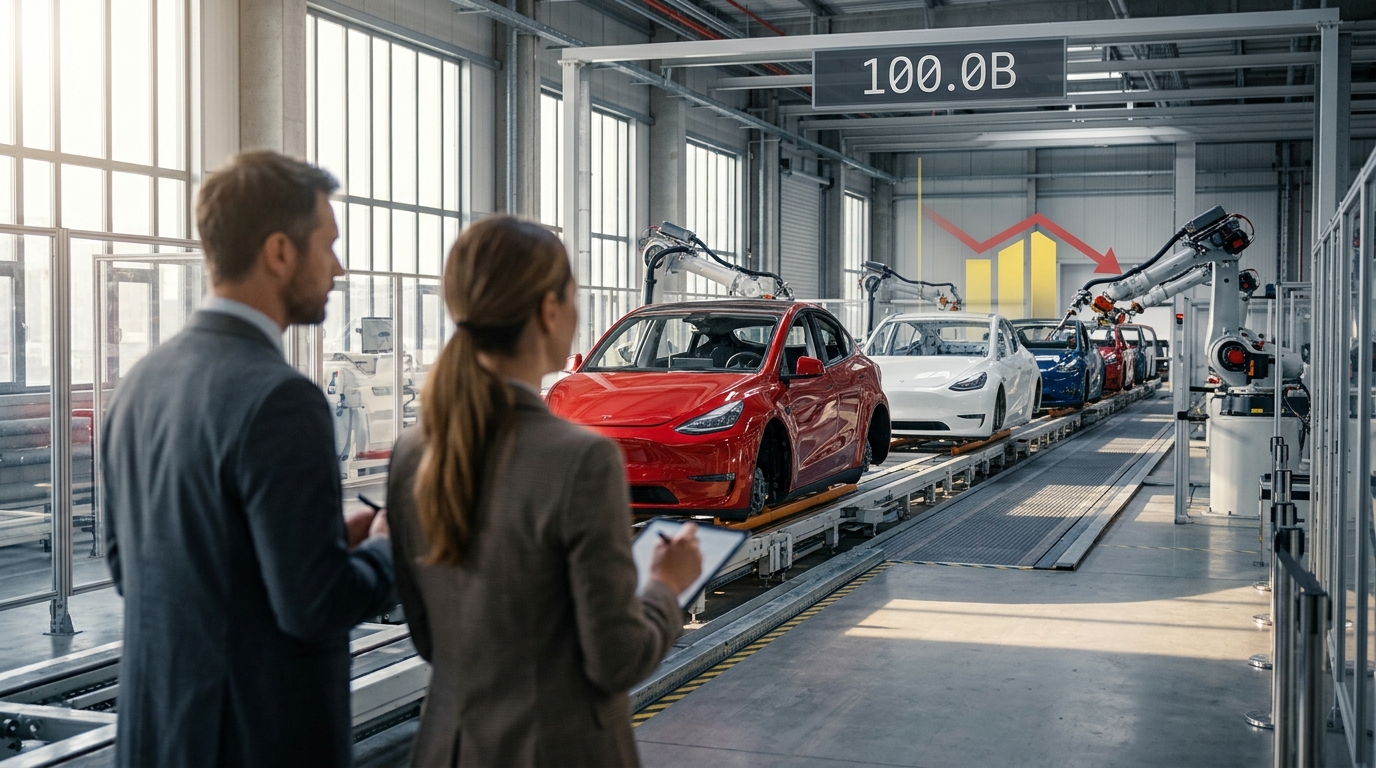
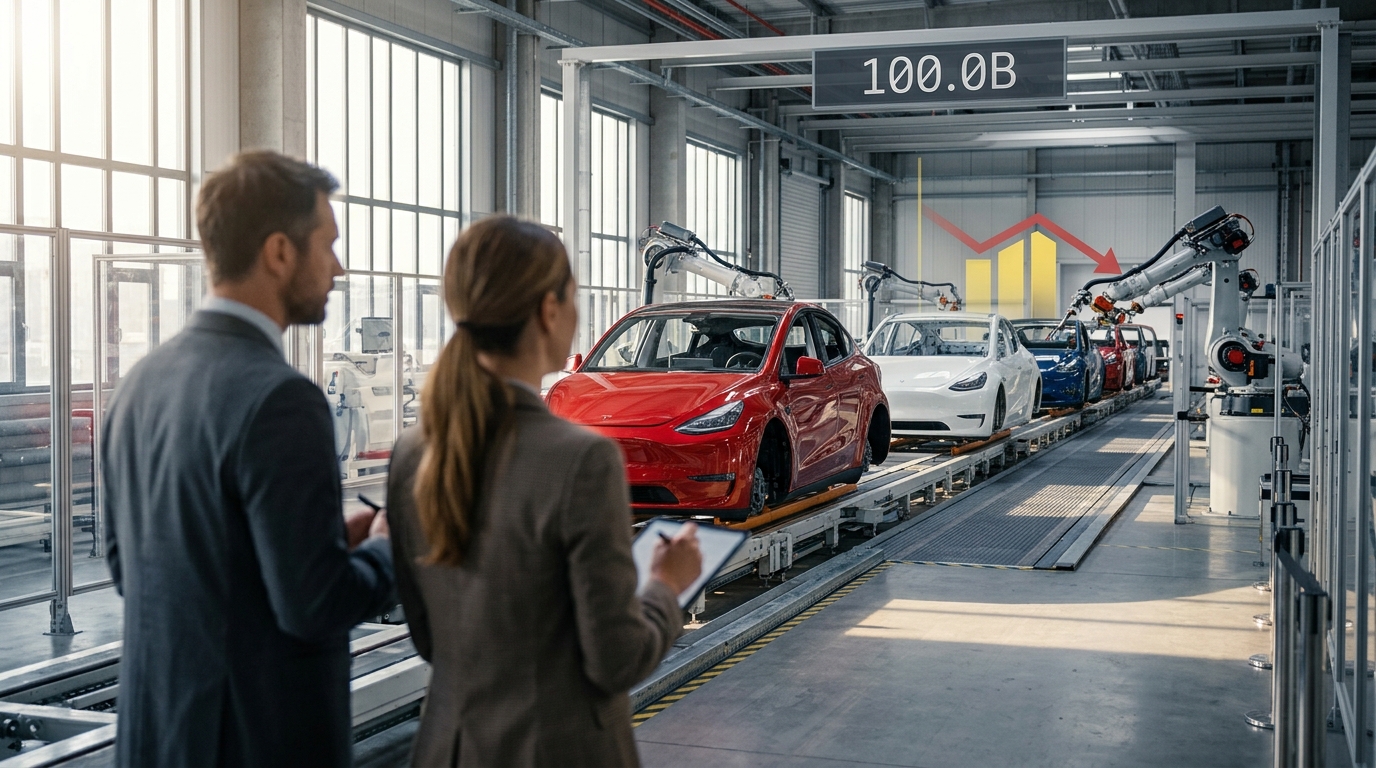
Tesla just did the thing that used to end arguments: it crossed $100 billion in annual revenue. Then it did the thing that starts new ones: it showed how little of that revenue is falling to the operating line.
The big question in real investment committee conversations is not “Is Tesla big?” It is: are we watching a temporary margin valley while Tesla pays the bill for AI and robotics, or are we watching the structural end of peak auto profitability for the company?
Why Wall Street cares
Because Tesla is no longer being valued like a cyclical automaker, but its financials keep behaving like one. The stock is effectively asking investors to underwrite a pivot: from an EV manufacturer with strong margins to an “AI, autonomy, and robotics” platform that may take years to show up cleanly in earnings.
In the most recent quarter, the tension was hard to miss: revenue strength alongside a sharp step down in operating profit, driven in part by heavier R&D spending tied to AI and robotics ambitions. Tesla reported Q2 2026 revenue of about $28 billion, while GAAP operating income fell roughly 57% year over year to about $398 million and operating margin compressed to around 1.4%.
Slight tangent, but it matters: when an equity story is “optionality,” investors tolerate messy quarters. When the story starts to look like “price cuts plus higher costs,” the patience gets thinner, even if the long-term vision is intact.
The bull case
Bulls see the margin compression as elected pain. The argument goes like this: Tesla is intentionally pushing operating leverage into the future by funding autonomy, training infrastructure, and robotics. If that spend creates a defensible lead, today’s low auto margins matter less than the future software-like margin pool.
They also point out that Tesla’s business mix is not purely autos. Energy generation and storage has been growing and it can be a steadier counterweight when vehicle pricing gets competitive. In Q2 2026, Tesla’s energy segment posted $3.14 billion of revenue, up 13% year over year.
And the “$100B revenue” point is real. In fiscal 2024, Tesla reported total revenues of $97.69 billion and income from operations of $7.076 billion. That is the near-$100B base the bull case builds on.
Elon Musk’s Empire Secretly Runs on This…
Elon has a new obsession.
It’s a material you’ve probably touched today without a second thought…
And the success of Elon’s entire AI operation depends on it.
But no matter what happens to Elon’s plans, one Wall Street trader has found a way for you to potentially profit from this market – every 90 days, like clockwork.
The bear case
Bears see something less romantic: auto is turning into a knife fight, and Tesla is paying a big innovation tax on top of it. If EV demand is more elastic than expected, and competitors keep forcing price concessions, Tesla could be stuck with low margins even if deliveries are strong.
There is also the inconvenient benchmark problem. Tesla’s operating income in 2025 was materially lower than 2024, based on widely tracked financial statements, implying a sizable step down year over year.
If that direction persists, the multiple does not “grow into” itself. It becomes a debate about how much of Tesla is a maturing car business and how much is a real call option on autonomy and robotics.
The evidence
Professionals are anchoring to a few data points:
- Margin compression is not theoretical. Q2 2026 GAAP operating margin was around 1.4%, with operating income down sharply year over year.
- Spending is rising. The quarter reflected heavier R&D tied to AI and robotics.
- The mix is shifting. Energy is growing, but autos still dominate the revenue base, so vehicle pricing and costs drive the headline outcome.
What’s interesting is how quickly the conversation has moved from “delivery momentum” to “quality of earnings.” That is a subtle but meaningful change in what the market is actually paying for.
The Mavens’ view
The investor crowd that matters is not arguing about whether AI and robotics are exciting. They are arguing about timing and durability.
One camp is comfortable treating Tesla’s current profitability as a bridge to a different earnings model. They accept volatility if they believe autonomy or robotics can become a scaled, high-margin contributor.
The other camp wants proof that the core auto business can stabilize margins without relying on perpetual price moves. They are less interested in vision and more interested in whether Tesla can defend unit economics while still funding the next act.
In other words, the debate is not belief. It is underwriting.
What investors are missing
Most people frame this as “EV margins vs. AI investment.” The second-order consequence is capital intensity and internal competition for dollars.
If Tesla’s forward plan requires materially higher capex, then the market is not just debating near-term profitability. It is debating how much free cash flow Tesla can generate while simultaneously funding factories, compute, and new product bets. That tension can matter more than any single quarter’s margin.
The part people skip: higher investment can be the right decision and still compress the equity story if returns take longer than expected. You can be strategically correct and financially early. The stock does not always pay you for “early.”
Stocks to watch
- Tesla (TSLA): The center of the debate. Watch operating margin and cash flow conversion more than the headline revenue number in coming quarters.
- BYD (BYDDF / 1211.HK): A direct beneficiary if EV pricing stays aggressive and consumers keep trading down to value. Also a reference point for how quickly China-scale manufacturing can pressure global margins.
- NVIDIA (NVDA): If Tesla and peers keep spending on AI training and inference, the supply chain lever is compute. NVDA remains the cleanest public proxy for sustained AI infrastructure demand.
- Mobileye (MBLY): A higher-beta read-through on whether ADAS and autonomy adoption accelerates, and how much value accrues to suppliers vs. OEMs.
Worth a look: if Tesla’s margins do not stabilize, the “Tesla is an AI platform” argument has to do more work, faster. If margins do stabilize, then the market will start asking a different question, which is how much of the AI spend was really optional in the first place.
– Wall St. Mavens