August 16, 2026
The Hormuz Deal Is Not a Reopening
Featured: The Hormuz Deal Is Not a Reopening
My accountant is going to kill me when she sees this.
She specifically told me to stop giving away my “Simple Options Trading For Beginners” book for free.
“Bill, you’re leaving money on the table,” she said. “That book sells for $29.97 on your website.”

She’s right. But here’s what she doesn’t understand…
Every trader I help avoid the mistakes I made is one less person who’ll quit trading in frustration like I almost did decades ago.
So against her advice, I’m sending you this email.
Right now, you can grab a copy of the same book selling for $29.97 on our website… completely free.
It reveals the ONE options technique that took me 11 years to discover (and saves you from wasting time on the other 47 strategies that don’t work).
Inside, you’ll find out:
- Why “more strategies” actually means “more losses”
- The 10-minute nightly routine that replaced my 8-hour trading days
- The specific market setup I look for (it’s almost embarrassingly simple)
Click here to get your free copy before my accountant locks me out
Good Trading,
Bill Poulos
P.S. You can buy this book right now for $29.97, or you can grab your free copy here.
The Hormuz Deal Is Not a Reopening
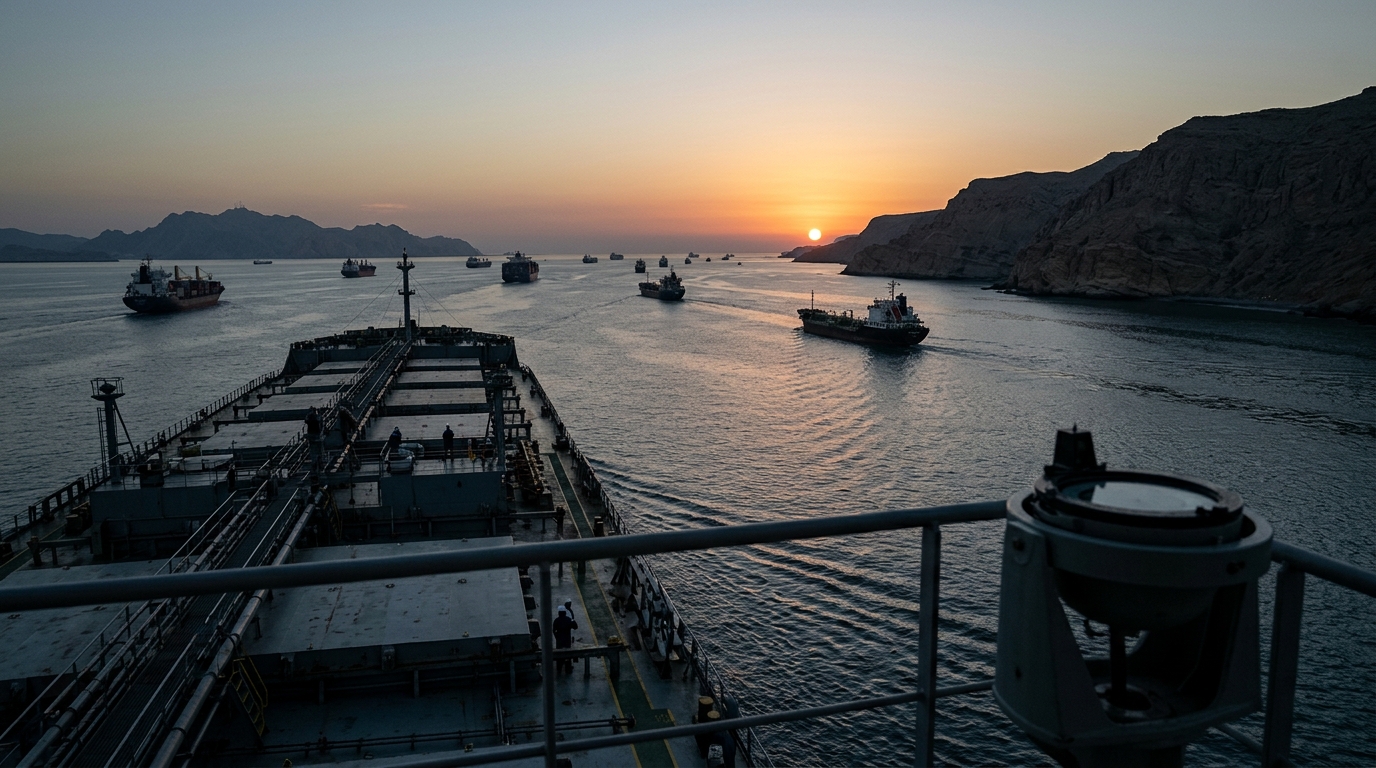
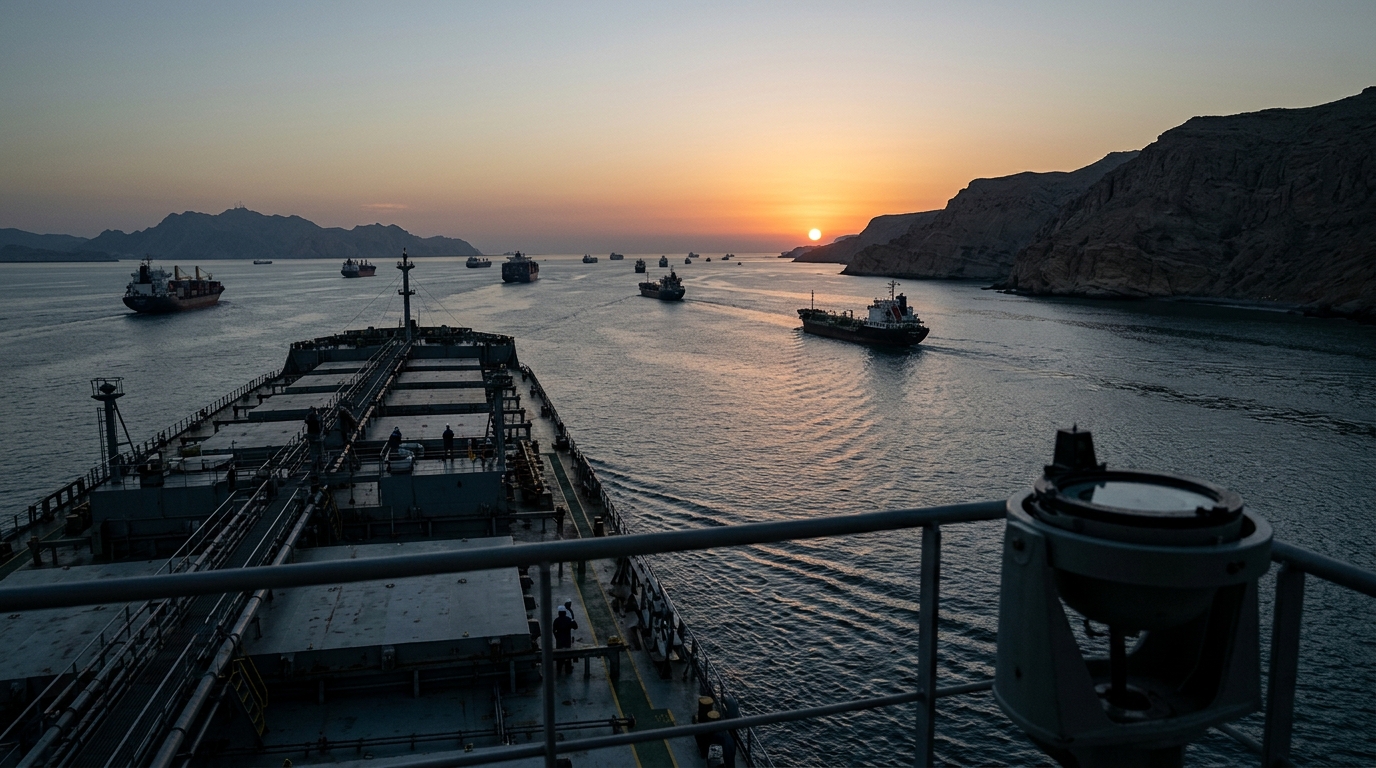
The investment committee question this week is not whether the Strait of Hormuz will reopen. It is what kind of reopening is actually on offer, and whether energy markets have correctly priced the difference. They have not.
The Big Question
Iran and Oman appear to be edging closer to a deal on how the Strait of Hormuz should be managed, agreeing on routes through the key waterway that has proved a major stumbling block in efforts to end almost six months of war between the Islamic Republic and the US. The diplomacy is real. But the structure of what is being agreed matters far more than the headline.
The finalization of a “shipping map” forms part of a broader accord to govern traffic through the strait and constitutes an independent arrangement between the two states that will uphold their sovereignty and ensure the safe transit of vessels, Defa Press cited Iranian Foreign Ministry spokesman Esmail Baghaei as saying. The words “sovereignty” and “independent arrangement” are doing enormous work in that sentence. This is not a restoration of the prior order. It is a new one.
Why Wall Street Cares
The conflict has caused the restriction of nearly all traffic through the Strait of Hormuz, leading to what the International Energy Agency characterized as the “largest supply disruption in the history of the global oil market.” Before a single Iranian drone flew, the strait had effectively closed through the insurance market alone. Within 48 hours of coordinated U.S.-Israeli airstrikes on Iran on February 28, 2026, war risk premiums surged fivefold, major marine insurers terminated existing coverage and offered replacements at roughly sixty times pre-crisis rates, and Lloyd’s Joint War Committee redesignated the entire Arabian Gulf as a conflict zone.
Ship-tracking data in early August showed crossings remained a fraction of pre-conflict levels. Institutional investors have been pricing two possible outcomes: a clean reopening that collapses the risk premium, or a prolonged standoff that keeps oil structurally elevated. The Iran-Oman deal is a third scenario neither side has fully modeled.
The Bull Case
The optimist case is simple: any agreement is better than no agreement. A joint statement from the two countries is under review and the route would remain active for two to four months, although the agreement does not mean a full reopening, according to Iranian officials. Even partial resumption of traffic would relieve the supply shock that has produced the worst energy disruption in recorded history. Refiners running on elevated crack spreads benefit regardless of whether volumes normalize at 50% or 100% of pre-war levels. U.S. domestic producers, already ramping, have been capturing margin unavailable to them for years.
The utilization of equipment needed to fracture a new shale well has risen 20% over the past few weeks in the Permian basin, meaning that already-drilled wells are coming into production in greater numbers. That activity reflects confidence that elevated prices have a medium-term floor, not just a ceasefire bounce.
The Bear Case
The bear case begins with the fee. Multiple reports say the agreement incorporates elements of Iran’s 10-point proposal, which includes a provision for Iran and potentially Oman to levy transit fees on ships, reportedly $1 to $2 million per vessel or the crypto equivalent of about $1 per barrel of oil. That is not a technical service charge. It is a sovereignty claim over an international waterway, formalized in treaty language.
The leaders of shipping lobby groups are already protesting the impending agreement between Iran and Oman to reopen the Strait of Hormuz, which appears to include a proposal in which ships would have to pay fees to transit the waterway. The signatories include the Baltic and International Maritime Council, the International Chamber of Shipping, and the World Shipping Council. These are not political actors. They are the commercial infrastructure of global trade, and they are telling you that this deal imposes costs the market has not priced.
There is a harder problem underneath the fees. Iranian Foreign Minister Abbas Araghchi said an agreement with Oman would not translate into the strait’s reopening. He said that while Iran and Oman were close to an agreement on Hormuz, the waterway would not reopen until Washington met certain conditions, including easing sanctions on Tehran and paying war reparations. The bilateral shipping map and the full reopening are two separate events, on two separate timelines, with two separate negotiating parties. Conflating them is how this rally gets the trade wrong.
The Evidence
The price of Brent crude, the global benchmark, rose almost 6% this week as hopes faded of a quick resolution to a deadlock that has disrupted the flow of oil and other key commodities to global markets. That move reflects the market waking up to the third scenario. A partial, fee-laden, Iran-controlled reopening that excludes U.S. and Israeli-linked vessels is not the normalized trade flow that oil bulls have been modeling.
War risk insurance confirms the picture. War risk shipping insurance premiums have surged to between roughly 3% and 10% of hull value, up from around 0.25% before the war. A $100 million tanker now faces war risk premiums of about $3 million to $10 million, compared to roughly $250,000 prior to hostilities. Even with the Oman deal partially progressing, premiums are nowhere near pre-war levels. Insurers are not pricing a reopening. They are pricing a managed restriction.
There had been some 62 confirmed incidents involving vessels in Hormuz and the broader Middle East, and 17 seafarers had died as of late July, according to the International Maritime Organization. Attacks continued since then, with the UK Maritime Trade Operations reporting a vessel struck by a projectile off Oman, and the United Arab Emirates reporting two ADNOC-operated tankers attacked while transiting the strait on Thursday evening. Diplomacy and drone strikes are running simultaneously. That is not a reopening. That is a negotiating weapon.
The Mavens’ View
The professional consensus has shifted in the past two weeks from “when does Hormuz reopen” to “what does Hormuz look like after it reopens.” Those are fundamentally different questions with opposite implications for energy equities.
Fund managers who bought refiners in March on a supply-shock thesis are now debating whether to hold through a partial-reopening that compresses crack spreads without fully restoring volume. The answer depends on whether you believe the Iran-Oman arrangement survives U.S. pressure. The U.S. was not party to its negotiation and is unlikely to agree to terms that do not restore free passage along the route linking the Persian Gulf to the Gulf of Oman and the Arabian Sea.
An adviser to Iran’s supreme leader said “a new regime for the Strait of Hormuz” will follow the war’s eventual end, allowing Tehran to apply maritime restrictions on states that have sanctioned it. That is the structural framework Iran is building toward, whether or not this specific shipping map survives. The post-war Hormuz is not the pre-war Hormuz. Institutional investors who assume mean reversion in energy supply chains are underweighting that possibility.
What Investors Are Missing
The debate has focused almost entirely on oil prices and whether they go higher or lower as diplomacy progresses. That framing misses the more durable trade.
A permanently fee-laden, sovereignty-encumbered Hormuz is structurally bullish for U.S. domestic refiners and LNG exporters, independent of the day-to-day ceasefire noise. If Iranian transit fees become a standing feature of the new regime, the competitive cost advantage of non-Persian Gulf supply chains widens for years, not months. American refiners processing domestic crude, untouched by Hormuz logistics, collect that spread indefinitely.
The second overlooked implication is the insurance market. The 2026 mechanism is structurally distinct: a limited military action triggered a systemic commercial response because the modern insurance architecture, with its interlocking P&I, reinsurance, and Joint War Committee designation systems, is far more tightly coupled than its 1980s predecessor. Lloyd’s is not going to redesignate the Arabian Gulf as a safe zone the moment a bilateral Iran-Oman memo gets signed. War risk premiums have a new structural floor regardless of the diplomatic outcome. Whoever provides political risk insurance for Gulf transit has a durable revenue stream.
Stocks to Watch
Marathon Petroleum (MPC). Marathon Petroleum has materially outperformed since the war began, helped by the supply shock and strong refining economics. The partial reopening scenario does not end that trade; it extends it at a lower but steadier margin. MPC processes almost no Persian Gulf crude. A fee-laden Hormuz that raises delivered costs for Asian and European competitors widens its structural advantage.
Valero Energy (VLO). Valero reported second-quarter 2026 net income of $3.7 billion. If the Iran-Oman deal produces a managed, partial flow rather than a clean reopening, Valero’s feedstock advantage persists through at least 2027.
Phillips 66 (PSX). Phillips 66 runs a smaller refining footprint but pairs it with a large midstream and chemicals business, with a dividend yield closer to the mid-2% range recently, and lower beta than VLO and MPC. The midstream exposure provides a partial hedge if crack spreads compress on any surprise full reopening, making PSX the more defensive way to own the refiner thesis.
Exxon Mobil (XOM). XOM holds the largest weighting in XLE at just over 20%. Its Permian footprint and U.S.-centric production profile insulate it from Iranian transit risk while allowing it to capture the elevated price environment. The balance sheet also supports capital returns through a prolonged disruption.
Kinder Morgan (KMI). U.S. LNG export infrastructure becomes structurally more valuable if Persian Gulf LNG flows stay impaired. QatarEnergy declared force majeure on LNG exports when the strait closed in March 2026. Even a partial Hormuz reopening does not immediately restore Qatari LNG market share lost over five months. Kinder Morgan’s pipeline and terminal network sits in the path of incremental U.S. LNG export demand.