
July 27, 2026
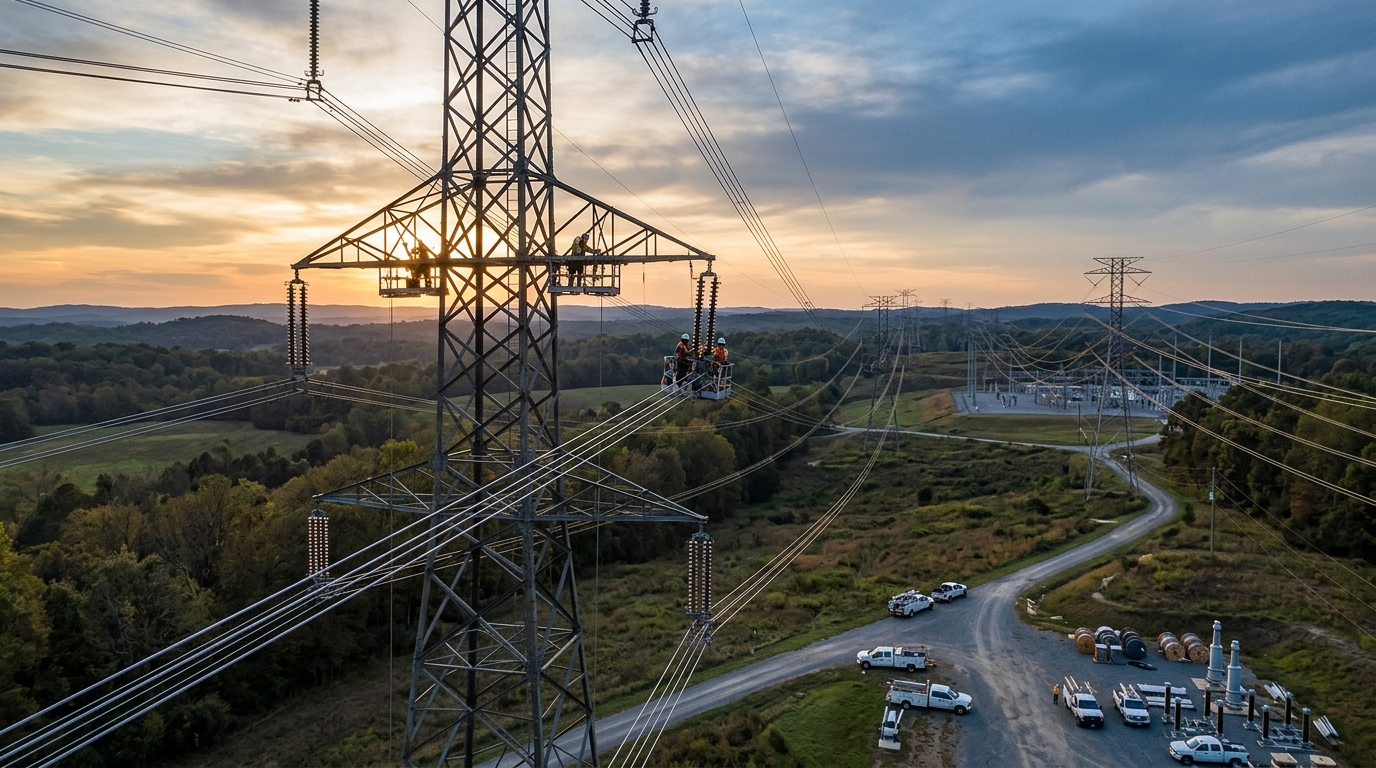
Is Wall Street Underpricing the Grid?
Featured: Is Wall Street Underpricing the Grid?
First a note from Brownstone Research
Editor’s Note: Larry Benedict has spent more than 40 years as a professional trader. He went 20 years without a losing year and made over $274 million for his clients. Now he’s revealing a ticker he calls one of the best-kept secrets in the market. Click here to see the details.
Dear Reader,
There’s a single asset that Wall Street legend Larry Benedict calls “the best kept secret in the stock market right now.”
It’s a ticker that next to no one searches for online.
You won’t find it on top 100 lists anywhere.
But when this market starts moving, it quickly becomes Wall Street’s favorite way to trade it.
Larry says now is the time to reveal this ticker to hardworking Americans.
The people who save as much as they can but just need that extra something to get ahead.
This ticker could very well be that thing – if you’re willing to act fast.
Because there’s a huge event coming out of the Oval Office that could send billions flooding into this corner of the market.
And this ticker sits right at the very heart of it.
Play it right, and you could make 2026 one of the best years you’ve ever had.
Click here to discover the name and symbol of this special ticker, for free.
Lauren Wingfield
Managing Editor, The Opportunistic Trader
P.S. Larry went 20 straight years without a single losing year – a record that earned him the nickname “The 20-Year Man.”
When a trader like that says August 15 could be the best window of the year, it’s worth a few minutes to hear why. Click here to learn more.
Is Wall Street Underpricing the Grid?
The Big Question
Here is the question sitting at the center of nearly every institutional energy conversation right now: Is the US power grid crisis a multi-decade structural investment cycle, or a demand surge that will correct faster than the consensus expects and leave utilities, equipment makers, and grid operators holding stranded costs and overbuilt capacity?
That question matters because the answer determines whether a wide range of companies are cheap, fairly valued, or quietly expensive at current prices. The two camps are not talking past each other. They are looking at the same data and drawing genuinely different conclusions. That is what makes this worth paying attention to.
Why Institutional Investors Are Focused Here
The proximate catalyst is not subtle. In early July, PJM Interconnection, the grid operator responsible for electricity service to more than 67 million people across 13 states and Washington D.C., approached a peak demand forecast that would have broken a record set in 2006. The Department of Energy issued emergency orders directing data centers in the mid-Atlantic region to shift to backup diesel generators to free grid capacity for residential air conditioning. Grid operators across the country, from ERCOT in Texas to NYISO in New York, faced similar stress simultaneously.
That sequence of events compressed what was already becoming a high-conviction institutional debate. The grid is not abstractly stressed. It is concretely, measurably, documentably short on capacity at precisely the moment demand is being asked to absorb a structural and rapid shift.
The PJM capacity market puts a price on that gap. The 2026/2027 auction cleared at $329.17 per MW-day, a 22% jump from the prior year. The December 2025 auction for 2027/2028 cleared at $333.44 per MW-day, hitting the FERC-approved cap for the second straight year while still falling 6,623 MW short of PJM’s own reliability target. PJM itself acknowledged this was the first auction in which the entire RTO fell short of its reliability requirement. Data centers now account for approximately 97% of PJM’s 5,250 MW load growth in its most recent demand forecast.
The Bull Case
Institutional investors who are constructive on the power infrastructure cycle point to a convergence of demand drivers that is genuinely unprecedented in scale and duration. AI data centers are the most visible part of the story, but they are not the only part. Electrification of transportation, reshoring of manufacturing, and the retirement of aging thermal generation are adding load simultaneously. The Edison Electric Institute estimates capital expenditure in the utilities sector will reach $1.1 trillion from 2025 through 2029, nearly matching the prior ten years combined.
The equipment orders coming out of industrial earnings reports are what bulls cite most aggressively. GE Vernova reported Q2 2026 orders of $24.2 billion, up 88% year over year, with its total backlog reaching a record $176 billion. Its Electrification segment booked more than $5 billion of data center orders in the first half of 2026 alone. The company has already contracted over half of its 2031 gas turbine production capacity. Management raised its full-year 2026 revenue forecast to $45.5 to $46.5 billion, the second consecutive upward revision in 2026, and lifted free cash flow guidance from $6.5 to $7.5 billion all the way to $11.5 to $12.5 billion. These are not forecast numbers. These are contracted, prepaid, multi-year infrastructure commitments. The bull case says that kind of order flow does not get built up under a temporary demand spike.
For regulated utilities, the bull argument is about rate base growth and earnings visibility. Load growth in the Southeast is accelerating in a way that has not been seen since the 1970s. Duke Energy’s CEO outlined a demand growth forecast roughly tenfold above the prior 0 to 0.5% annual load trend, driven by AI data centers and new manufacturing. The company has signed 7.6 gigawatts of electric service agreements with data center customers, with nearly two-thirds already under construction.
The AI Boom’s Most Profitable “Tollbooth” Stock?
A little-known company is quietly building what may be the closest thing to a virtual monopoly the AI era has ever seen.
Whitney Tilson – the man CNBC calls “The Prophet” – calls it the world’s most profitable tollbooth. One billionaire put more than half his $9 billion fund into it.
Right now it’s trading at a rare discount…the same kind that’s previously turned $10,000 into $55,000…in just over 12 months.
The Bear Case
The bear case is not that AI demand is fake. It is that the market is extrapolating current order flow too aggressively and that execution risk, regulatory friction, and project slippage are being systematically discounted.
Start with project timing. Estimates from Goldman Sachs suggest roughly 50% to 60% of announced data center capacity is expected to come online on schedule over the next one to two years. The rest faces permitting delays, interconnection queues, labor constraints, and equipment lead times that are stretching to multi-year horizons in some categories. A backlog is not revenue. A signed power purchase agreement is not load on the system. There is a meaningful gap between what is contracted and what actually shows up as kilowatt-hours consumed.
The regulatory dimension compounds this. PJM’s own executive vice president signaled in December 2025 that a new, more conservatively vetted load forecast could come in significantly lower than the numbers that drove the most recent capacity auction results. For regulated utilities, state commissions control the allowed return on rate base investment. A hostile rate case, a change in state energy policy, or a political pushback on data center cost recovery could compress earnings and delay capital recovery for years.
Then there is the valuation overlay. The XLU utility ETF now trades at roughly 23 times earnings, well above its historical average of 17 times. The premium names in the sector, Constellation Energy and Vistra, trade at forward multiples that are not utility multiples by any historical standard. Investors are paying for the AI electricity thesis at a price that reflects considerable optimism already.
The Evidence
What separates this investment debate from most is the quality and specificity of the evidence on the bull side. GE Vernova’s Electrification equipment backlog grew 69% year over year to $41 billion, with North American orders increasing approximately four times. Management specifically cited substations, switchgear, and transformers as areas of particularly strong demand. Air-insulated switchgear backlog alone reached approximately $5 billion. Electrification EBITDA margin expanded 700 basis points to 18.4%, meaning the order growth is arriving with favorable pricing and operating leverage, not margin dilution.
That margin expansion is important to professionals who have watched prior infrastructure cycles. In prior cycles, surging orders came with pricing pressure as competitors flooded in. What GE Vernova is reporting is the opposite: a supply-constrained market where lead times are extending and pricing is improving simultaneously. First-half equipment orders for heavy-duty HA turbines were priced more than 20% above Q4 2025 levels. The company is expanding gas turbine production capacity from 20 GW annually to 30 GW by 2030, and more than half of its 2031 production slots are already contracted.
The counterevidence is subtler. PJM’s revised load forecast, expected to incorporate stricter vetting of large load interconnection requests, could narrow the apparent capacity gap. Several data center operators have disclosed that hyperscaler capex commitments, while large in aggregate, involve phased deployments that may not hit the grid on the schedules originally announced. And the interest rate environment remains a genuine constraint for utilities deploying $100 billion-plus capital plans over multi-year periods.
The Mavens’ View
The most sophisticated institutional view of this situation is not that the demand is real or that it is fake. The real debate among professional investors right now is about the shape of the investment cycle and which part of the supply chain captures the most value.
Mizuho’s lead utilities analyst Maheep Mandloi put it directly in a March 2026 note, writing that the combination of secular load growth, regulated returns, and a defensible Southeast footprint makes certain regulated utilities the best risk-adjusted way to play the US power transition, adding that even if capital plans slip by a year or two, the underlying earnings algorithm remains intact. That framing, durability of the earnings algorithm over timing precision, is how disciplined allocators are approaching the regulated utility side of this debate.
On the equipment side, the institutional conversation has shifted from whether the cycle is real to how long the supply bottleneck persists and what it does to equipment pricing. GE Vernova’s backlog and margin performance are being read through to every company in the electrical supply chain: Eaton, Schneider Electric, ABB, Siemens Energy, Hubbell, and others that serve the same substations, switchgear, and transformer markets. The read-through is explicit. GE Vernova management identified these end markets directly on its Q2 call.
Where institutional investors are most divided is on the merchant power generators, Constellation and Vistra specifically. Both have signed long-term hyperscaler power contracts and both operate around-the-clock baseload generation that data centers require. The disagreement is about valuation. Constellation trades at roughly 25 times forward earnings after its Calpine acquisition transformed its revenue base, posting Q1 2026 revenue of $11.12 billion, up 64% year over year. Vistra trades at a lower multiple, roughly 16 to 18 times forward earnings, with a forward free cash flow yield around 7.2% versus Constellation’s approximately 3.8%. That gap reflects both genuine business model differences and a market that has not fully converged on which structure wins over the next five years.
What Investors Are Missing
The conversation is heavily concentrated on generation and equipment. Almost nobody is talking about the transmission and distribution layer with adequate specificity, and that may be where the most durable value is accumulating.
Grid interconnection queues have become the single biggest constraint on bringing new power supply to market. FERC data shows that the interconnection backlog has grown to the point where new projects are waiting five to seven years in some regions before they can connect to the grid. That bottleneck does not resolve when new generation is built. It resolves when transmission and distribution infrastructure is upgraded, which requires substations, switchgear, transformers, and grid automation equipment at a scale the market has not had to supply in decades. GE Vernova’s backlog data is the clearest evidence of this, but the same demand is flowing to Eaton, Hubbell, and a handful of specialized industrial electrical companies that do not carry the premium valuation of the more visible generation names.
The second overlooked dimension is regulatory protection. Regulated utilities operate under cost-of-service frameworks that allow them to recover capital investment through customer rates, subject to commission approval. That structure means their earnings growth is more predictable and less cyclical than merchant generators, but it also means the market consistently undervalues them during periods of rapid capital deployment because near-term free cash flow looks constrained. Investors who understand regulated utility mechanics see that constraint as temporary. The rate base grows, the allowed return compounds, and earnings follow, typically on a three-to-five-year lag from when the capital is deployed.
Duke Energy’s Customer Protection Plus framework, introduced in July 2026, is a direct attempt to address the political risk embedded in that dynamic. By tying data center load growth to long-term agreements that include shared customer savings provisions, Duke is building a regulatory argument that rapid infrastructure investment benefits the entire rate base, not just the hyperscalers. That kind of structural protection is not being priced into Wall Street models with any precision.
Louis Navellier: Don’t buy OR sell another AI stock…
Until you’ve heard this urgent AI warning from the man who called Nvidia before its 44,000% rise…
According to Louis, a massive reset is coming in an obscure corner of the AI market.
This $100 trillion disruption could send some of the world’s biggest AI stocks to zero… and one off-the-radar stock soaring… starting now.
Stocks to Watch
GE Vernova (GEV) is the most direct expression of the grid infrastructure build. Q2 2026 orders of $24.2 billion, up 88% year over year. Total backlog of $176 billion. Free cash flow raised to $11.5 to $12.5 billion for the full year, more than 2.5 times the full-year 2025 figure in just the first half of 2026. The supply constraint dynamic in gas turbines and electrification equipment is structural, not temporary. The risk is a valuation that already reflects strong expectations, leaving less cushion if execution or demand timing disappoints.
Duke Energy (DUK) is the regulated utility with the clearest data center growth story tied to a specific, defensible geography. Trading around $129 versus a consensus analyst target near $138 to $139, with at least one bullish analyst carrying a $159 target supported by a model that takes the $103 billion capital plan and 7.6 GW of contracted data center load through 2030. The Q2 2026 report is scheduled for August 4, and load growth acceleration in the Carolinas will be the key figure to watch. Enterprise-wide load growth is expected to reach 3% to 4% annually from 2027 through 2030, versus 1.5% to 2% in 2026, a meaningful step-change that the current multiple does not fully reflect.
Constellation Energy (CEG) operates the largest nuclear fleet in the US, with an average capacity factor exceeding 93%. Q1 2026 revenue of $11.12 billion with a 22% operating margin. Management projects base earnings growth exceeding 20% through 2029, supported by the nuclear production tax credit and long-term data center offtake agreements. The Calpine acquisition has made Constellation’s revenue base and earnings profile materially different from what most utility models were built to analyze. Wall Street consensus implies roughly 40% upside from current prices, though the forward multiple near 25 times leaves limited room for error.
Vistra (VST) is the most debated name in this space among professionals right now. Forward P/E near 16 to 18 times versus Constellation’s 25 times, with a free cash flow yield around 7.2% that is materially higher than any comparable merchant operator. Zacks consensus estimates imply 65% earnings growth for 2026 and another 26% in 2027. The lower multiple reflects higher leverage, with net debt of roughly $19.6 billion versus Constellation’s approximately $5.9 billion. Vistra’s Vistra Vision subsidiary, focused on zero-carbon nuclear and storage, is where the long-term AI power thesis concentrates. The risk/reward here is wider in both directions than Constellation, which is exactly why institutional investors are split on it.
Eaton Corporation (ETN) is the overlooked name in this cycle. Eaton supplies power management systems, switchgear, and electrical infrastructure to the same data centers and grid upgrade projects that are driving the other names on this list. GE Vernova’s Q2 call explicitly identified the read-through to Eaton’s end markets, noting that backlog growth in substations, switchgear, and transformers benefits the broad electrical platform players directly. Eaton does not carry the headline risk of a merchant generator or the regulatory complexity of a regulated utility. It is an industrial electrical company with strong pricing power, growing backlogs, and exposure to a multi-year spending cycle. The market has not awarded it the premium valuation of the generation names, which may be the point.
The grid stress visible this summer is not a weather story. Weather accelerated the timeline. The underlying problem, a power system designed for flat demand that is now absorbing the largest load growth in fifty years, was already in place before the heat arrived.
Professional investors who have done the work on this cycle are not debating whether demand is real. They are debating execution risk, regulatory timing, and whether the market has already priced the clearest beneficiaries to levels that limit further upside. That is a more nuanced and more useful debate than the one showing up in most financial media coverage.
The investment committee discussion right now is not about whether to own power infrastructure. It is about where in the supply chain to own it, at what price, and with what tolerance for a cycle that is almost certain to be longer and lumpier than current models assume.
The Wall St. Mavens Editorial Team