
May 31, 2026
Retail’s Quiet Comeback
Costco stays steady, Target improves, value still feels tight
Your free download link is about to expire.
Once it does – this guide goes back to $29.97.
Inside: options trading explained in plain English. No jargon. No textbook talk. Real trade examples you can copy directly into your own account.
Calls. Puts. Strikes. Premiums. All of it – explained the way a friend would explain it over coffee.
Grab your free copy before the link dies.
Download while it’s still free.
FEATURED
Retail’s Quiet Comeback
Retail is acting weird again.
Not in a “everything is great” way. More like… strong pockets, weak pockets, and the market can’t decide which one is the real story.
As of Friday, May 31, 2026, the cleanest macro markers still say “slow growth, not a cliff.” The unemployment rate held at 4.3% in April 2026. Q1 2026 GDP (second estimate) was revised to +1.6% annualized. And the PCE price index was +3.5% year over year in March 2026. None of that screams boom. None of that screams bust either. It’s just… tight. A little unforgiving. If you’re on the wrong side of prices and rent, you feel it every week.
Slight tangent, but it matters: consumer sentiment is not lining up with “the economy is fine.” The University of Michigan’s final May 2026 reading was 44.8. That is a rough number, and it’s hard to ignore when you’re trying to handicap discretionary demand.
And yet, some retailers are doing more than “fine.”
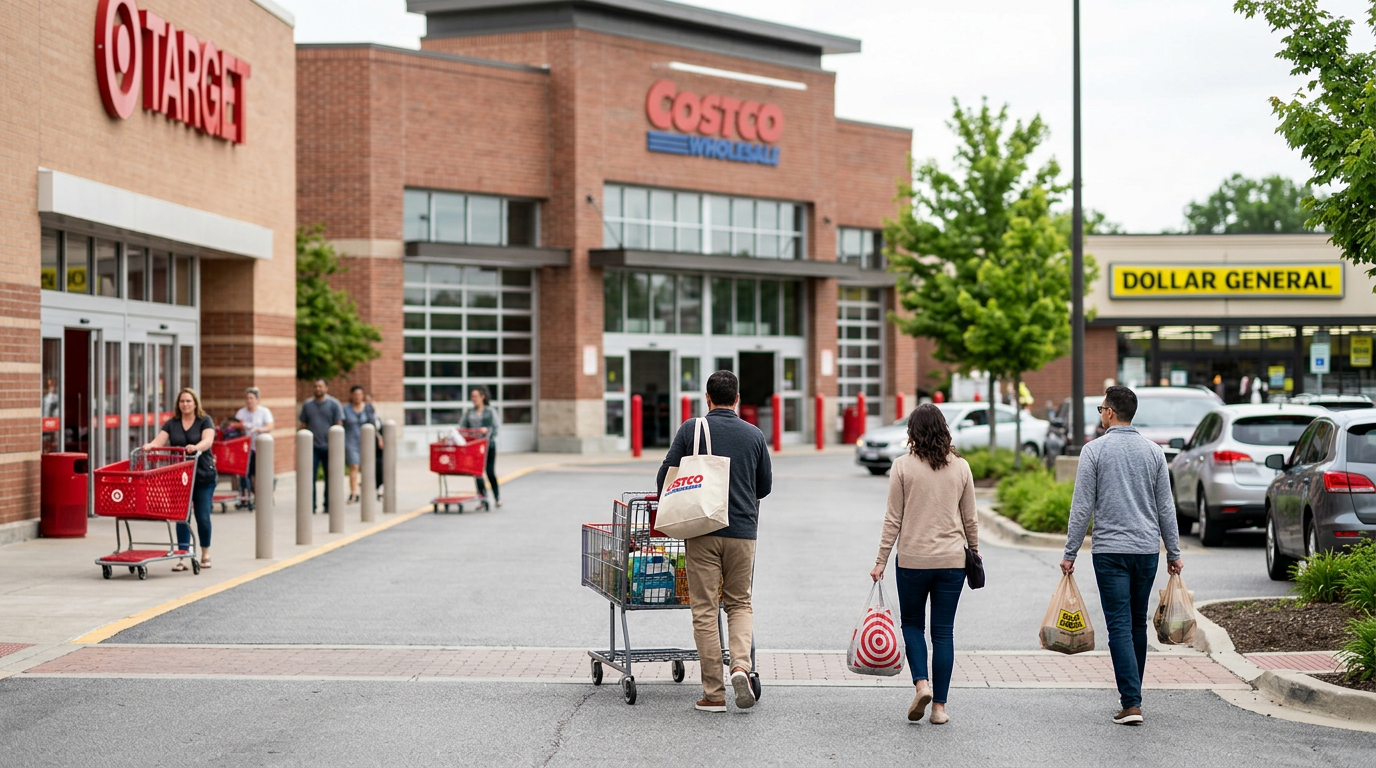
Costco is still the obvious example. In fiscal Q2 2026 (ended Feb. 15, 2026), it reported total revenue of $69.6B and diluted EPS of $4.58. Comps were +7.4%, or +6.7% adjusted for gas and FX. That’s not a fragile consumer. That’s people choosing certainty. Fewer bad trips. Fewer surprises at checkout.
Target surprised a lot of people too. In fiscal Q1 2026 (reported May 20, 2026), comparable sales were +5.6% and digital sales were +8.9%. I’m not ready to call it “fixed” after one clean quarter, but it’s the first time in a while the business felt like it had momentum instead of excuses.
Here’s the thing. This is not a single consumer. It’s at least two.
The higher end is spending, still. The middle is spending but picky. The lower end is doing math in the aisle. That shows up as trading down, smaller baskets, more store brand, and fewer “fun” add-ons. You can call it cautious, you can call it stressed. It’s both.
What matters is the direction, not the headline. If inflation stays sticky, that lower-income pressure doesn’t go away just because GDP is positive. And if rates don’t come down soon, the categories that need financing stay awkward for longer.
Abrupt transition: I also think people are over-romanticizing the “value” channel right now. Yes, it benefits when shoppers downgrade. But it also gets hit first by fuel spikes, food spikes, and any wobble in hours worked. It’s not automatically a safe place to hide.
Why Didn’t Your Bank Tell You This?
For decades, America’s biggest banks quietly used a powerful compounding strategy most families never heard about.
The results? $1,000 potentially growing into more than $556,000 since 2000.
It’s simple, legal, and now available to everyday investors.
If you want one near-term checkpoint, the June 2026 retail sales report (released mid-July) is the next clean read. Not perfect, but clean. If it comes in soft while COST holds up and TGT keeps comp momentum, that split gets louder.
Worth a look if you’re tracking retail: watch whether Target can stack another quarter of positive comps without leaning on heavy discounting. That’s the part people skip. And watch whether Costco stays strong even if gas calms down. That tells you if it’s real loyalty or just a lucky tailwind.
I’ll be watching it with you. I don’t think this divergence is done yet.