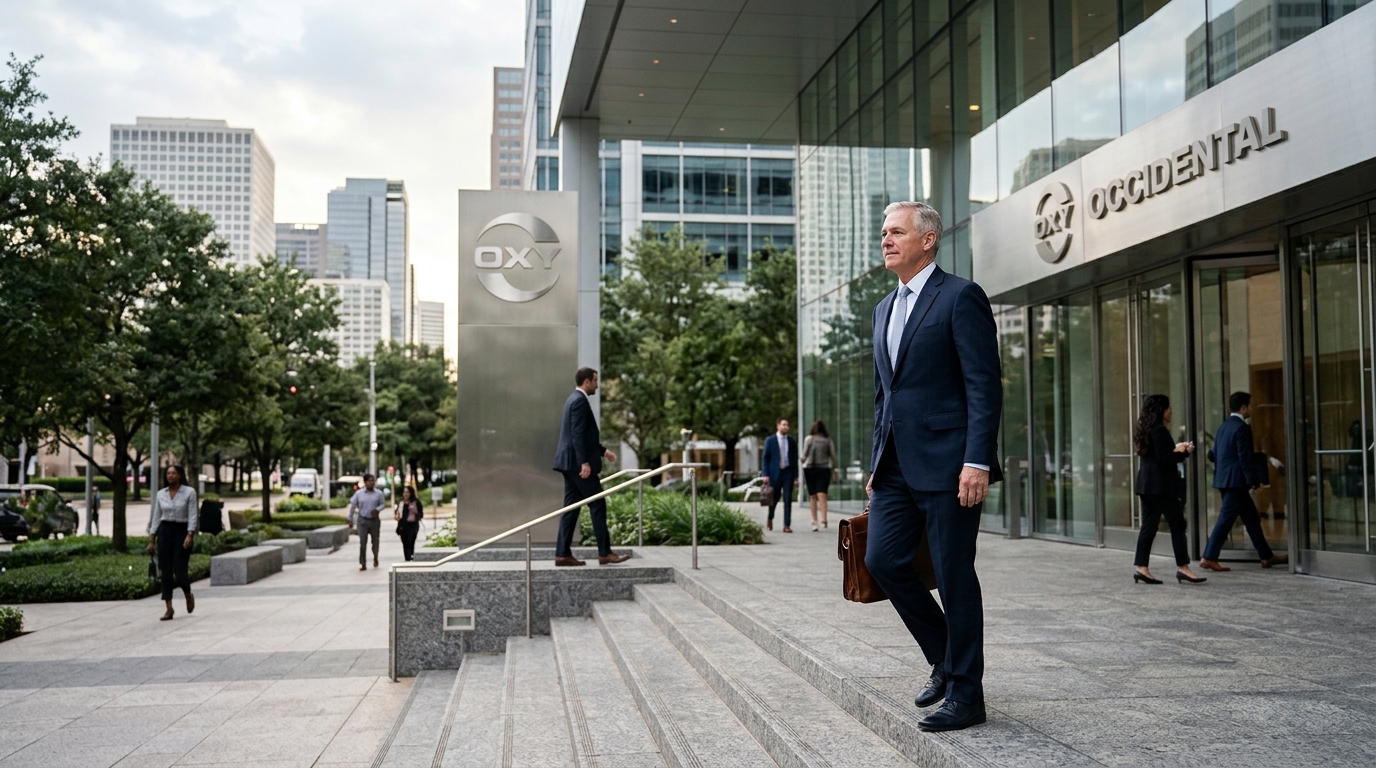
OXY reports Q3 earnings after the market closes Monday, November 9, with analysts expecting diluted EPS of about $1.43, up from $0.64 in the year-ago quarter. The year-on-year comparison flatters the number, partly because crude prices were softer in Q3 2025. But the more important question is structural: what does Occidental actually look like now that the chemicals business is gone?
The Balance Sheet Transformation
On January 2, 2026, Occidental completed the sale of OxyChem to Berkshire Hathaway for $9.7 billion in cash. Management promised the proceeds would attack the debt load left over from the Anadarko and CrownRock acquisitions, and they delivered. The company said the transaction reduced debt by $5.8 billion since mid-December 2025, bringing principal debt to approximately $15.0 billion at close. That was only the opening move.
After-tax proceeds and free cash flow were then used to repay $8.609 billion of debt, reducing total borrowings at face value to $11.818 billion and lowering interest expense. Following Q1 2026 results, management reiterated that reducing principal debt to $10 billion remains the near-term priority. Monday’s report should show whether OXY is tracking toward that milestone on schedule.
What the Buffett Relationship Actually Means Now
Berkshire’s fingerprints are everywhere on this story. It bought the chemicals arm outright. It still holds a large equity stake in the upstream company. Berkshire has reported owning 264.94 million shares of OXY, and earlier in 2026 it disclosed that stake as about 26.9% of the company. Berkshire also holds $8.5 billion in preferred stock plus warrants. That preferred position carries an 8% dividend and represents the next significant liability on OXY’s balance sheet once the $10 billion principal debt target is cleared.
Berkshire has regulatory clearance to buy up to 50% of OXY’s common stock, a ceiling that has previously triggered rallies on disclosure of fresh purchases. Whether Greg Abel, who became CEO of Berkshire on January 1, 2026, shares that appetite for OXY shares is an open question. What is not in question is that Berkshire’s dual role, as OXY’s largest equity holder and the buyer of its former chemical arm, keeps the two companies tightly bound.
The Income Case
On October 26, 2026, Occidental declared a regular quarterly dividend of $0.28 per share, payable January 15, 2027. That represents a $1.12 annualized dividend. The yield is modest relative to peers like Chevron or ConocoPhillips, but the trajectory matters more than the current level. Dividend growth is likely tied to progress toward the $10 billion debt milestone and execution against the company’s longer-term cash-flow improvement goals.
Q3 earnings are likely to have benefited from strong domestic production, improved operational efficiencies, and lower interest expenses, with continued debt reduction and cost-saving initiatives expected to have supported profitability. Lower interest costs are real: each billion of principal retired reduces the annual interest bill, money that can flow toward dividends or buybacks once the debt target is met.
Risks to Monitor
Crude is not cooperating cleanly. Oil has swung sharply in recent sessions as the U.S. enforces a naval blockade on Iran and military tensions in and around the Strait of Hormuz persist. That kind of volatility compresses the planning horizon for any E&P company. OXY, now without the chemical earnings buffer, is more exposed to oil price swings than it was two years ago.
The key question for OXY investors is whether the benefits of a simpler balance sheet and much lower debt outweigh the loss of earnings diversification from the chemical business. Monday’s report delivers the first full quarter of data to begin answering that. Watch the free cash flow figure, the updated debt balance, and any commentary on the preferred share retirement timetable.
The Wealth Builder Takeaway
Occidental has executed one of the most aggressive balance-sheet transformations in the energy sector over the past ten months. The debt is down, the dividend is rising, and Berkshire’s continued presence as the dominant shareholder provides both a credibility floor and optionality for income-oriented investors. The company is not yet a high-yield income stock, but it is moving in that direction with unusual discipline. Investors building long-term energy exposure should use Monday’s report less as a trading trigger and more as a scorecard on how much runway remains before OXY can redirect its cash flow fully toward shareholder returns.