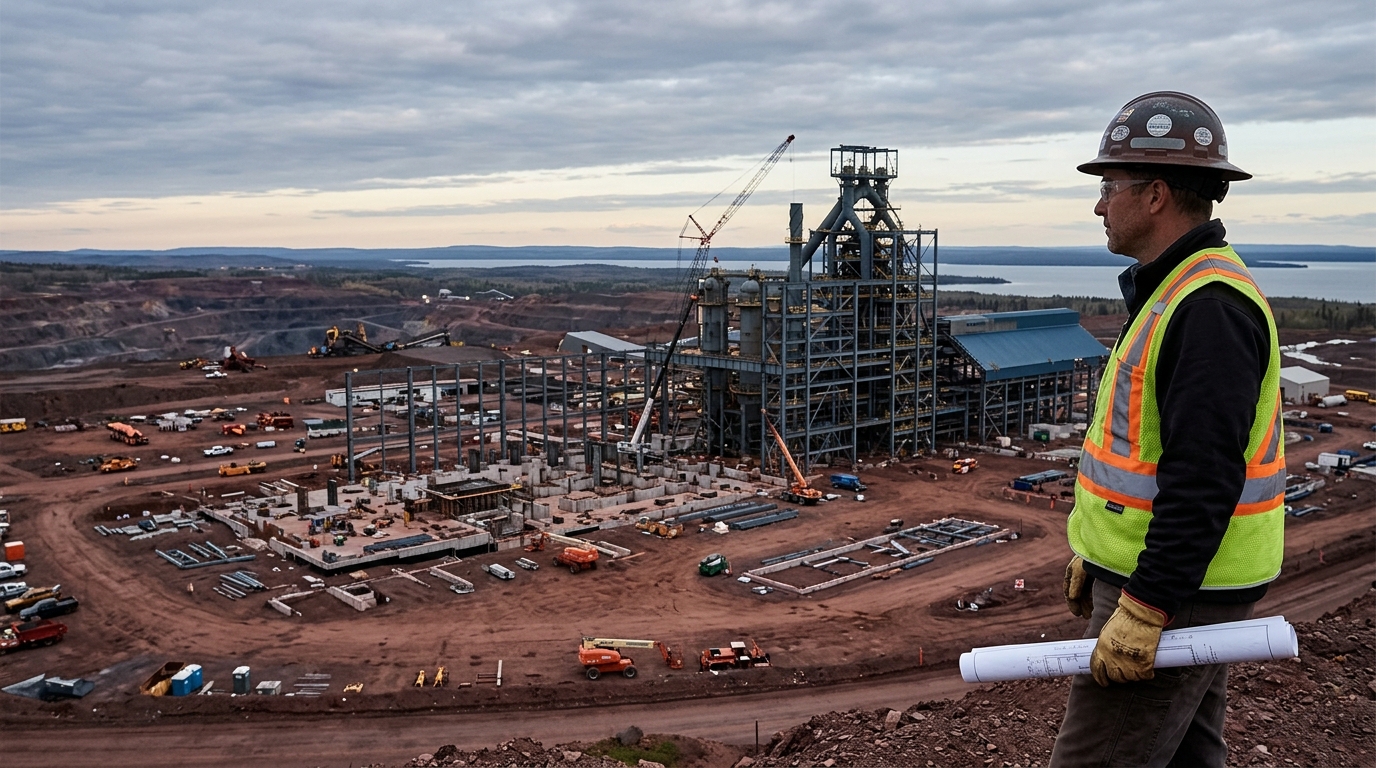
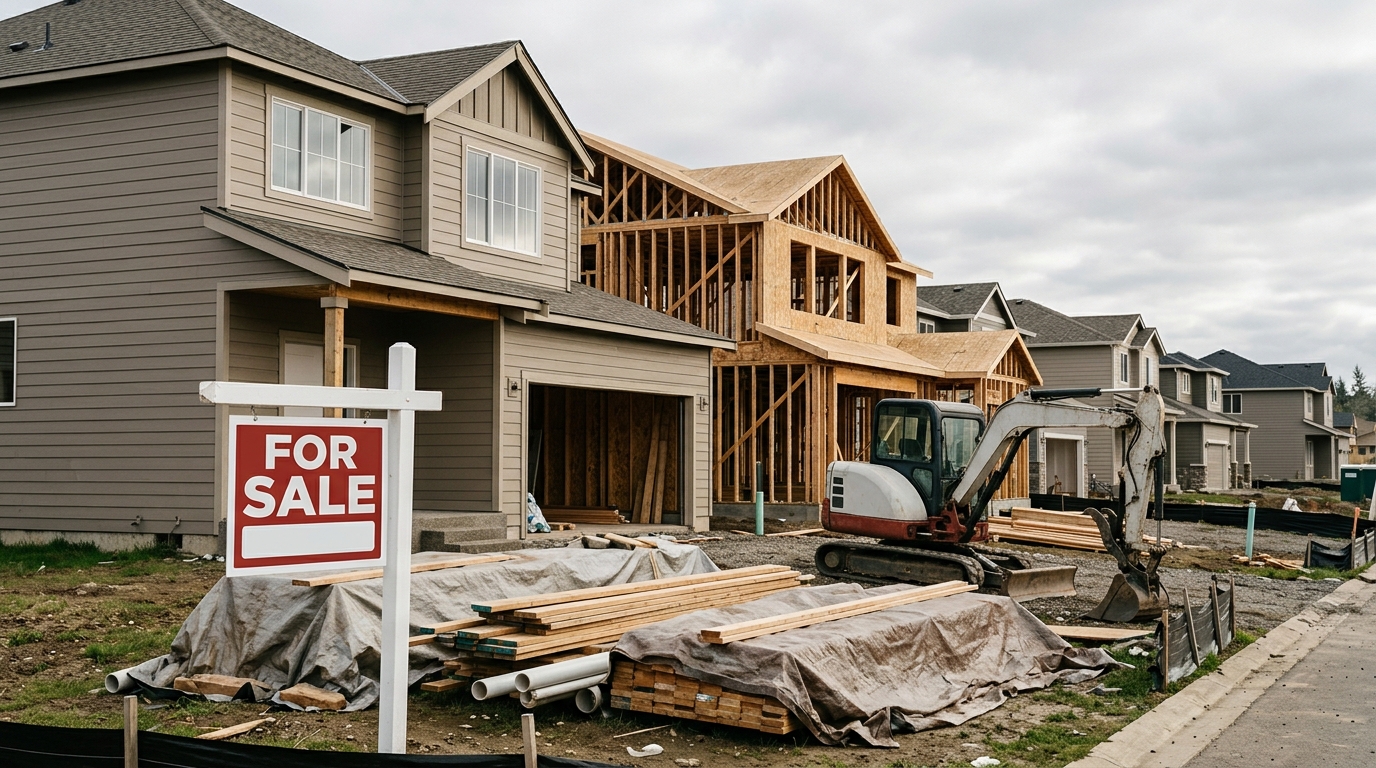
Three things happened in the homebuilding sector this week that, taken together, have forced a real reckoning among institutional investors: U.S. construction spending unexpectedly fell in July to $2.158 trillion, the lowest level since October 2023, as higher mortgage rates weighed on single-family homebuilding. Then a global bond market sell-off drove mortgage rates to their highest level of the year, with the 30-year fixed rising to 6.71%, the highest since July 2025, putting fresh pressure on home shoppers and anyone hoping to refinance. And finally, S&P Dow Jones Indices announced that Builders FirstSource will be removed from the S&P 500 in the quarterly rebalance, with all changes taking effect before the open on September 21, 2026.
The question professionals are wrestling with is not whether the housing data is bad. It clearly is. The question is whether this cluster of signals constitutes the kind of washout that precedes a durable rally, or whether 6.71% mortgages pointing toward 7% represent a structural problem that forces the entire homebuilder group lower.
The Bull Case
The bull argument is that pain is already priced. Investment in residential construction tumbled 1.3% in July, with single-family housing spending dropping 3.2%, and down 6.5% year-over-year. Numbers that severe tend to reflect cuts already made, not cuts still coming. Builders have been managing land exposure tightly: Lennar ended its latest quarter owning about 11,000 homesites and controlling roughly 484,000, a structure designed to reduce capital intensity and adjust more quickly to changing demand without tying up capital in land. That optionality matters when volume is compressing.
Index removal events also frequently mark lows. Forced selling by passive funds that tracked BLDR at large-cap weights creates a mechanical dislocation that has nothing to do with earnings power. Contrarian investors know this script.
The Bear Case
The bear case is that the rate pressure is not a blip. The 10-year Treasury and the broader bond market have been swept up in a global sell-off, with investors focused on renewed U.S.-Iran conflict risks, higher energy costs, and a U.S. national debt that has surpassed $40 trillion. None of those catalysts resolve quickly. Mark Zandi, chief economist at Moody’s Analytics, said mortgage rates are “effectively” at 7% already and “rates could easily go over.”
Pending home sales also softened over the summer, with July falling to the lowest level since January 2026. Meanwhile, homebuilding is being squeezed by a glut of unsold single-family houses. Builders can cut prices and offer incentives to move product, but that destroys margins. Lennar’s own guidance last quarter signaled gross margin on home sales of roughly 16%, a level that leaves little room if incentives deepen.
What Wall Street Is Actually Debating
StoneX initiated PulteGroup at Buy with a $148 target on Friday while assigning Lennar a Hold, splitting its homebuilder sector outlook on the same day, a signal that analysts are not making a uniform call on the group. They are differentiating by balance sheet and buyer mix.
That distinction matters. The overlooked implication here is that the S&P 500 removal of Builders FirstSource exposes a second-order risk most commentary has missed: BLDR is not just a homebuilder. It is the primary materials supplier to homebuilders. Builders FirstSource will move to the S&P SmallCap 600 following its removal, shrinking its institutional ownership base precisely when order flow from its largest customers is declining. The stock faces demand contraction from both sides simultaneously.
Stocks to Watch
Lennar (LEN) reports Q3 earnings September 16. Management reduced its full-year fiscal 2026 delivery target to approximately 82,000-83,000 homes, with mortgage rates in the mid-to-upper 6% range cited as the defining affordability challenge. The earnings call will tell investors whether incentive spending is accelerating.
PulteGroup (PHM) received the more bullish call from StoneX on Friday. Its exposure to active-adult buyers gives it some insulation from first-time buyer rate sensitivity. Worth watching as a differentiated play within the sector.
D.R. Horton (DHI) competes at national scale in entry-level housing, the segment most directly punished by 6.71% mortgage rates. The most exposed of the large builders to a prolonged rate environment.
Builders FirstSource (BLDR) faces forced index-driven selling before September 21. If the materials business stabilizes faster than the market expects, the post-rebalance dislocation could be the entry point. The risk is that it is cheap for real reasons, not mechanical ones.
ITB / XHB – the two major homebuilder ETFs – concentrate the debate. Both will see BLDR-related rebalancing effects. Institutional investors watching sector flows will use these as the clearest read on whether professional money is buying the weakness or stepping aside.