
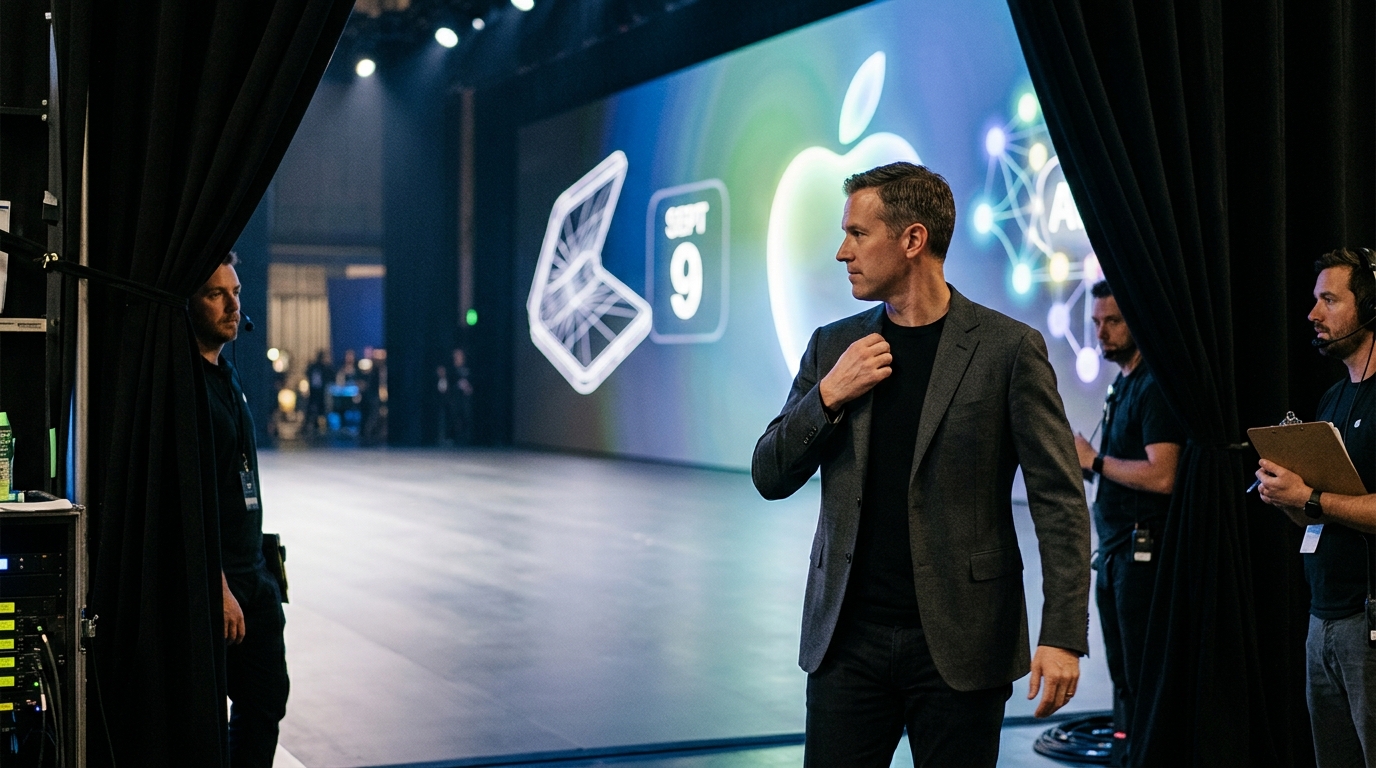
John Ternus became Apple’s CEO on September 1, 2026, succeeding Tim Cook, who moved into an executive chairman role. The transition was orderly by design. It also marks a deliberate shift in what kind of executive runs Apple: Cook came from operations, Ternus from engineering. That distinction is not cosmetic. It shapes every decision Ternus will face, starting with the one happening in five days.
He gets barely a week to settle in before Apple holds its annual iPhone event on September 9, where it is widely expected to unveil its first foldable handset. According to Bloomberg’s Mark Gurman, the keynote will introduce the latest iPhones and Apple Watches and kick off what he describes as the company’s biggest run of device releases in its history. That framing matters. For much of the past decade and a half, Apple spent more energy refining existing lines and expanding services than inventing new categories. Gurman’s reporting frames September 9 as the start of a different stretch, with new form factors and entirely new product areas arriving across 2026, 2027, and beyond.
The foldable is not just a product. It is not merely a change in form factor. It is Ternus’s first opportunity to demonstrate that Apple can still create a new premium product category rather than simply refine an existing one. Ternus also inherits supply chain pressure, tariff uncertainty, and a design vacuum that has persisted since Jony Ive left in 2019. Samsung has owned the foldable category for years.
The AI question is harder than the hardware one. On his first day, Ternus signaled a hardware-first AI approach built on Apple Silicon’s on-device inference, with a pipeline of sensor-rich devices including camera AirPods, smart glasses, and a robotic home display. Apple will also roll out its new Siri experience, powered in part by Google’s Gemini models. One analyst called the appointment “Apple’s subtle way of doubling down on hardware innovation as a core strategy,” arguing it “intertwines AI with hardware, rather than treating AI as a standalone product.”
Bank of America wrote in an August research note that Ternus could cement Apple’s device dominance in an AI-enabled era. That is the bull case. The bear case is simpler: Apple shows no clear, consumer-useful AI advantage and the foldable disappoints, forcing the stock’s premium valuation to compress.
Three things will define the early Ternus tenure: whether Siri’s Apple Intelligence rebuild ships on its promised timeline; further executive retirements now that the transition is complete; and Cook’s actual weight as executive chairman, whose global policy remit gives him a live role in Washington and Beijing. That last point is structurally important. Ternus owns the products. Cook still owns the geopolitics. Whether that division of labor stays clean under pressure is a real question.
Gene Munster of Deepwater Asset Management said Apple “went with a product person,” calling it important. He has also argued that Ternus needs to accelerate recruiting and bring in top talent, because the company still needs to reinvent itself. That is the real agenda behind September 9. The foldable closes one chapter. Everything after it writes the next one.