
August 4, 2026
BP Made $5.7B. The Trading Desk Did the Heavy Lifting.
First a note from Stansberry Research
Editor’s note: CNBC nicknamed him “The Prophet.” He called Netflix at 78 cents, Apple at 38 cents, and Amazon at $2.80 – long before anyone knew their names. He’s appeared on 60 Minutes twice. Now former hedge-fund manager Whitney Tilson is naming what he calls “America’s Greatest Retirement Stock” right now – one company at the center of the AI and energy boom. He’s giving away the name and ticker, free. See below…
It beat Apple, Amazon & the S&P – COMBINED
Every talking head on CNBC will tell you to own Apple.
Or Amazon.
Or just “buy the index.”
Here’s what they won’t tell you:
There’s a single, little-known stock that has beaten all three – COMBINED – over the past decade.
Apple returned about 1,200%. Amazon, 660%. The S&P 500, 330%.
This one company? Over 2,200%.
>>>> See which company here <<<
And stretch it further? More than 8,300% in total returns.
Enough to turn $10,000 into $830,000.
This little-known company has virtually no debt… only 114 employees… $798 million in annual revenue… more than 60 cents of every dollar flowing straight to the bottom line.
It sits at the dead center of the biggest spending boom in American history – AI, energy, and a critical third industry almost nobody is talking about yet.
>>>> Learn what the third industry is <<<
And right now, there’s a rare discount window open on this stock. Past discount windows like this one have turned a $10,000 stake into $55,000 – in just over 12 months.
I just recorded a full presentation – name, ticker, complete story – 100% free.
>>>> Watch: The One Stock That Beat Apple, Amazon, and the S&P 500… Combined <<<
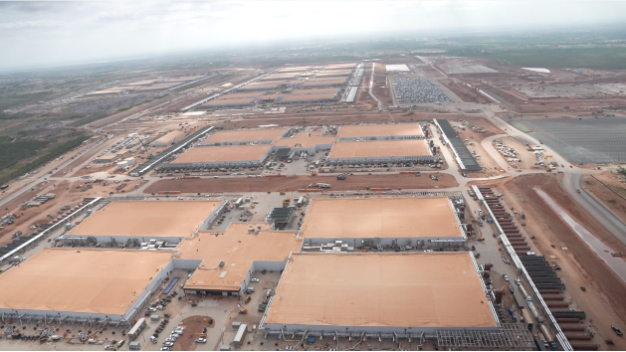
I recently flew to West Texas to see this company’s operations firsthand…
What I saw from a helicopter above the largest construction site in America told me everything the performance numbers couldn’t.
Regards,
Whitney Tilson
Senior Analyst, Stansberry Research
P.S. If it goes the way I think it will – Wall Street gets forced into this stock.
That “third industry almost nobody is talking about yet” in the presentation?
It sits right at the heart of Trump’s “Project Vault” – signed February 2nd to set hard price floors on America’s most critical minerals.
July 13th is when Washington makes that call.
If those price floors get the greenlight, every fund and every trading desk rushes in at once. A stock already beating Apple, Amazon, and the S&P combined doesn’t stay at a discount when that happens.
BP Made $5.7B. The Trading Desk Did the Heavy Lifting.

Here is the thing most people are missing about BP’s quarter.
The oil giant posted underlying replacement cost profit of $5.7 billion for the April to June period. That number beat the Street. It comfortably beat analyst expectations of $5 billion, according to an LSEG-compiled consensus. And it is, by any measure, a genuinely impressive result.
But dig one layer deeper and the story gets more interesting.
Pre-tax profit at the customers and products unit, which includes BP’s huge oil trading desk, was $4.95 billion, above the average estimate in a BP-provided analyst poll of $4.46 billion and $1.53 billion a year ago. Read that again. The trading desk alone nearly matched the entire company’s profit expectation for the quarter. That is not an upstream story. That is a volatility story.
The jump in oil and gas prices, combined with significantly higher refining margins and stronger oil and gas trading profits from a year earlier, boosted BP’s underlying earnings above analyst expectations. Moreover, BP noted that “the oil trading contribution for the second quarter and first half was significantly higher compared with the same periods in 2025.”
Slight tangent, but it matters: this is exactly what BP’s integrated model was built for. When markets are calm and prices are range-bound, the trading operation is a cost center that critics love to question. When the Strait of Hormuz closes and Brent swings $40 in a quarter, the 3,000-person trading floor becomes the most valuable real estate in London. The war did not just lift prices. It created the kind of dislocation that skilled commodity traders turn into outsized margins.
Total revenue climbed 47% to $70 billion compared with a year earlier. Operating cash flow reached $10.9 billion in Q2, supporting a $7 billion reduction in financial obligations. Net debt dropped to $22.25 billion from $25.3 billion three months earlier. On paper, this is a clean sweep.
The Escape Hatch Before CBDCs Launch
In their Bloomberg interview, Bank of America said the digital dollar was inevitable. The infrastructure is being built as you read this.
Once the digital dollar launches, every transaction you make can be tracked. Your spending could be controlled. Your accounts could be frozen.
China already did this. Nigeria already did this.
But there’s still a way to preserve your privacy. Tan Gera, CFA© Charterholder and ex-Wall Street banker, reveals how you hold assets the government can’t freeze and generate yields the Federal Reserve can’t touch.
And yet. The group said upstream plant reliability fell to 92.4% in the second quarter, from 95.7% in the previous quarter. Production declined to 2.2 million barrels of oil equivalent per day and its refineries processed less crude, partly due to planned maintenance and disruption from the conflict in the Middle East. The very war that made BP rich also made it harder to operate. That is a detail most of the headline coverage is glossing over.
The Macro Behind the Numbers
Fighting between Washington and Tehran has severely disrupted shipping through the Strait of Hormuz, a narrow waterway that handles around a fifth of the world’s oil and natural gas. The International Energy Agency has forecast that global supply will fall by 3.9 million barrels per day in 2026, with the war estimated to have blocked more than 14 million barrels per day of Middle East output.
The combined effect on Big Oil has been extraordinary. The five biggest Western energy majors, BP, Chevron, ExxonMobil, Shell and TotalEnergies, reported combined net profits of almost $47 billion in Q2 as earnings multiplied on the US-Iran conflict. That is roughly $500 million per day across five companies. And it has not gone unnoticed in Washington.
Speaking to reporters, Trump said the oil companies were “making too much money” from the Strait of Hormuz closure. “Chevron, too much money. ExxonMobil, too much money,” the president said. Trump demanded the companies return some of their windfall to the public by cutting their retail prices, saying profits that had jumped as much as 12-fold were not acceptable and that he was not happy about it.
On the other side of the aisle, Senator Whitehouse and Representative Ro Khanna reintroduced the Big Oil Windfall Profits Tax Act to protect consumers from giant oil companies exploiting world events to jack up prices. The political pressure is coming from both directions simultaneously, which is unusual enough to be worth watching.
What BP Is Actually Doing With the Money
This is where the story gets complicated for long-term investors. “The latest reporting period has been marked by one of the most disrupted periods in the global energy market,” said BP chief executive Meg O’Neill, CEO since April 1, 2026. Her response to that disruption has been to use the cash windfall not for buybacks, but for balance sheet repair and portfolio simplification.
BP announced it is moving to divest Archaea Energy, a U.S. biogas unit it purchased for $4.1 billion in 2022. The company also said it had completed the sale of its Gelsenkirchen refinery in Germany and plans to sell its North Sea business. The company also increased its 2027 cost reduction target to $6.5 to $7.5 billion, supported by expected savings from the divestment.
Dividend per share increased 4% to 8.66 cents. That is the shareholder return on offer. Not a buyback surge. Not a special dividend. A modest quarterly increase while the company strips assets and pays down debt.
Investors are increasingly looking beyond BP’s windfall profits toward the company’s longer-term strategy. Analysts are watching whether cost cuts, portfolio simplification and debt reduction can eventually translate into sustainable earnings growth, higher shareholder distributions and a more competitive valuation compared to peers.
That is the real question. Oil prices posted their biggest monthly gain since March in July, with Brent crude rising roughly 20% as the conflict escalated and disruptions spread across key shipping routes. As long as the conflict runs, BP’s trading operation keeps printing. But O’Neill is quietly rebuilding a leaner company underneath the wartime windfall, one that, in theory, does not need $90 oil to generate acceptable returns. Whether the market believes that thesis is a different conversation entirely.
The stock rose 0.8% on the results. That tells you something about how much of this quarter the market had already priced in, and how little patience it has for the longer story BP is trying to tell.