
September 26, 2026
Bonus Content: Japan’s Bond Yield Is at a 30-Year High. The Real Problem Is Who Stopped Buying.
Dear Reader,
Mitt Romney turned $450,000 into as much as $100 million in 15 years.
Peter Thiel turned $2,000 into $5 billion between 1999 and 2021.
Both inside their retirement accounts.
They both used the same trick – a type of investment that regular Americans weren’t allowed to touch.
For decades, it was locked away. Reserved for the ultra-wealthy.
But Trump just signed an executive order that opened it up to everyone.
And there’s one fund that gives you direct access.
Trump himself has up to $25 million in it.
My colleague Alexander Green says it could be the best opportunity he’s seen in his entire career.
Click here to see his full presentation – and learn how you can get in for less than $20.
Good investing,
Rachel Gearhart
Publisher,The Oxford Club
Japan’s Bond Yield Is at a 30-Year High. The Real Problem Is Who Stopped Buying.
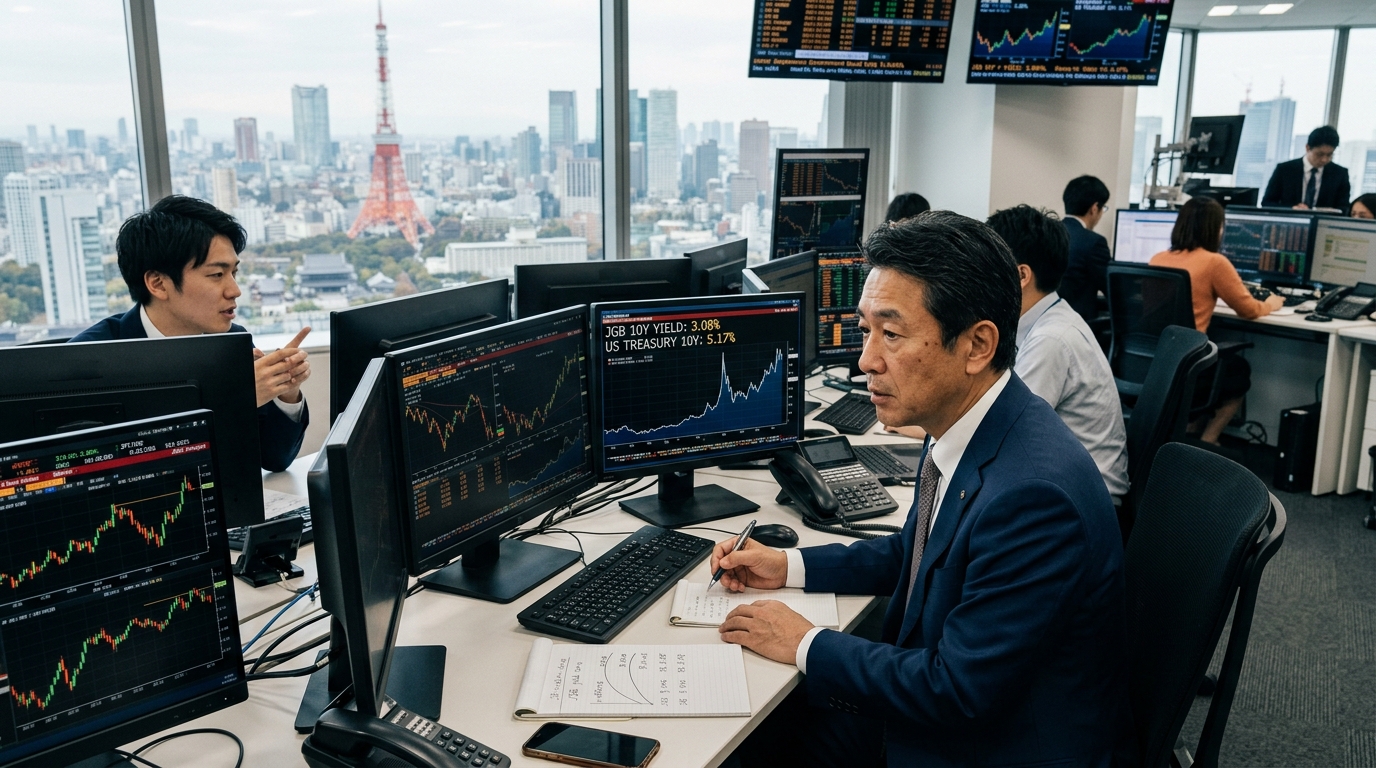
The bond market story consuming financial television this week is the US 30-year yield touching 5.53% and the 10-year closing Friday at 5.17%. Both figures are real and worth watching. But they are also the least consequential part of what happened.
The more important development: Japan’s 10-year government bond yield surged to about 3.08% on Thursday, its highest since August 1996, when Tokyo reopened after the Silver Week holiday with three sessions of catching up to do. The 5-year yield climbed to about 2.35%. The 30-year climbed to about 4.13%. Across the curve, in a single session, Japan reset itself by roughly 8 to 10 basis points. That is not a blip. That is a structural shift in the cost of capital for the world’s third-largest economy, a country whose debt now exceeds 200% of GDP and whose fiscal 2027 budget requests are approaching ¥140 trillion.
European sovereign debt told a parallel story. Germany’s 10-year Bund yield climbed above 3.3% for the first time since May 2011, a 15-year high. France’s 10-year OAT yield hit 4.7%, an 18-year high, with the spread between French and German debt reaching about 105 basis points, its widest margin since the eurozone debt crisis of 2010 to 2012. France’s budget deficit is now projected to widen to 5.4% of GDP this year, and with presidential elections approaching in 2027, there is no credible fiscal consolidation in sight.
The Buyer Problem
Why does Tokyo matter more than Washington right now? Because Japan has for decades been the world’s largest pool of patient capital. Japanese life insurers and pension funds recycled domestic savings into US Treasuries, European sovereigns, and Australian bonds, suppressing borrowing costs globally. That flow is reversing.
Since fiscal year 2020, Japanese life insurers have been net sellers of foreign bonds for six consecutive fiscal years. Major insurers are trimming ultra-long JGB exposure as well, focused on swapping low-coupon bonds for higher-coupon ones rather than adding duration. When the JGB 10-year yield sat at 0.1%, there was no choice but to look abroad. At 3%, Japan’s own market competes. Foreign investors now account for roughly 65% of monthly cash trading volume in JGBs, compared with about 12% in 2009, meaning the marginal seller is as likely to be a global macro fund as a domestic institution.
The Bank of Japan’s policy rate sits at 1.25%, already a three-decade high, and markets are pricing in further hikes as inflation persists and the yen remains under pressure. Higher domestic rates are structurally pulling Japanese capital home.
Why the Buyback Announcement Changed Nothing
Treasury Secretary Scott Bessent tripled the size of long-end buyback operations to as much as $6 billion per transaction, up from the original $2 billion ceiling. The market reaction was immediate and unambiguous: yields rose further. As one senior fixed-income strategist at PGIM noted, the Treasury is issuing a spectacular volume of securities and trying to influence the long end with operations that are, in the big scheme of things, not necessarily major. The program addresses liquidity at the margin. It does not address supply. It does not address the structural withdrawal of foreign buyers.
The iShares 20+ Year Treasury Bond ETF, TLT, closed at a record low of $80.46 on September 23 and has shed more than half its value since its 2020 peak. Its 30-day SEC yield now stands at 5.41%. The income is real. The capital destruction has been relentless.
What Investors Are Missing
The consensus frames this as an inflation and Fed story. It is also a savings-glut unwinding story. The countries that ran persistent current account surpluses and parked the proceeds in G7 sovereign debt, Japan foremost among them, are finding domestic yields attractive for the first time in a generation. That repatriation does not require a crisis. It just requires 3% JGB yields and a Bank of Japan that keeps hiking.
The second-order consequence is for European peripheral spreads. If Japan and Germany are both repricing higher, the marginal buyer of French OATs and Italian BTPs becomes scarcer and more expensive to attract. The France-Germany spread at about 105 basis points already signals that markets are beginning to charge a country-specific risk premium that was absent two years ago.
Stocks to Watch
- TLT (iShares 20+ Year Treasury Bond ETF): The direct expression of long-end pain. Income is rising but price destruction continues, and there is no structural catalyst for reversal while JGB yields compete at 3%.
- Nippon Life Insurance: Japan’s largest life insurer signaled openness to becoming a net JGB buyer at current yields. If domestic rates stabilize, insurers repatriate capital. If they keep rising, unrealized losses on existing holdings become a solvency conversation.
- Mitsubishi UFJ Financial Group (MUFG): Japan’s largest bank, with significant JGB and foreign bond holdings across both portfolios. A continued rise in domestic yields compresses net interest margin on held-to-maturity books while marking down available-for-sale positions.
- Pimco Active Bond ETF (BOND) and similar active duration managers: Active managers with discretion to shorten duration or rotate across geographies are better positioned than passive long-bond holders in an environment where the buyer base for the 10-to-30-year sector is shrinking globally.