August 11, 2026
The Wendy’s Debate: Traffic vs. Time
Featured – The Wendy’s Debate: Traffic vs. Time
First a note from Base Camp Trading
WARNING FOR NEW OPTIONS TRADERS!
Hey Trader,
Most people never make money with options for one simple reason…
They try to learn from YouTube videos, social media posts, and random internet “gurus” who claim they’ve made a fortune trading options – but can’t prove it!
As a result, you end up confused, overwhelmed, and afraid to place your first trade.
That’s exactly why we created The Beginner’s Guide To Options.
It gives you a simple foundation for understanding how options really work – without the jargon, complexity, information overload, or hype.
Best of all, it’s available free right now.
But not for long.
Click here and claim your copy before we start charging for it.
To your trading success,
Dave Aquino
Lead Options Trader, Base Camp Trading
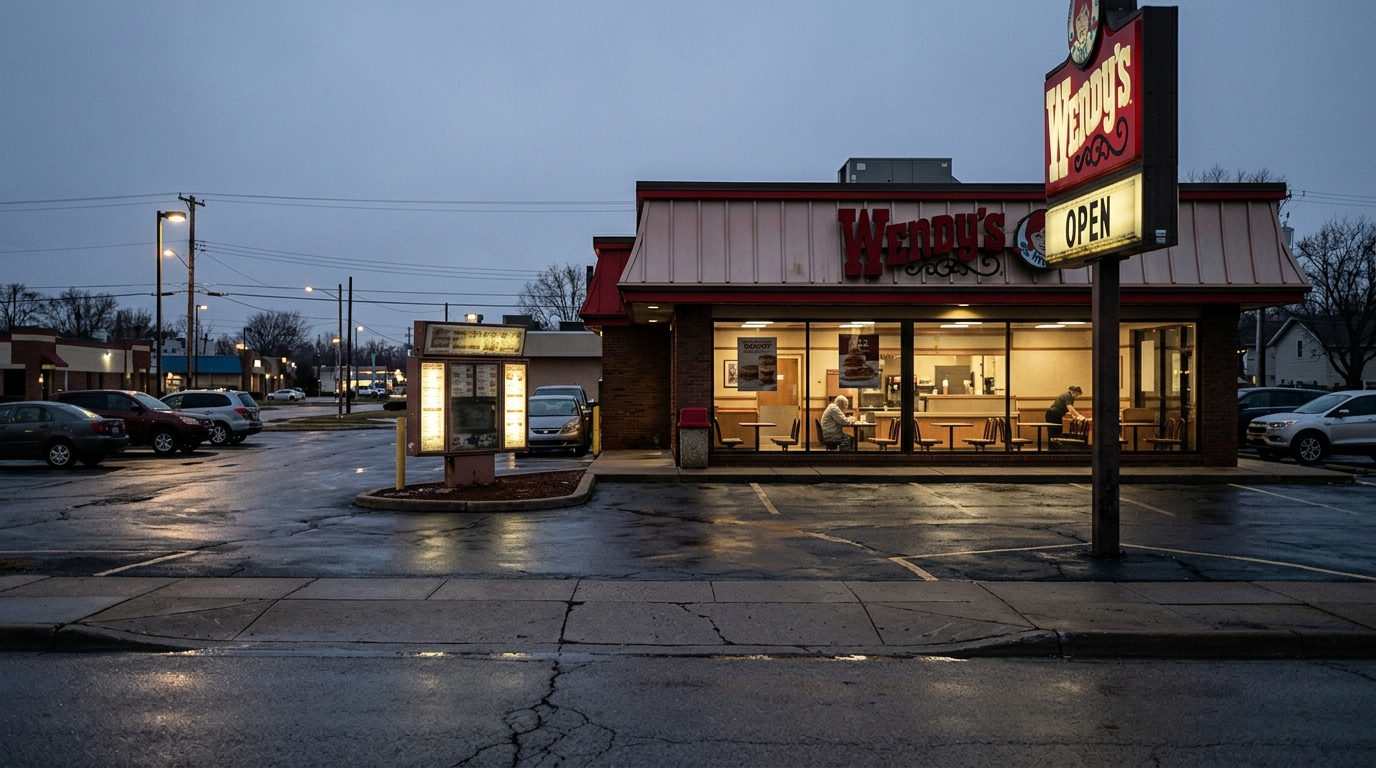
The Wendy’s Debate: Traffic vs. Time
Can the system stabilize before closures and reinvestment fatigue become self-reinforcing?
The Big Question
If you were in an investment committee meeting today, the Wendy’s conversation would not start with valuation. It would start with a timing problem: can Wendy’s stabilize U.S. traffic fast enough to protect franchise economics?
That is the debate because Wendy’s has already done the two things that signal a leadership team is buying time: it cut the dividend and withdrew guidance. On August 7, 2026, the quarterly dividend was reduced to $0.07 from $0.14, and the company pulled its full-year outlook. The Street can debate whether those moves were “prudent” or “painful,” but institutional investors tend to read them the same way: liquidity and flexibility now matter more than signaling confidence.
Once that happens, the franchise model takes over the discussion. The path to recovery runs through a single chokepoint. Traffic must stop falling.
Why Wall Street Cares
WEN sits in an awkward corner of the market. It is small-cap, widely owned by income and consumer staples allocators, and it operates a franchise system where the equity can look optically inexpensive right up until unit economics break.
As of late July 2026, WEN’s market capitalization was roughly $1.5 billion, with about 190 million shares outstanding. In that range, the stock can swing on flows, positioning, and sentiment. That creates tradable volatility, but it also means fundamentals have to reassert themselves through the system, which is slower.
Professional investors care because the “burger complex” has turned into a live share fight again. If Burger King can post another strong quarter while Wendy’s is still contracting, the market starts to treat Wendy’s as the laggard that must prove it can defend relevance. The multiple then becomes a consequence, not a cause.
The Bull Case
The bulls are not blind to the traffic issue. They are underwriting optionality.
First, the reset is real. Cutting the dividend and withdrawing guidance are actions that clear the deck. In an institutional framework, that matters because it reduces the risk of management defending an indefensible plan for another year.
Second, leadership has a coherent operating hypothesis: simplify value, fix marketing, improve execution, and reinvest in stores where returns are defendable. Bob Wright was appointed President and CEO effective May 21, 2026. The finance and strategy seat also matters in a franchise turnaround, and Steve Cirulis has served as CFO and Chief Strategy Officer since June 2026. Investors who have lived through other QSR recoveries will tell you the same thing: if the team can produce sequential comp improvement, the stock rerates before the income statement looks clean.
Third, small-cap characteristics can amplify any credible green shoots. When expectations are low and positioning gets cautious, even modestly better quarter-to-quarter trends can move the tape quickly.
The Bear Case
The bears think the market is still treating this like a standard consumer turnaround. They see a franchise durability issue.
Guidance withdrawal is not just “uncertainty.” It removes the earnings anchor that keeps long-only holders patient. Once guidance goes away, the market looks to traffic and unit economics for its next reference point. If those do not improve, the equity can grind lower even without a headline blow-up.
The other bear argument is structural. When traffic declines persist, franchisees rationally become defensive. They delay remodels, cut labor, and shrink local marketing. Guest experience erodes. That pushes traffic lower. At that point, closures stop being a corporate initiative and start being a system outcome.
Bears also point to competitive momentum. Burger King’s U.S. same-store sales growth has been positive for multiple quarters, and it reported another strong Q2 result in early August 2026. Investors do not need Wendy’s to collapse for the multiple to compress. They only need Wendy’s to keep losing the “close the gap” narrative against an improving peer.
The Evidence
There are five evidence points we think an investment committee would keep on the whiteboard.
- Policy reset (hard signal): On August 7, 2026, Wendy’s cut the quarterly dividend to $0.07 from $0.14 and withdrew full-year guidance.
- Leadership continuity (execution signal): Bob Wright became CEO effective May 21, 2026, and Steve Cirulis has served as CFO and Chief Strategy Officer since June 2026.
- Small-cap trading reality (positioning signal): Late July 2026 market cap was roughly $1.5 billion, with about 190 million shares outstanding. That profile tends to exaggerate both squeezes and air pockets.
- Competitive divergence (industry signal): Burger King reported strong U.S. same-store sales growth in Q2 2026, reinforcing the idea that reinvestment and marketing can still generate traffic in this category.
- Anchor debate (process signal): Without guidance, the stock will trade off incremental comp and traffic evidence. That increases the penalty for “not worse” quarters that still fail to show stabilization.
This is why you see sophisticated investors talk less about “cheap” and more about “sequence.” They want to know what the next two quarters have to look like for franchise confidence to return.
The Mavens’ View
In our read, the professional consensus is cautious, but not fatalistic.
What consensus believes: Wendy’s can stabilize, but it will take time and will likely require a smaller, healthier system. Investors are increasingly comfortable with “right-sizing” if it creates a base that can reinvest and improve unit economics.
The assumption underneath: The brand still has enough equity that value and marketing can bring lapsed customers back once execution improves. That is the bull premise the market has not fully abandoned.
Where the disagreement is: how long “time” is. Bulls believe a sequential improvement cadence is possible within a couple of quarters. Bears believe the system is already in a negative feedback loop where reinvestment slows faster than traffic recovers.
In committee terms, this is the split between “turnaround in progress” and “turnaround not yet investable.” The dividend cut and guidance withdrawal pushed more investors into the second camp until they see evidence that traffic is bottoming.
What Investors Are Missing
The under-discussed second-order effect is capital allocation inside the franchise base, not at corporate.
Most commentary focuses on corporate choices: dividend, guidance, messaging. The bigger swing factor is whether franchisees believe their incremental dollar earns an acceptable return in this system right now. If they do, remodel cadence holds, staffing and service levels stabilize, and the brand has a shot at sequential improvement.
If they do not, the decline can become self-reinforcing even with a capable management team. That is the “time” risk. Not bankruptcy. Not a one-quarter miss. A slow erosion of reinvestment that delays the traffic recovery the stock needs.
One Shark Missed Billions… Another Saw This Coming
Mark Cuban passed on Uber at a $10M valuation only to watch it go public at $80B.
Kevin Harrington, one of the original shark tank investors, invested early in Mode Mobile.
Like Uber turned vehicles into income-generating assets, Mode is turning smartphones into income streams. Deloitte named Mode the #1 fastest-growing software company.
Last chance to invest at $0.52/share. Price changes 8/14.
Please read the offering circular at invest.modemobile.com. This is a paid advertisement for Mode Mobile’s Regulation A+ Offering.
Stocks to Watch
We would frame this as a cluster trade around value perception and reinvestment execution, not a one-ticker situation.
- The Wendy’s Company (WEN): The pure expression of the debate. The next investable signal is sequential improvement in U.S. traffic and comps. Until then, it trades like an option on stabilization.
- Restaurant Brands International (QSR): Burger King’s U.S. improvement is the most direct competitive reference point. If Burger King continues to post strong U.S. comps, it raises the bar for Wendy’s and strengthens the “share shift is real” view.
- McDonald’s (MCD): The category anchor. If value-led initiatives keep MCD traffic resilient, it reinforces the idea that the consumer is still buying, just more selectively. That context matters for how harshly the market judges Wendy’s declines.
- Yum! Brands (YUM): A check on what “good” looks like in QSR right now, particularly around value architecture and marketing cadence across brands. It is less correlated to burgers, but useful as a sentiment and execution benchmark.
The cleanest, evidence-based stance today is straightforward: Wendy’s does not need a heroic outcome to work, but it does need time. The market will not grant unlimited time without traffic stabilization.
Wall St. Mavens