September 2, 2026
Korea faces an AI demand shock. India faces an oil bill. Neither is 1997.
The surface reading of HSBC chief Asia economist Frederic Neumann’s August 31 note is alarming. The current Asian financial environment is strikingly similar to that on the eve of the 1997 crisis: high US Treasury yields, a weak yen, and widespread optimism in the technology sector. The deeper reading is more useful, and it draws a very different map of where the actual danger sits today.
The Tech IPO Set to Be 41X Bigger Than the Google, Microsoft, and Amazon IPOs Combined
Nvidia, Google, Amazon are all loading up on shares.
Here’s a secret backdoor in for regular investors. [Free Ticker]
Why Wall Street Is Paying Attention
Japan’s benchmark borrowing costs rose to their highest level in three decades on Tuesday, after Treasury Secretary Scott Bessent signaled he expects action from Tokyo to support the falling yen. The Japanese 10-year yield rose about 6 basis points to around 3%, nudging above that level for the first time since 1996. The same session saw 10-year Treasury bond yields around 4.79% to 4.80%. The visual symmetry with the late 1990s is hard to dismiss.
Then add Bessent’s direct diplomacy. Bessent said he believes Japan’s government and central bank will take action that leads to a stronger yen, signaling a strong chance of a Bank of Japan interest rate hike in September. USD/JPY stood near 159.75, close to the 160 intervention level. An investment committee watching all of this simultaneously would reasonably ask: is 1997 the right frame?
The Bull Case for the 1997 Comparison
Neumann is not crying wolf. Surging US bond yields, a weak Japanese yen, and tech optimism dominated the financial environment in the lead-up to the 1997 crisis, and Neumann highlighted elevated US Treasury yields as a key similarity. Today, 10-year Treasury yields have climbed from a low around 0.5% in August 2020 to around 4.79%. “This year alone, the yield has jumped some 80bp since 3.9% in February,” Neumann noted. Some regional currencies have also been under pressure this year, but the details matter: the Indian rupee touched an all-time low near 96.82 to 96.84 per dollar in May, the Indonesian rupiah traded through the symbolic 17,000-per-dollar level that evokes the 1997-1998 crisis, and the Korean won hit a 17-year low earlier this year.
World’s Largest Investors Are Moving Their Money (Not Into AI)
While the media distracts you with stories about the next big AI IPO… The world’s largest investors are moving their money into one asset – at the fastest pace in a generation. This asset has crushed the S&P 500’s return over the past 12 months… More than TRIPLED the S&P 500’s return in 2025… and has outperformed the S&P 500 over the past 25 years by more than 1,100 percentage points. According to one Wall Street veteran, with over 40 years of professional investing experience… the biggest gains could be still ahead. That’s why he’s urging you to make one money move now.
Why Contagion Alone Is the Wrong Worry
The 1997 playbook required one specific ingredient: Asian economies borrowing in dollars to fund domestic spending. Unlike in 1997, most Asian economies have now shifted from net capital inflows to net capital outflows, significantly reducing their dependence on external financing. This structural shift means the transmission chain of currency collapse, capital flight, and banking system crisis is much harder to replicate today.
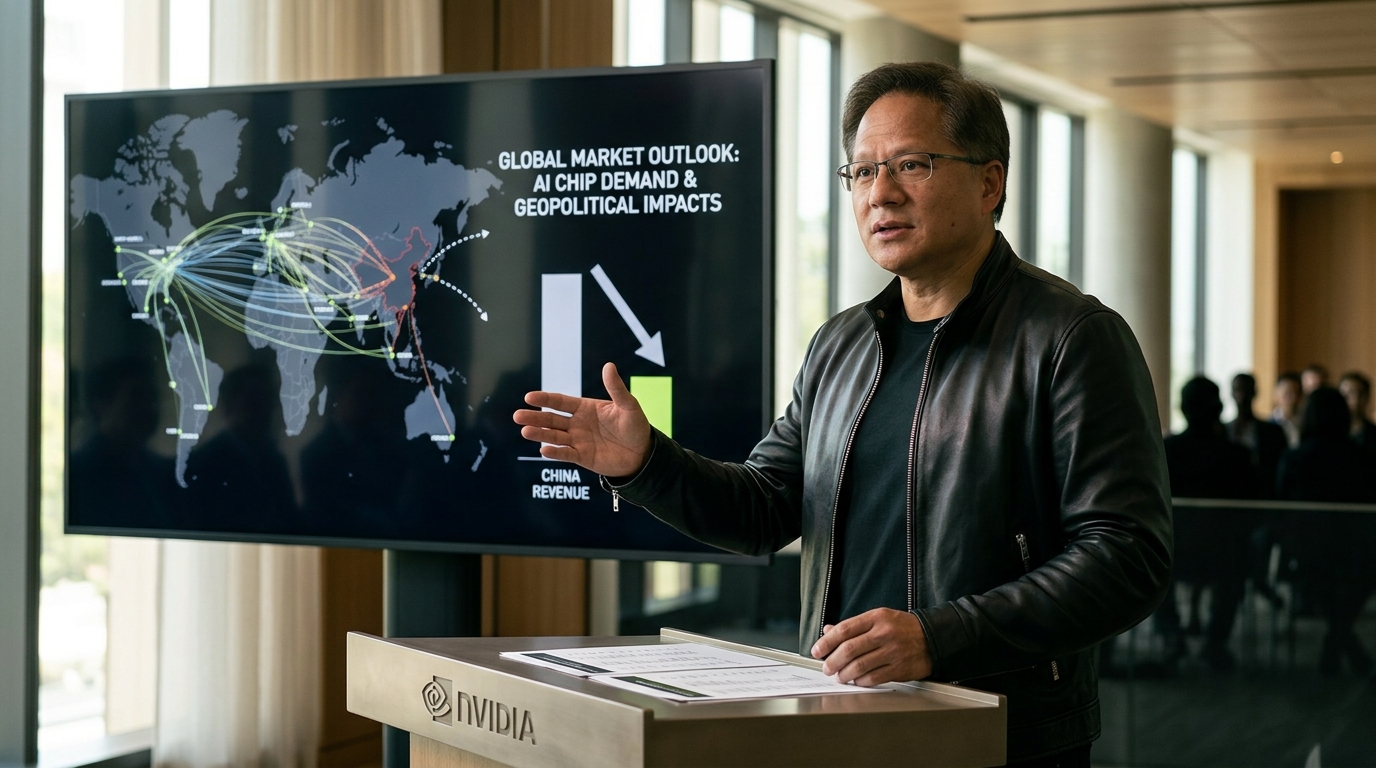
Neumann’s actual warning is more precise. The risk has shifted from financial contagion to a potential slowdown in US AI demand, which is powering Asian electronics exports. He warned that the high dependence of economies such as South Korea, Japan, and Singapore on demand for US AI hardware is becoming the biggest hidden danger hanging over Asia. The crisis mechanism is demand, not debt.
The Evidence: Who Is Actually Exposed
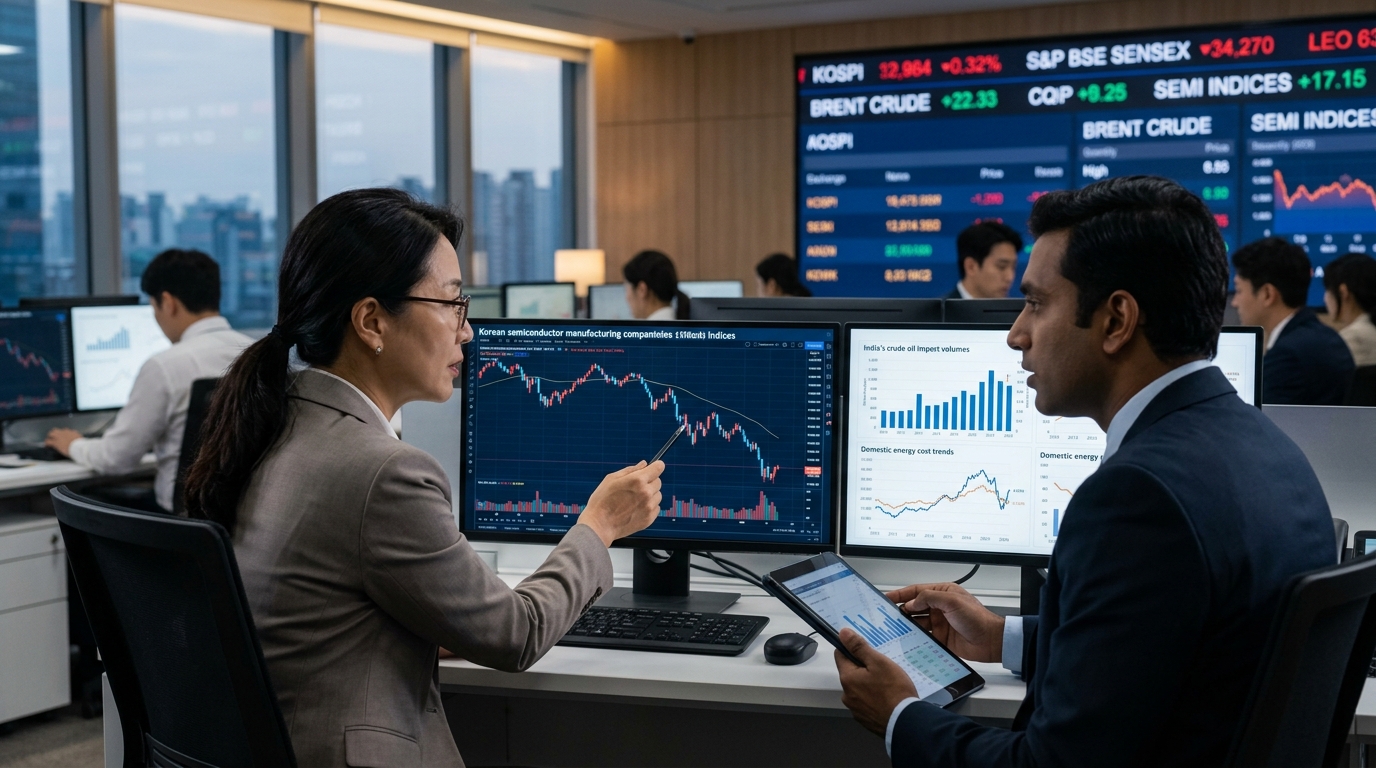
Run that test market by market and the picture sharpens considerably. South Korea carries the most concentrated exposure. SK Hynix is a top holding in EWY at roughly 19% to 21% of the fund, and Samsung Electronics is another roughly 22% to 23%. Together they form both the engine of South Korea’s export economy and the core of the ETF. South Korea’s ICT exports reached a record $47.79 billion in May 2026, rising 128.9% from a year earlier, as semiconductor exports surged to $37.16 billion. That is the upside. The downside is symmetrical: a deceleration in US hyperscaler capex spending would hit Seoul faster than any currency move.
India’s exposure runs through a different channel, one closer to the old 1997 playbook than Neumann’s clean summary implies. The rupee weakened sharply over the last year, with oil shock-driven dollar demand a key mechanism. Geopolitical instability tends to favor the dollar, and India imports most of its crude, magnifying rupee pressure. INDA holders face a twin drag: sticky energy costs widening the current account and a central bank that has spent heavily at times to smooth currency volatility.
Trump Signed 4 Executive Orders in ONE DAY to Bring This American Energy Source Back
And he didn’t stop there.
Trump ordered the U.S. to begin rebuilding the domestic supply chain behind it – after decades of growing dependence on foreign countries.
There’s just one problem: America currently produces only a fraction of the critical material it consumes. But one tiny U.S. company controls more than 30 million pounds of it. The government has already bought from this company before. And today, its shares trade for around $1.50. Now Trump’s historic energy push could put this overlooked company squarely in the spotlight.
EWJ sits in the most ambiguous position. Japan’s bond selloff has drawn attention because the country’s heavy debt burden makes it especially vulnerable to rising borrowing costs. The government assumed a 3% long-term interest rate to calculate debt-servicing costs in its fiscal 2026 budget, and a move above that level adds further strain. A BOJ hike in September theoretically supports the yen, but it also slows a domestic economy still emerging from decades of stagnation.
What Investors Are Missing
The debate has organized itself around two poles: 1997 financial contagion versus AI demand slowdown. Both miss a second-order consequence. There have been observations that a reallocation of funds by Japanese institutions, driven by rising domestic yields, could impact the US Treasury market. If the BOJ hikes in September and JGB yields stay above 3%, Japanese life insurers and pension funds face renewed incentive to repatriate assets parked in US Treasuries. That feedback loop would pressure the very US yields fueling the 1997 comparison in the first place.
The cleaner way to think about EEM broadly is that it now contains two very different stories stitched into one ticker: a hardware export cycle with South Korea at the center, and an energy-import vulnerability with India. Portfolio managers who hold both without distinguishing between them are not running an emerging markets position. They are running two separate risk factors that happen to share a benchmark.
Stocks to Watch
- EWY: The most direct expression of AI hardware demand risk. Heavily concentrated in SK Hynix and Samsung, it moves on US capex signals faster than any macro indicator.
- INDA: Oil price and dollar strength are the primary drivers, not AI. Carries more structural 1997-style vulnerability than consensus acknowledges, given energy import dependence and foreign outflow history.
- EWJ: The BOJ hike expected at the September 17-18 meeting could be positive for the yen but compresses domestic margins. Watch the 10-year JGB: every basis point above 3% tightens Japan’s fiscal math.
- EEM: The aggregate masks the split. Useful only as a hedge vehicle until the Korea/India divergence resolves.
- USDJPY: The single most consequential variable in this debate. A move decisively below 155 on BOJ action would be the first credible signal that the 1997 macro rhyme is breaking down.