July 3, 2026
The World Cup Trade Nobody Talks About
First a note from The Oxford Club
Dear Reader,
Make no mistake, SpaceX’s IPO is going to mint a fortune.
Just not for the millions of people rushing to buy the stock.
Because as history shows time and time again…
The real fortunes didn’t come from chasing the mega-IPO of it’s time.
Instead, the real fortune will flow to a small group of tiny, overlooked stocks caught in what JC calls “The IPO Aftershock.”
Good investing,
Pete Campbell
Publisher, TrendLabs
FEATURED
The World Cup Trade Nobody Talks About
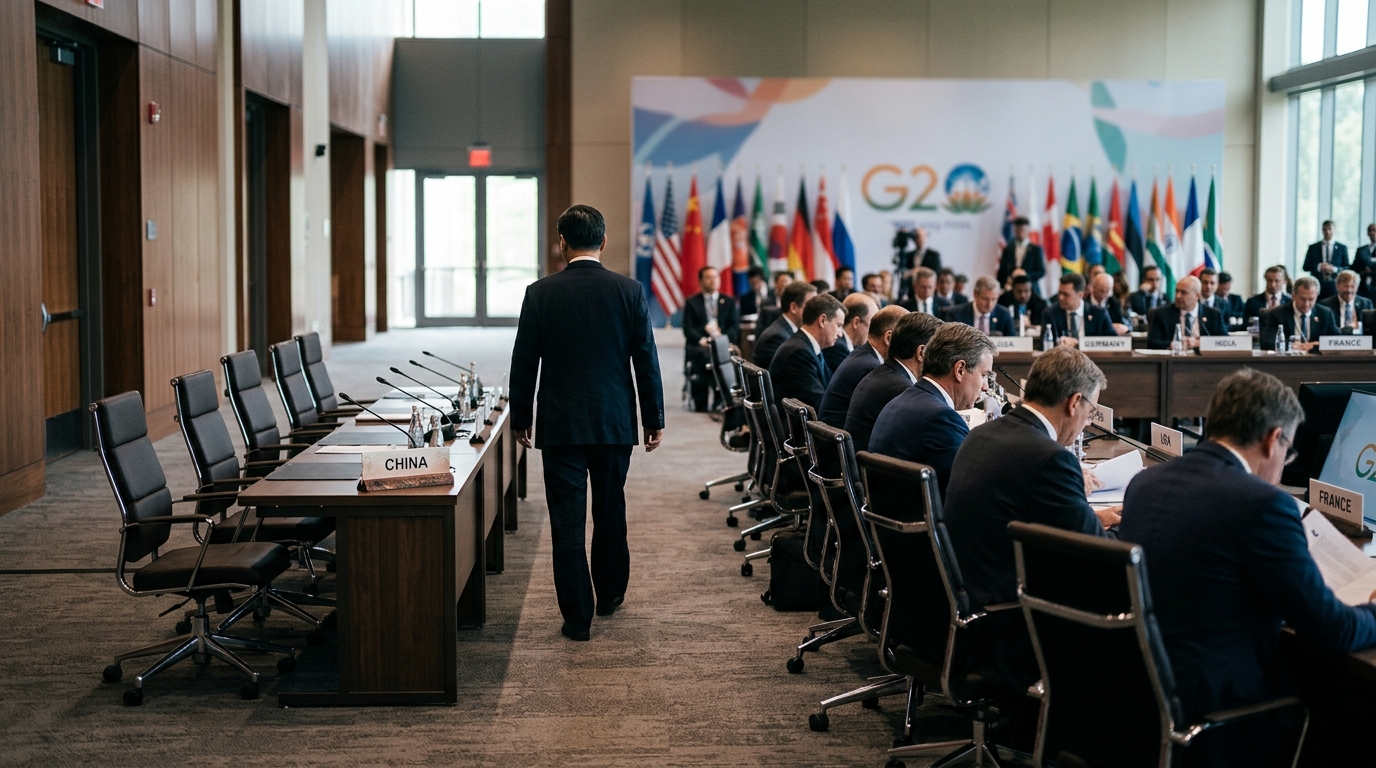
Before the tournament kicked off, the consensus take on the 2026 FIFA World Cup was mostly logistical dread. Sixteen host cities across three countries, visa backlogs, transit strain, security headaches at a scale North America had never attempted for a single sporting event.
The money showed up anyway.
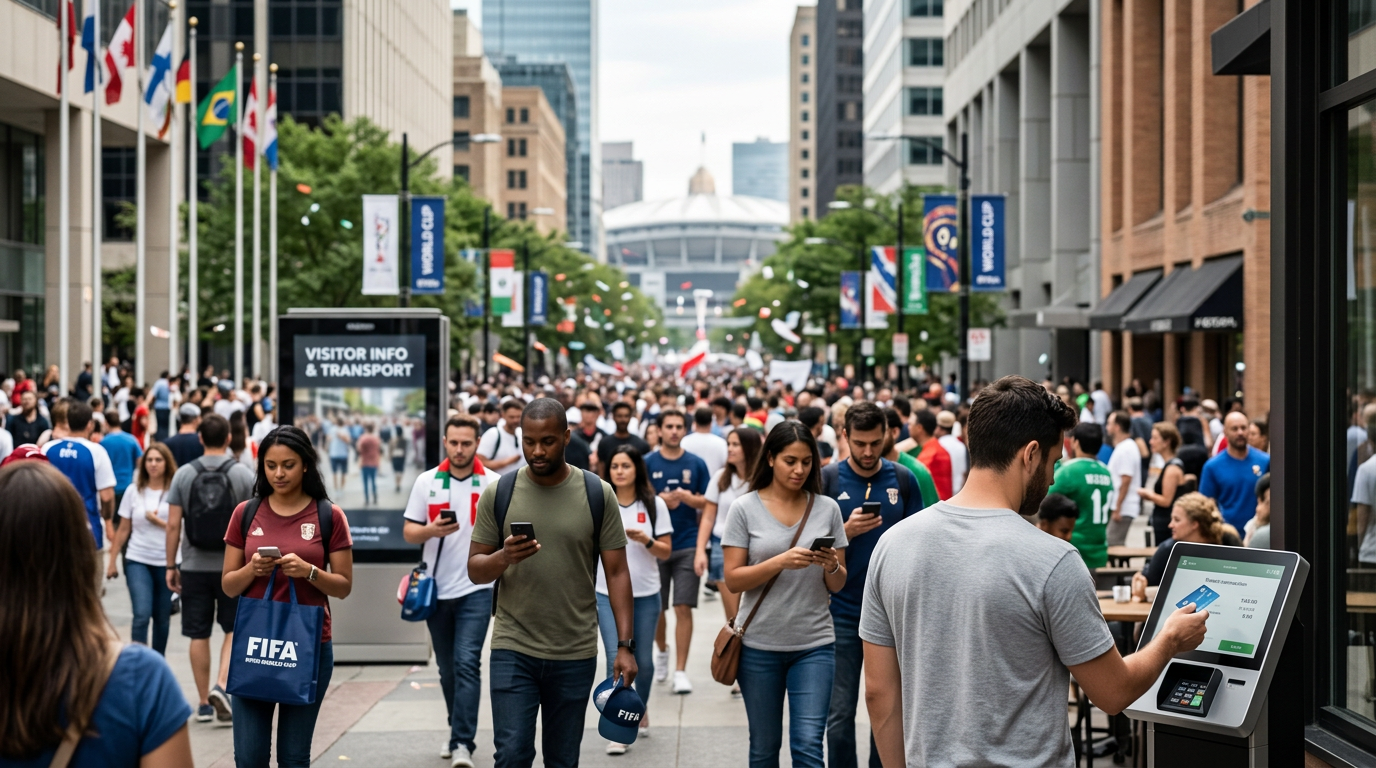
Bank of America card data, which tracks actual spending rather than projections, found that overall purchases in the 16 U.S. host cities are up 6.3% year over year. That number is interesting. The number behind it is more interesting. Non-local visitor spending in those same cities is up 16.7% compared to a year ago. That gap between local and visitor spending is where the investment signal lives.
The Macro Backdrop Makes This Weirder
U.S. domestic consumer sentiment has been under pressure for most of 2026. Real GDP grew just 2.1% in Q1, with personal consumption contributing a modest 0.5%. Americans are cautious. The macro picture is not clean.
And yet, recreation and food services spending climbed meaningfully year over year in host markets. The activity is coming from abroad. Tourists converting euros, pesos, and Brazilian reais into hotel rooms and restaurant tabs in Dallas, Miami, and Los Angeles are effectively importing economic activity into a soft domestic environment. Jorge Mas, managing owner of Inter Miami CF, put it plainly on Fox Business: over 8 million visas were granted for the tournament. “I think it has blown every single expectation that we had out of the water,” he said.
For investors, this dynamic matters because it is additive, not redistributive. A Colombian fan who flew in from Bogota and booked five nights at a Marriott in Houston is not replacing a domestic traveler. That is incremental demand.
“A Dangerous Financial Plan Unfolding in D.C. Could Cost You 40% of Your Wealth”
Former Goldman Sachs executive who traded through Black Monday warns this plan is all written down in black and white, spearheaded by a financial insider who infiltrated the Federal Reserve… It’s gone “viral” in the hedge fund circles… and yet practically nobody on Main Street understands this financial shock playing out across America. He lays out all the evidence… plus a detailed roadmap for exactly what to do. (And it doesn’t require shorting… options… or perfectly “timing the market.”)
Who Actually Captures It
Allianz Trade estimates the tournament will generate roughly $9 billion in North American GDP during June and July, with foreign tourism spending expected to increase by $8 billion across the three host countries. The biggest sectoral beneficiaries are transportation, accommodation, food services, entertainment, and retail. Worth noting: some economists caution that these projections tend to be optimistic, and Natixis CIB research flagged that hotel bookings in several host cities came in below initial expectations ahead of the tournament.
But the more useful framing for investors is not who benefits from the World Cup in general. It is which public companies can convert that visitor demand into pricing power, margin expansion, or recurring behavior. That is a much shorter list.
Payment networks first. Visa (V) reported fiscal Q2 2026 net revenue of $11.2 billion, up 17% year over year, with cross-border volume growing 12% on a constant-dollar basis. Mastercard (MA) posted cross-border volume growth of 13% in its latest quarter. Both companies sit directly inside every hotel booking, rideshare, restaurant charge, and merchandise purchase a foreign fan makes. Visa has been the official FIFA payments partner since 2007 and is actively rolling out contactless payment technology at all 16 host cities this cycle. Every tap-to-pay moment is their transaction. On the Q2 earnings call, Visa management explicitly flagged improving U.S. and Latin America inbound volumes tied to World Cup enthusiasm as a driver for Q3. Visa was trading near $360 as of early July, and Mastercard near $540. Both are quality compounders with a multi-week cross-border volume tailwind that will show up in Q3 earnings.
Hotels are the next read-through. Marriott (MAR) confirmed Q1 2026 adjusted EBITDA up 15% to $1.398 billion, with worldwide RevPAR growing 4.2% year over year on a constant-dollar basis and a development pipeline of nearly 618,000 rooms. Hilton (HLT) posted $901 million in adjusted Q1 2026 EBITDA, up 13%, with systemwide RevPAR up 3.6% on a currency-neutral basis. These are not distressed valuations hunting for a catalyst. They are high-quality operators getting a meaningful demand spike in precisely the markets where premium room pricing holds. Hotel prices on game days across host cities are running more than 31% above baseline levels, per Lighthouse Intelligence. A foreign fan following their national team through three cities over three weeks is exactly the right traveler for these businesses.
Booking Holdings (BKNG) is the less obvious angle. The 2026 tournament stretches across three countries and 16 cities. A fan may begin in Mexico City, travel to Dallas, continue to Los Angeles, and finish in New York. That kind of multi-city itinerary is nearly impossible to manage independently. Booking Holdings thrives when travel becomes complicated. The company operates one of the largest online travel ecosystems in the world through Booking.com, Priceline, Agoda, Kayak, and OpenTable, capturing the full itinerary stack rather than one transaction within it.
The Risks Worth Running
This is not a buy-everything-adjacent-to-soccer trade. Analysts and economists have consistently found that actual economic gains from mega-events frequently fall short of projections, particularly in large, mature economies. Crowding-out effects are real. Regular tourists sometimes avoid host cities during major events, partially offsetting the positive impulse. Margin compression is real. Restaurants under labor pressure and hotels absorbing event-related service costs do not always convert more revenue into more profit.
There is also this: international tourism to the United States softened in 2025, and high ticket and travel costs have constrained some of the spending that early projections assumed. The actual economic lift may be real but more modest than the headlines suggest.
The more useful filter here is to prioritize companies that benefit from cross-border transaction volume rather than venue-specific foot traffic. Visa and Mastercard capture the spending regardless of which city it happens in. A restaurant near a stadium in Kansas City might have its best week ever, or it might face staffing chaos and break even.
The expanded 48-team format draws more attendees from markets like Latin America, West Africa, and Southeast Asia where spending per fan runs lower than European tourists on average, but volume more than compensates. Broadcast networks holding World Cup rights are expected to generate more than $500 million in advertising revenue from the tournament, adding media and entertainment as secondary beneficiaries worth watching.
STOP SELLING On Fridays…
Every late Friday afternoon like clockwork, traders close their positions for the week. But not this veteran trader.
He’s loading up knowing breaking after-hours news is about to drop that’ll have you desperate all weekend and scrambling to buy back shares on Monday morning at twice… even triple what you sold them for.
All the while he gets to bank as much $16,159 or more just for holding shares over the weekend.
The Calendar Is Your Edge
Here is what is easy to overlook heading into the holiday weekend. The tournament knockout rounds run through mid-July. Q3 earnings season opens around July 14. Payment networks, hotel operators, and travel platforms will all report with actual World Cup spending embedded in their numbers for the first time. Not projections or analyst estimates, but real card volume and real RevPAR data from the most geographically dispersed sporting event ever staged. Visa reports July 28. That is the first hard read on whether the cross-border lift showed up in the numbers.
The Bank of America visitor spending pace, currently 16.7% above year-ago levels, is the number to watch through July. If that holds into the knockout rounds, the Q3 earnings revisions for cross-border-exposed businesses will be material. If it fades, the opportunity closes before it fully opens.
- Primary beneficiaries: Visa (V), Mastercard (MA) — cross-border volume tailwind visible in Q3 earnings; Visa reports July 28
- Secondary beneficiaries: Marriott (MAR), Hilton (HLT) — RevPAR lift in 16 host markets; hotel prices on game days running 31%+ above baseline
- Contrarian angle: Booking Holdings (BKNG) — complexity of multi-city itineraries drives platform value
- Key data watch: BofA host-city card spending through July, specifically the visitor vs. local spending gap
- Risk: Crowding-out of regular tourism; margin compression in venue-proximate businesses; softer-than-expected hotel bookings in some markets
The domestic consumer is cautious. The foreign visitor is not. That divergence is temporary, and it is still running.