August 8, 2026
Who Owns the Secrets Apple Says Were Stolen?
Featured: Who Owns the Secrets Apple Says Were Stolen?
A note from our Sponsor
Jon Najarian just made a massive prediction about SpaceX…
He believes Elon has something even bigger planned…
An event that could soon be worth over $44 TRILLION.
And by staking a claim now, you can potentially profit from Elon’s $44 trillion wealth event.
But you’ll want to move fast…
Click here now for the full story from Jon Najarian himself.
P.S. Fact is, this event may be your last chance to profit thanks to Elon Musk.
He launched reusable rockets, internet from space, mass market EVs… And while Elon’s ultimate goal is to get to Mars, that could be decades away… Which is why this $44 trillion wealth event could be your FINAL chance to profit thanks to Elon in your lifetime.
Who Owns the Secrets Apple Says Were Stolen?
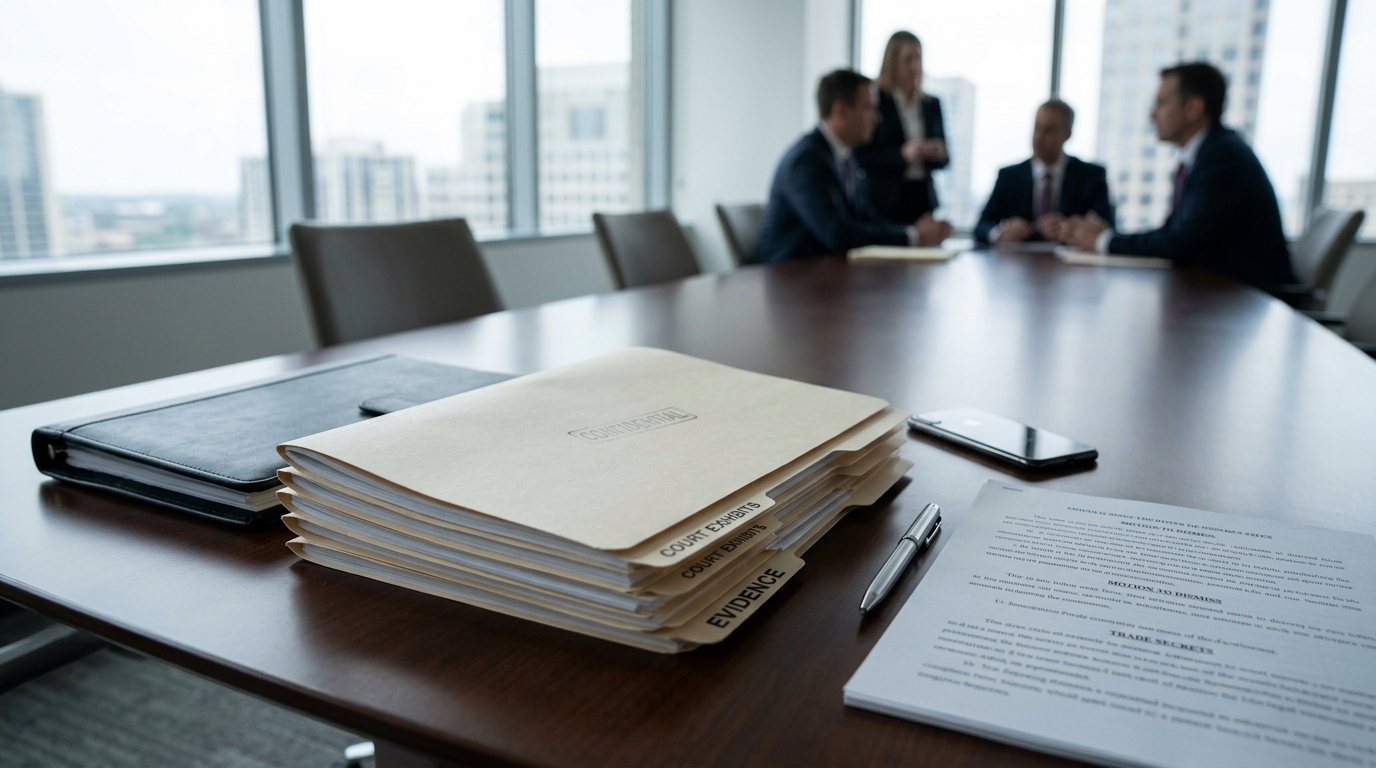
The central question in the Apple versus OpenAI litigation was supposed to be whether former Apple engineers carried confidential hardware information out the door. OpenAI’s August 5 motion to dismiss reframes the entire argument. It does not contest that access occurred. It contests whether Apple ever had the right to call that access theft.
That distinction matters enormously in federal trade secret law, and it is the reason this case deserves more serious investor attention than it has received.
The Big Question
Can Apple survive a federal trade secrets claim when its own offboarding policies may have created the access it is now calling theft?
This is not a hypothetical. OpenAI’s 31-page motion to dismiss argues that the “residual access” Apple is calling theft was created not by OpenAI’s engineers but by Apple’s own policy of letting employees use personal iCloud accounts for work, and by Apple’s subsequent failure to revoke that access properly when those employees left. The motion attacks the foundational legal requirement Apple must satisfy before any trade secret claim can proceed: that it took reasonable measures to keep the information secret. No reasonable measures, no trade secret. No trade secret, no case.
Why Wall Street Cares
AAPL closed at $312.41 on August 6, with a market capitalization of approximately $4.56 trillion and a 52-week range of $216.58 to $344.57. The stock’s record close of $344.57 was set just ten days earlier, on July 29. What happened between that record and the current price is a combination of mixed earnings reaction and the accumulating weight of this litigation, now entering its most consequential stretch.
The dispute centers on competition for future AI devices that may not rely on traditional apps or operating systems and could draw attention away from the iPhone. This is not litigation over something peripheral. OpenAI is building a direct consumer hardware product, and Apple filed its original complaint on July 10 precisely because it understands what that product could do to its ecosystem over the next three to five years.
The calendar has become a trading variable. Apple must submit a written response to OpenAI’s motion to dismiss by August 19, 2026, with the full hearing scheduled for October 1, 2026, in San Jose federal court. Between those two dates, institutional positioning around AAPL will reflect legal risk assessment as much as earnings fundamentals.
The Bull Case: Apple’s Legal Architecture Holds
Apple’s complaint is not thin. Apple identifies Chang Liu as a former senior systems electrical engineer who spent eight years at the company before joining OpenAI in January 2026, alleging that Liu retained an Apple-issued Mac after his employment ended and used residual access to retrieve confidential files, including engineering presentations, specifications, and information about unreleased hardware, with the access continuing after he had already begun working for OpenAI.
Apple also alleges another former employee took screenshots of confidential documents concerning an unreleased product shortly before interviewing with OpenAI, and that multiple former employees later contacted the company about returning Apple-issued work devices they had retained after leaving. That pattern of conduct, if established, is far harder to dismiss as accidental.
The Rivos precedent is meaningful here. Judge Edward Davila found in August 2023 that Apple had sufficiently identified its trade secrets and alleged sufficient harm for individual-level claims to proceed, though he dismissed corporate-level claims against Rivos for insufficient allegations of how individual misconduct could be imputed to the corporation. Apple’s individual-level claims survived once. The question is whether the corporate imputation argument fails again.
A preliminary injunction requires Apple to show it is likely to succeed on the merits, that it would be irreparably harmed without the injunction, that the balance of harms favors it, and that the public interest favors the injunction. Apple’s filing told the court directly that it would be irreparably harmed without relief. Whether the judge agrees depends on what the August 19 response contains.
The Bear Case: Apple Built the Vulnerability It Is Now Litigating
OpenAI’s motion does not read like procedural boilerplate. The filing portrays the lawsuit as an effort to compensate for Apple’s struggles to retain talent and keep pace in AI, with variations of the word “fail” appearing nearly 50 times across the 31 pages. That is a document written to persuade, not merely to preserve.
The evidentiary core of OpenAI’s argument is specific. OpenAI submitted records showing an Apple manager remained logged into former engineer Chang Liu’s personal account after he left the company, later seeking his help with technical questions. OpenAI argues that any access issues stemmed from Apple’s own practices rather than theft. That is a difficult factual claim for Apple to rebut, because the exhibit exists.
OpenAI also claims Apple reviewed personal iMessages left on corporate devices and created internal confusion by encouraging employees to use personal iCloud accounts for work purposes. The legal formulation OpenAI uses is precise: “Apple cannot transform the foreseeable consequences of its own systems and policies into evidence of theft by former employees who were not aware of their latent access.”
If OpenAI successfully argues at the October 1 hearing that Apple’s own policies eroded its trade-secret protections, it may be able to defeat the injunction even if the underlying case survives. That is the bear scenario in condensed form: Apple wins on the motion to dismiss question but loses on the injunction, leaving OpenAI’s hardware timeline intact.
The Evidence: What the Device Actually Is
The hardware that sits at the center of this dispute came into sharper focus this week. OpenAI’s first hardware device is reportedly a donut-shaped speaker loaded with ChatGPT, priced between $300 and $400. The battery-powered device, roughly the size of a hockey puck, is being developed in partnership with LoveFrom, the design studio founded by former Apple chief design officer Jony Ive, whose io hardware startup OpenAI acquired for $6.5 billion.
Bloomberg noted that the device’s timeline could change depending on the outcome of Apple’s lawsuit. That is a remarkable admission sitting inside a product preview. The legal calendar and the product calendar are now explicitly linked.
OpenAI currently reaches most consumers through devices and operating systems controlled by Apple, Google, Microsoft, and others. Its own device would give the company a direct consumer interface, control over the sensors feeding context into its models, and a new hardware revenue stream beyond subscriptions and APIs. That is why Apple sued when it did, and why the October 1 hearing is not routine scheduling.
Apple Price Hikes Reveal Mode’s Big Opportunity
Apple will potentially raise prices on Macs and iPads by $200 or more, another reminder that the devices we rely on keep getting more expensive.
Mode Mobile, is building the countertrend: technology that turns everyday smartphones into income-generating assets.
Its EarnOS platform has already helped users earn and save $1B+, reached 490M+ users, and powered 32,481% three-year revenue growth, earning Deloitte’s #1 fastest-growing software company ranking.
Now, Mode has secured the Nasdaq ticker $MODE, and its pre-IPO investment offering is open at $0.52/share with up to 20% bonus shares. But that window is closing fast.
Please read the offering circular at invest.modemobile.com. This is a paid advertisement for Mode Mobile’s Regulation A+ Offering.
The Mavens’ View: What Institutional Investors Are Actually Debating
The investment committee conversation is not about whether Apple wins this lawsuit. It is about what the case reveals and what it costs regardless of outcome.
The reveal: Apple’s AI transition is proceeding under competitive and legal pressure simultaneously. The company announced in January 2026 that Google Gemini would power next-generation Siri capabilities, effectively ending the OpenAI partnership that had been formalized in June 2024. The lawsuit followed the deterioration of that relationship and the acquisition of io Products by OpenAI. These are not isolated events.
AAPL fell more than 9% over the five days ending August 4, following mixed earnings results. Evercore ISI’s Amit Daryanani reiterated a Buy rating and a $365 price target, citing consumer demand and AI monetization potential from Apple’s installed base. China Renaissance moved in the other direction, downgrading from Buy to Hold with a $280 target. Across 31 analysts surveyed by TipRanks, the average 12-month price target for AAPL stands at $333.18. The spread from $215 to $400 in current analyst targets tells you the market has not resolved its view of Apple’s AI competitive position.
The legal cost is real regardless of how the case ends. Discovery, if the motion to dismiss is denied, will surface internal communications about Apple’s offboarding practices, its iCloud policy decisions, and how it managed credentials for departing employees. That material becomes part of the public record. For a company whose brand depends substantially on the perception of its security and design discipline, that exposure carries value beyond the courtroom.
What Investors Are Missing
The coverage has focused on whether the injunction will land. Almost nobody is discussing what happens to Apple’s future trade secret enforcement posture if the iCloud offboarding argument gains traction in court.
Apple is a company that depends on secrecy as a competitive advantage. Unreleased products, supplier relationships, component specifications, manufacturing processes. The legal doctrine protecting all of that requires the same reasonable measures standard that OpenAI is attacking here. If a federal judge finds those measures inadequate in a case this prominent, Apple’s ability to bring future trade secret claims against departing employees or competitors is materially weaker. That is a second-order consequence that current analyst models are not pricing.
If the case survives the motion to dismiss, discovery could expose sensitive details about both companies’ hiring, hardware development, and data-security practices. The disclosures that would emerge from a full discovery process in this case are a risk to Apple’s institutional reputation that is harder to quantify than AAPL’s support level but potentially more durable in its effects.
There is also a Foxconn angle worth tracking. The OpenAI device is being developed in partnership with LoveFrom, but manufacturing at scale requires a contract partner with the capacity to build tens of millions of units. A preliminary injunction that halts hardware development removes a meaningful near-term order pipeline from any supply chain partner positioned to build the device, while simultaneously signaling to those same partners that OpenAI’s hardware ambitions carry litigation risk.
Stocks to Watch
Apple (AAPL). Shares closed at $312.41 on August 6, with a market cap of approximately $4.56 trillion, trading at 35.87x trailing earnings. The stock is caught between a strong Services business generating record revenue and a hardware and AI strategy under simultaneous competitive and legal pressure. The August 19 response filing is the next catalyst with a defined date. A well-constructed reply that addresses the iCloud offboarding gaps with specificity and grounds Apple’s reasonable measures argument in concrete policy documentation would shift institutional sentiment before October 1 arrives. Evercore ISI at $365, China Renaissance at $280. The range reflects genuine uncertainty, not analyst noise.
OpenAI (private). OpenAI acquired io Products for $6.5 billion, its largest deal to date, specifically to accelerate the hardware program now under legal scrutiny. No public equity is available. The litigation is a direct IPO timing variable: any registration statement filed while a preliminary injunction motion is pending would require disclosure of the legal risk as a going-concern item. A hardware injunction that delayed the device timeline by 12 to 18 months would reset the revenue assumptions supporting the company’s last reported private valuation of $852 billion. That is not a theoretical risk for secondary market buyers at those levels.
Foxconn (2317.TW). The company has diversified beyond Apple assembly into EV components, servers, and AI hardware, with the OpenAI device representing a meaningful near-term opportunity in the AI hardware supply chain. Bloomberg noted the device’s timeline could shift depending on the lawsuit’s outcome. A preliminary injunction that pauses hardware development damages not just the order pipeline but the strategic relationship OpenAI has been building with contract manufacturers as an alternative to Apple-centric supply chain arrangements. Watch Foxconn’s AI device segment disclosures in Q3 reporting for any signals about order status.
Cirrus Logic (CRUS). A key Apple audio chip supplier whose fortunes track iPhone and Apple hardware cycles closely. KeyBanc recently lowered its price target on Cirrus Logic, consistent with broader concerns about Apple’s hardware trajectory. If the legal outcome reduces execution uncertainty around Apple’s AI device roadmap and allows management attention to return fully to product development, Cirrus Logic is an indirect beneficiary with more leverage to an Apple recovery than AAPL itself.
Broadcom (AVGO). Apple’s $30 billion chip deal with Broadcom, reported in July 2026, reflects the company’s sustained commitment to custom silicon regardless of the litigation backdrop. Broadcom benefits whether Apple wins or loses in court: Apple hardware continues, and Broadcom’s revenue from the relationship is contractually anchored. For investors who want Apple ecosystem exposure without the binary legal event risk, Broadcom offers a cleaner line of sight to the same underlying demand.
Scenario Map: August 19 Through October 1
Bull case for AAPL. Apple’s August 19 filing directly rebuts the iCloud offboarding evidence with documentation showing that the access Liu retained was a technical anomaly, not a policy failure. The court denies OpenAI’s motion to dismiss, finds Apple’s trade secret descriptions sufficiently specific, and issues a preliminary injunction at the October 1 hearing pausing OpenAI’s hardware development pending trial. The competitive threat to Apple’s hardware ecosystem is delayed by 12 to 24 months. AAPL moves back toward $335 to $345 as the market removes the AI hardware competitive discount. The condition: Apple’s legal team must produce a document that addresses the exhibits OpenAI filed, not just reassert the original complaint’s framing.
Base case. The court denies the motion to dismiss, finding the complaint sufficient to proceed under the Rivos framework, but declines a broad preliminary injunction covering all hardware development. Instead, a narrower evidence-preservation order issues, and both companies enter discovery running through 2027. OpenAI’s device timeline slips modestly; its engineering teams work around defined restriction zones while the litigation proceeds. AAPL stabilizes between $305 and $320. The reputational dimension of Apple’s iCloud policy exposure becomes a secondary story during discovery. Most likely outcome given current precedent and the specificity of Apple’s individual-level claims.
Bear case for AAPL. The court grants OpenAI’s motion to dismiss in substantial part, finding Apple’s trade secret descriptions too generic under the DTSA’s particularity requirement and citing the iCloud offboarding exhibits as direct evidence that Apple failed the reasonable measures standard. The preliminary injunction is denied. OpenAI’s hardware development continues unimpeded toward a late 2026 announcement. AAPL tests $270 to $285 as the market prices both the litigation loss and the removal of legal friction from OpenAI’s competitive hardware timeline. The Rivos precedent makes full dismissal unlikely, but a partial dismissal of the corporate-level claims paired with an injunction denial would carry nearly equivalent strategic damage for Apple.
Trading Framework
Two defined catalysts between now and October 1. The August 19 response filing is the first. It arrives before the hearing, before any judicial ruling, and before most options traders will have repositioned for October. Watch how the stock reacts to that document on the day it hits the docket: institutional legal risk assessment happens fast, and the initial directional move on August 19 will reflect how sophisticated money reads Apple’s ability to rebut the iCloud exhibits.
AAPL’s record close was $344.57, set July 29. The stock has given back roughly 9.5% of that peak in ten trading sessions. The $295 to $305 zone is the next meaningful support range, defined by the consolidation base from Q1 2026 and the stock’s 200-day moving average. A close below $295 on elevated volume would signal that institutional money is pricing litigation risk as structural rather than temporary, not merely headline noise around a case expected to resolve in Apple’s favor.
Resistance sits between $318 and $325. Reclaiming that range requires either a convincing August 19 filing or a broader technology sector bid. Neither is guaranteed before October.
One structural note for options traders. Federal judges on preliminary injunction motions routinely take matters under submission after the hearing and issue written rulings days or weeks later. A position structured for October 1 resolution may carry uncertainty well into mid-October. The implied volatility curve on AAPL already reflects some event premium in the October cycle. Entering long volatility positions at current levels requires a price move large enough to overcome elevated time decay. Size positions accordingly. This is a binary legal event, not an earnings report with a defined release time.
The Bottom Line
The Apple versus OpenAI case began as a complaint about hardware secrets. It represents an early legal skirmish in a battle that could stretch for years and expose sensitive details about both companies’ internal operations. OpenAI’s motion reframes the entire proceeding as a test of whether Apple’s own security architecture meets the legal standard required to protect the information it is now claiming was stolen.
That is a harder argument for Apple to win than it appears, and it is the argument the court will actually decide on August 19 and October 1. The hardware war between these two companies will not be resolved in San Jose. But the October 1 hearing will determine whether it is fought on OpenAI’s timeline or Apple’s. That distinction has a price.
Wall St. Mavens is published for informational and educational purposes only. Nothing here constitutes investment advice. All investments involve risk, including possible loss of principal.