
June 10, 2026
Costco Is Winning the Squeeze
Why stagflation keeps sending shoppers to the warehouse
First a note from Stansberry Research
Editor’s Note: Marc Chaikin, the 60-year Wall Street legend who called Nvidia before it soared 45,000%, just came forward with another huge opportunity he’s spotted in the AI space. It’s a way to get backdoor pre-IPO exposure to SpaceX – and I haven’t heard anyone else talking about it. With the IPO date looming, this note from Marc is extremely time-sensitive, so take a moment now to read it.
Dear Reader,
One simple trade you can make in your brokerage account today can unlock a backdoor to pre-IPO exposure to SpaceX before it goes public.
Get in position now, and you could look forward to benefiting from as high as a $122 billion windfall on IPO day.
That’s a payout worth more than the market cap of most publicly traded companies.
WARNING: You only have days left to make this play before SpaceX goes public.
Get all the details of this trade right here…
Sincerely,
Marc Chaikin
Founder, Chaikin Analytics
P.S. I highly suggest you do NOT buy into the SpaceX IPO on day one, because share prices could become extremely unstable. This backdoor way in before the company goes public is a much better way to get your piece of the SpaceX pie. Click here to see how…
Costco Is Winning the Squeeze
Here is what keeps standing out to me when I look at the consumer spending picture right now.
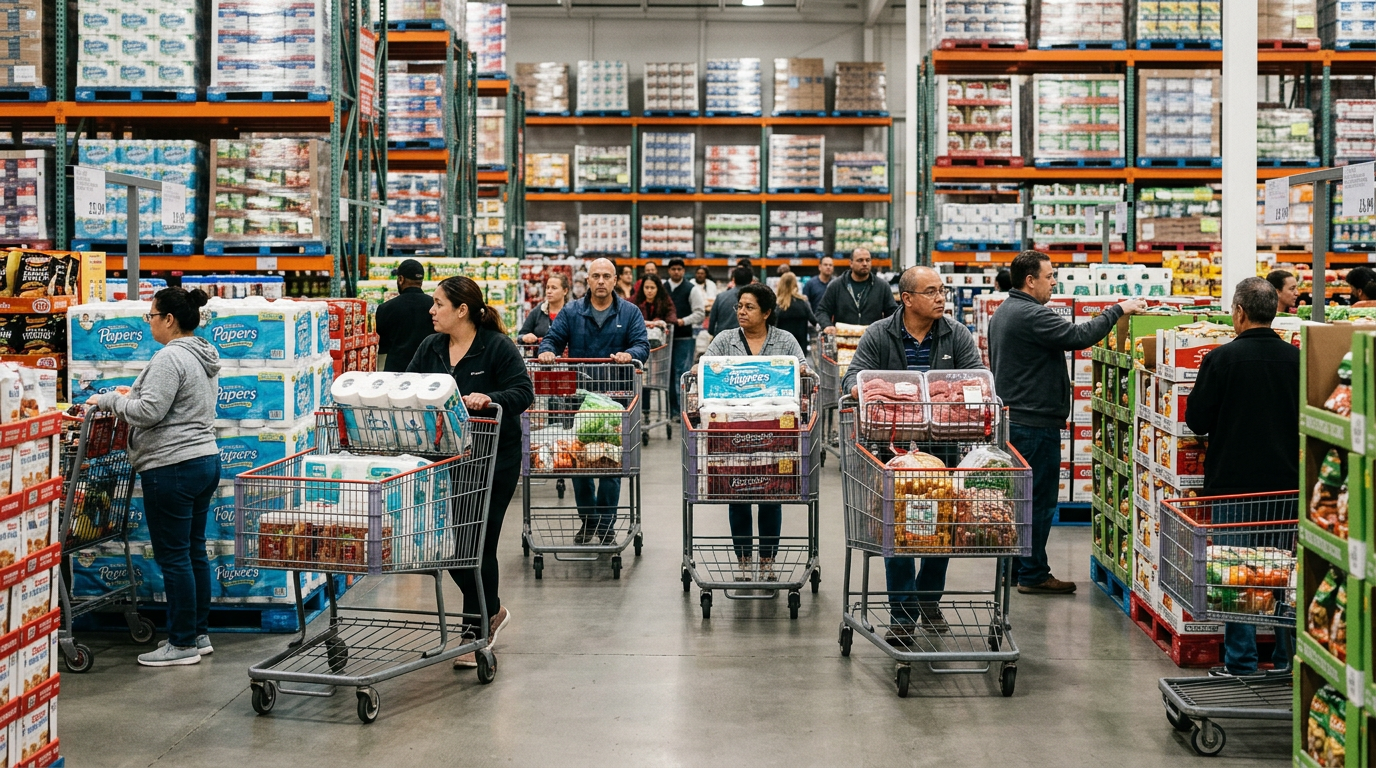
People are not breaking. They are just getting smarter about where the money goes. Inflation has been sticky longer than most expected. Tariffs are quietly pushing product costs higher at the shelf level. And the consumer response, pretty much across every income bracket, has been the same: consolidate. Buy more of the things you need, buy them somewhere that gives you a better deal per unit, and stop splitting your grocery run between four different stores. That behavioral shift has a very clear winner, and it has been obvious for a while now.
Costco ($COST) is that winner.
The numbers are not subtle. Revenue came in at $70.53 billion for the quarter ending May 2026, up 11.6% year over year, with trailing twelve-month revenue sitting at $293.59 billion. Sales grew 8.2% and digital sales jumped 20.5% in Q1 fiscal 2026 versus the prior year period. Membership fee income climbed roughly 14% in Q4 2025, driven by higher paid member counts, tier upgrades, and a fee increase that members absorbed without much pushback. Renewal rates are 93% in the U.S. and Canada and close to 90% internationally. That last number is the one I keep coming back to. You do not hold renewal rates that high unless people genuinely feel like they are getting something most other retailers cannot offer.
The part people skip is who exactly is shopping there.
This is not a story about low-income households stretching their budget. Costco has seen higher sales across income levels as consumers look for value on groceries, household essentials, and more. That is a different customer base than the one discount retailers typically rely on, and it means the addressable market for this trade is larger than it looks at first glance. When even comfortable households start optimizing, that is a durable spending shift, not a temporary one.
Kirkland Signature deserves more attention than it usually gets. Costco has been rolling out new Kirkland items specifically as alternatives to products affected by tariff-driven cost increases. A strong private label in an inflationary environment is not just a margin story. It is a retention tool. It gives members a reason to stay even when branded goods get more expensive.
79% of consumers say they have changed their behavior because of tariff-driven price increases, with many responding by buying in bulk or switching stores. Nearly half of U.S. consumers surveyed say they plan to delay purchases over the next three months. Those two data points together describe exactly the environment Costco was built to absorb.
Analysts have been increasingly vocal about it. The general view is that COST delivers a value proposition that lands harder when consumers are price-sensitive, and right now price sensitivity is not going away. The macro pressure is doing the marketing for them.
What I am still watching is how long the wallet squeeze actually lasts. If rates stay elevated and tariffs do not roll back meaningfully, the runway here is longer than the stock might already be pricing in. That is the open question. And it is not a small one.