June 28, 2026
Small Caps Had a Big Year. Now Comes the Hard Part.
The rotation worked. The Warsh Fed just changed the math going forward.
For most of 2026, the story was almost too clean. Small caps outperformed. The equal-weight index beat the cap-weight index. Institutional money rotated out of the Magnificent Seven into domestic, rate-sensitive, real-economy companies.
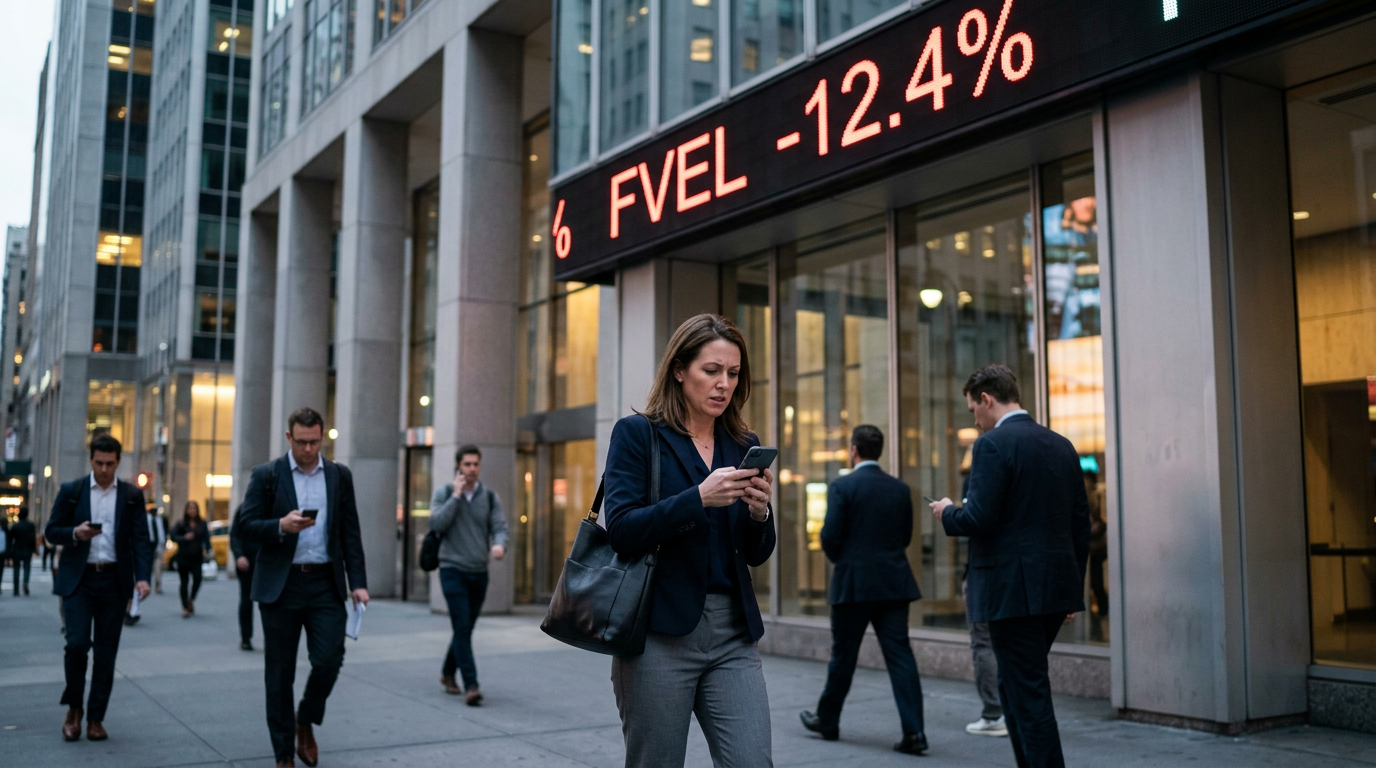
The Russell 2000 is up close to 19% year to date as of late June, compared to roughly 8% for the S&P 500. The thesis held. Then Kevin Warsh walked into his first press conference on June 17 and the math got a lot more complicated.
The structural case for the rotation was real. Nearly 40% of Russell 2000 constituent companies carry floating-rate debt. When the Fed cut rates three times in the back half of 2025 — three consecutive 25 basis point reductions — the relief hit small-cap balance sheets almost immediately, boosting earnings power that had been suppressed for years under the weight of higher borrowing costs.
Small-cap value stocks led the way. The Russell 2000 Value Index returned 46.3% over the one-year period ending April 30, 2026, compared to 42.6% for Russell 2000 Growth. That is not a rounding error. That is a real shift in what the market was rewarding.
That was the thesis. Here’s the complication.
What Warsh Changed
The Fed held rates steady at the June 17 meeting, keeping the benchmark federal funds rate at 3.50% to 3.75%. That part was expected. What wasn’t: the dot plot showed nine of 18 officials now expect at least one rate hike before year-end, with six of those projecting two hikes. The median year-end rate projection moved up to 3.8%, from 3.4% in March.
Warsh also stripped out the forward guidance language entirely, leaving markets with a shorter, blunter policy statement and no clear signal about what comes next. Two-year Treasury yields jumped 14 basis points on the day. The S&P 500 fell 1.06%. The Nasdaq fell 1%.
Wall Street is calling it the “Warsh Shock.” Here’s how to profit from it…
Nearly half of the world’s biggest money allocators are scrambling to reposition for what they expect to be the most volatile market in years.
Larry Benedict isn’t scrambling. He’s seen this before.
He says the Warsh Shock is setting up the most predictable wealth-building window he’s seen in 20 years… and there’s one ticker right at the center of it.
The inflation backdrop driving all of this: CPI hit a 4.2% annual rate in May, its highest reading since April 2023, pushed higher by energy prices tied to the conflict in Iran. The Fed raised its full-year inflation forecast to 3.6% on headline PCE, up sharply from the 2.7% projection it had in March.
Here’s where this gets uncomfortable for small caps. The floating-rate debt that gave them an earnings boost when rates were falling becomes a direct headwind if rates go back up. A rate hike would not be a minor adjustment. It would be a full reversal of the credit conditions that powered this whole trade.
What Still Works
Not everything breaks in a higher-for-longer world. The valuation gap is still there. The Russell 2000 trades at roughly 18 times earnings, while the S&P 500 commands around 27 times. That discount is historically wide, and it does not disappear just because the Fed turns hawkish.
Bank of America forecasts small-cap earnings to grow 17% in 2026, outpacing the 14% expected for large caps. If that holds, quality small caps can earn their way through a modest rate increase. The question — and it is a real one — is what happens to the lowest-quality names in the index that were being kept alive by cheap floating-rate debt. Analysts estimate that somewhere between 40% and 46% of Russell 2000 companies are currently unprofitable. Those are the names most exposed if rates move higher.
Slight tangent, but it matters: the total market cap of the Russell 2000 grew from $2.7 trillion at the 2025 reconstitution to $3.5 trillion at the 2026 reconstitution. That is real capital formation, not momentum fiction. The index graduating 43 companies up to the Russell 1000 this year is a sign of health, not weakness.
The Rotation Is Narrowing, Not Ending
The broadening-out trade does not need rates to fall further. It needs earnings to hold and the economy to stay out of recession. The Fed lowered its GDP growth projection slightly to 2.2% for 2026, which is not a recession call — but it is also not a lot of cushion.
In that environment, the small caps that hold up are not the highly leveraged ones. They are the domestically focused industrials, regional banks with strong deposit bases, and companies with real pricing power that benefit from reshoring and OBBBA-related fiscal spending regardless of what the Fed does next. BofA expects a powerful capital spending cycle tied to infrastructure, AI buildout, and reshoring to drive small-cap revenue growth in ways that are not rate-dependent.
This Startup is Growing 23X Faster than Nvidia
See this official SEC document? On page 146 Elon Musk revealed the name of a startup that Jeff believes will be…
The next monster IPO on Wall Street. (Click here to get the details.)
Even though this has nothing to do with robots, self-driving cars, or rockets…
This startup is growing faster than Tesla… faster than SpaceX… and even 23 times faster than Nvidia.
That’s why The Atlantic called it…
“The fastest-growing business in the history of capitalism.” (Click here to get the name, 100% free of charge.)
The Great Rotation worked. What comes next is more selective. That is not a bad thing if you are picking stocks. It is a harder thing if you are just long the index and hoping the macro cooperates.
The July 29-30 Fed meeting is the next real test. Watch the inflation data between now and then closely. The path is narrow.