
August 14, 2026
The $9.8B Question Behind the WBD Arb
Featured: The $9.8B Question Behind the WBD Arb
First a note Mode Mobile
Anyone who invested in Palantir at its IPO in 2020 could be sitting on nearly 1,540% gains right now.
But that great return is already in the past, and the stock is now one of the S&P 500’s most expensive.
And while Palantir was climbing on the back of your public information, another company was redefining big data.
Mode Mobile has already delivered 32,481% revenue growth before even going public.
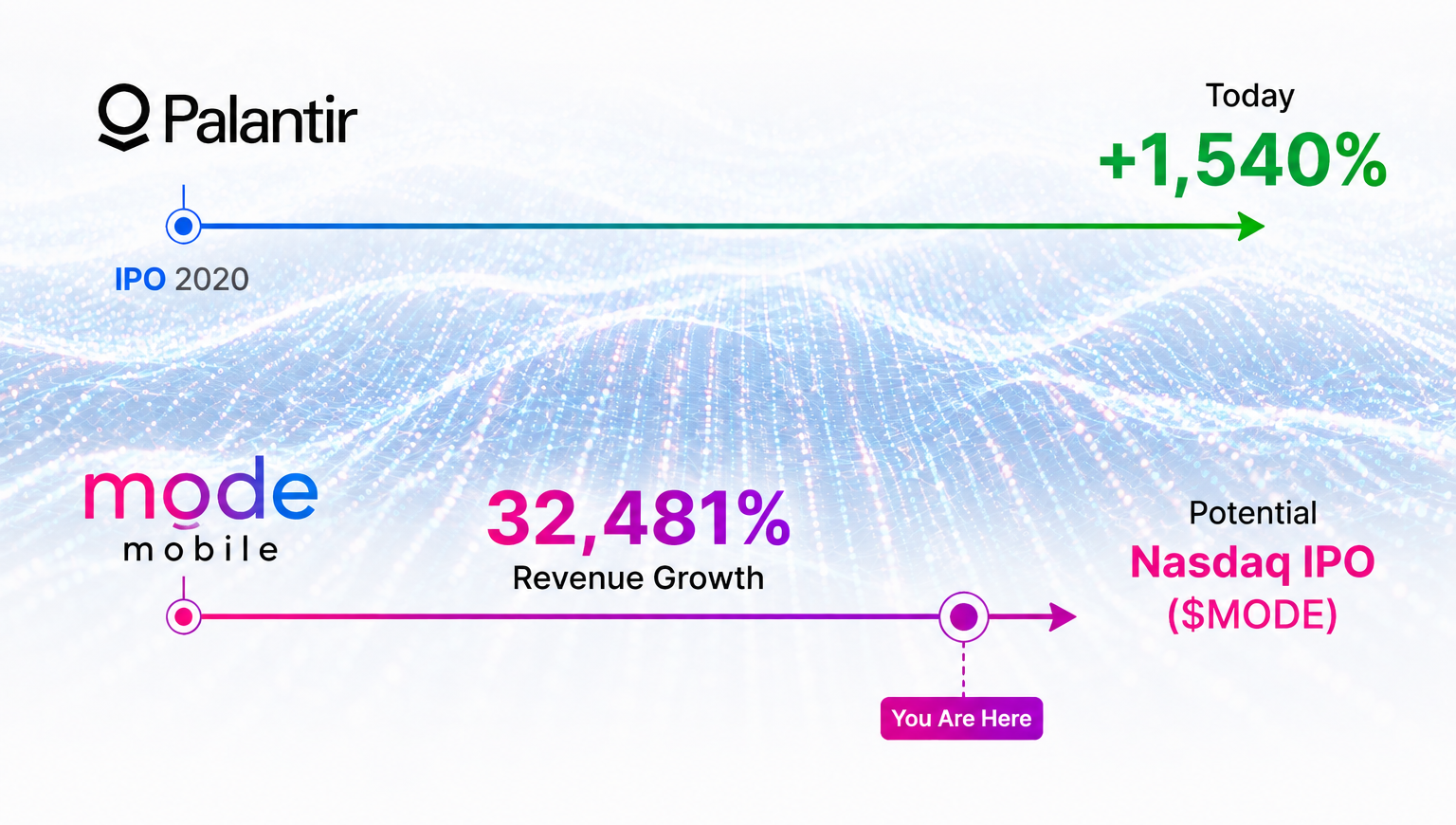
Mode has:
- 490M+ users
- $1B+ paid to users
- $115M+ in real revenue
- Nasdaq ticker secured for potential IPO
- Pre-IPO shares available for a limited time
Mode’s model pays users for their screen time and turns Big Tech’s free data mining play into a cash-generating engine for everyone.
Palantir now trades at ~85x forward earnings, which means Wall Street has already priced in massive expectations.
But Mode?
Still private.
That means the market hasn’t had its say yet.
Right now, investors can get Mode Mobile shares at early-stage pricing.
When the Nasdaq ticker potentially goes live, that window could close fast.
60,000+ shareholders have already invested over $100M in Mode, and pre-IPO shares are still available at $0.52/share.
But the opportunity to get in on that price closes on August 14.
Palantir’s moment has passed.
Mode’s may just be starting.
⏰ Last chance to invest at $0.52/share – price changes 8/14.
The $9.8B Question Behind the WBD Arb

The media industry’s biggest merger is no longer primarily a legal question. It has become a financial one. And the arithmetic is brutal enough that institutional investors should stop debating whether the state attorneys general are right and start modeling whether the Ellisons can afford to be.
The Big Question
Can Paramount Skydance close its roughly $110 billion acquisition of Warner Bros. Discovery before the deal’s financial structure collapses under its own weight? The trial date is March 2, 2027. The merger agreement end date is March 4, 2027. A ticking fee of roughly $7 million per day starts October 1. The question is not whether the states have a winning antitrust case. The question is whether the math of waiting forces Paramount’s hand before a judge ever rules.
Why Wall Street Cares
This deal reshapes the entire streaming and cable landscape. Paramount and WBD agreed to combine, forming what both companies described as a premier global media and entertainment company. The combined entity would bring together Paramount+, Max, CNN, and two of Hollywood’s most storied film studios. For media investors, the outcome determines the competitive structure of the industry for the next decade.
But there is a second reason Wall Street is watching. WBD presents a compelling event-driven arbitrage opportunity. The current discount to the $31 per share deal price, a $7 billion regulatory termination fee, and the ticking fee structure create a particular risk/reward for holders. With WBD trading around $25.47 as of late July, the spread to the $31 takeout is roughly 22 percent. That spread is not just a function of whether the deal closes. It reflects when, and under what conditions.
The Bull Case
Paramount has cleared the regulatory hurdles that matter most. The U.S. Department of Justice has closed its investigation of the proposed acquisition, clearing the merger of federal antitrust concerns. The DOJ did so without requiring any divestitures, behavioral remedies, or concessions. The EU followed. Paramount Skydance won approval from European regulators for its proposed acquisition of WBD, a major milestone for the deal. The EU said Paramount agreed to certain concessions to make the deal move forward. Those concessions included exiting the United International Pictures film distribution joint venture with Universal Pictures in Europe.
Paramount says it has already received competition clearances from bodies and governments representing 65 jurisdictions around the world, including key markets such as the United States, Australia, Brazil, Canada, and China. The UK, once considered a risk, cleared too. The remaining threat is a California-led coalition of twelve state attorneys general challenging the deal in federal court in California under a theory that Paramount’s counsel has called one of the weakest merger challenges in modern antitrust history.
The AT&T-Time Warner precedent offers the most direct comparison. In 2018, the DOJ brought its own case against that deal and lost. Paramount’s defense is being led by Chief Legal Officer Makan Delrahim, who previously headed the antitrust division of the DOJ. The states, not the federal government, are the plaintiffs this time, and state antitrust enforcement in horizontal merger cases has a thin track record.
$38.4 Trillion Debt + AI = The Biggest Wealth Transfer Ever
BlackRock’s Bitcoin ETF just became their #1 revenue source. JPMorgan processes $1 billion daily through digital asset rails. 170 public companies have repositioned their treasuries. Meanwhile, the U.S. debt-to-GDP ratio is projected to hit 143.4% by 2035, higher than Greece before their collapse. The government’s only mathematical escape is AI-driven GDP growth, but AI at scale needs new financial infrastructure. In this live presentation, Ex-Wall Street CFA Tan Gera reveals the exact convergence and how early investors caught 12,480% gains last time.
The Bear Case
The legal risk matters far less than the calendar risk. The delay will prove costly for Paramount. Under the merger agreement, the company must pay WBD shareholders the equivalent of $0.25 per share per quarter, measured daily, for every day after September 30, 2026 that the deal has not closed. That works out to roughly $7 million per day based on WBD’s current share count. A March trial date means Paramount will owe well over $1 billion in ticking fees before the judge ever rules.
Then comes the walk-away calculus. Walking away is hardly cheaper. Paramount faces a $7 billion regulatory termination fee in the event the transaction does not close due to antitrust or other foreign regulatory law, on top of the $2.8 billion already paid to Netflix, or $9.8 billion for the privilege of losing. That sum sits on top of the ticking fee liability. Making matters worse, the family balance sheet backstopping the bid looks less imposing than it once did. A bond market credit gauge associated with Oracle has hit record highs in 2026, and Oracle’s free cash flow has been sharply negative as capital spending surged in its data center buildout.
The March 4, 2027, merger agreement end date is the most underappreciated number in this trade. March 4, 2027, is the date on which David Zaslav can pull the plug on the deal if it has not closed and the agreement has not been extended under its terms. The trial is scheduled to run from March 2 to March 19. The judge’s ruling could come after that. If the ruling is late, the merger agreement may terminate before the court ever decides.
The Evidence
The states allege that the merger will harm competition in three markets: basic cable, tentpole theatrical releases, and wide-release theatrical distribution, by combining two of the top three cable programmers and two of the top five film distributors. Judge Araceli Martínez-Olguín has already shown a willingness to act. She granted the states a temporary restraining order, extended it, and then set the trial to run from March 2 to March 19, 2027, a date far closer to what the AGs requested than what Paramount wanted.
Paramount’s core response is that cable is dying. Team Delrahim argued that in the alleged market for the licensing of basic cable channels, the merging parties’ channel lineups are complements, not substitutes. Cable providers will license all of these channels both before and after the merger. As a result, the merger will not increase the combined company’s bargaining power over cable licensing. That argument worked against the DOJ in 2018. Whether it works against state AGs in 2027 is a genuinely open question. In her ruling, Judge Martínez-Olguín rejected the idea that efficiencies in one market offset competitive harms in another. That is not a favorable signal for Paramount’s cross-market streaming efficiency argument.
The deal’s foreign financing adds a separate layer of institutional concern. Saudi Arabia’s Public Investment Fund, the Qatar Investment Authority, and Abu Dhabi’s L’imad Holding Company are jointly providing roughly $24 billion to finance the acquisition. In regulatory filings, Paramount has maintained that these sovereign funds will not have any governance rights associated with their non-voting equity investments. Still, critics have sounded the alarm about what their money could mean in terms of behind-the-scenes influence.
The Mavens’ View
Richard Greenfield at Lightshed Partners has been the most explicit about the structural trap. In a recent note, Greenfield wrote that everything Paramount has done over the past several weeks appears to be inflaming the situation with California AG Rob Bonta and increasing the odds this case goes to trial in March 2027. Given that the merger agreement end date is March 4, 2027, going to trial is a suicide mission that will likely lead to the merger collapsing and the Ellison family being forced to pay the $7 billion regulatory termination fee.
The arb community has recalibrated around the new timeline without abandoning the long side. The arb math changed shape, not sign. The 20% spread that was roughly 70% annualized to a Q3 close is now roughly 22 to 25% annualized to a spring-2027 resolution, and the ticking fee converts from threat to income: 25 cents per share per quarter, worth up to roughly $0.50 per share if the delay runs from October through early March. Put differently: the deal now pays you to hold it, as long as it closes. The $7 billion regulatory termination fee backstops certain types of failure.
But that framing assumes the Ellisons are rational actors who close. With WBD trading 20 percent below its takeout price and Oracle credit risk being debated openly by investors in 2026, the arb market is signaling real doubt that Ellison closes this deal. The spread is wide not because traders expect a court loss. It is wide because traders are uncertain whether the deal survives its own financial structure long enough to reach a verdict.
What Investors Are Missing
Almost every analysis of this deal focuses on the probability that the state AGs win in court. That is the wrong question. The right question is whether Paramount’s cost of waiting exceeds its cost of losing before a verdict is rendered.
Consider the sequence. October 1: ticking fee starts at roughly $7 million per day. End of Q4 2026: roughly $650 million in ticking fee owed. End of Q1 2027: another roughly $650 million. The trial begins March 2. The ruling comes, optimistically, in April or May. The merger agreement end date is March 4, 2027, unless extended under its terms. By the time this is resolved, Paramount may owe well over $1 billion in ticking fees in the best-case scenario, on top of the $2.8 billion already wired to Netflix. A settlement with the states, or a negotiated consent decree, is the only path that avoids that spiral, and right now there are no indications of settlement discussions.
The trial date announcement does not preclude the possibility of a settlement, though there are no indications that the parties are currently discussing one. That is the hidden variable. California AG Rob Bonta has been publicly hostile to Paramount’s approach in this matter. When the lead plaintiff is speaking in those terms six weeks before the October 1 ticking fee clock starts, the settlement path looks narrow.
The asset deterioration risk is real too. In defending the merger from the states’ antitrust challenge, Paramount is placing a premium on procedural position. But it is sacrificing time, and there is a tremendous cost to that. Cable networks lose subscribers every quarter. Linear ad revenue declines. The WBD David Ellison buys in the spring of 2027 will not be the same asset he agreed to buy in February 2026.
Stocks to Watch
Warner Bros. Discovery (WBD): The purest expression of this trade. The $7 billion regulatory termination fee and ticking fee provide downside protection and enhance the arbitrage spread, making WBD attractive despite merger uncertainty. Max and Paramount+ together represent a meaningful global streaming footprint even if the deal breaks. The floor is not $0. But it is materially below $25.
Paramount Skydance (PSKY): The financial pressure accumulates here. The ticking fee is a Paramount liability, not a WBD liability. At around $8.21, a significant amount of deal-failure risk may already be reflected. But the ticking fee exposure, ongoing legal costs, and financing questions create near-term uncertainty the options market must price. Every quarter without a close represents roughly $650 million in additional liability for a company that is already carrying substantial leverage.
Netflix (NFLX): The quiet beneficiary of delay. In communications with regulators, the states have suggested Netflix is central to the competitive landscape. Netflix had a prior merger agreement with WBD that was terminated when WBD entered into its merger agreement with Paramount. If the deal collapses and WBD is forced to operate independently, Netflix faces a weaker competitor. If WBD eventually runs an independent sale process again, Netflix is the most credible alternative bidder for the streaming and studio assets.
Comcast (CMCSA): A Paramount-WBD collapse puts cable and content consolidation back on the table. Comcast was reported to have explored WBD during the bidding cycle and has the balance sheet to act. A deal failure that pushes WBD back toward a standalone streaming pivot also changes the competitive calculus for NBCUniversal’s Peacock.
Lions Gate Entertainment (LGF): The third-tier studio most affected by industry consolidation dynamics. If Paramount and WBD merge, Lions Gate is left as the only remaining independent mid-size studio. If the deal collapses, it faces two weakened major competitors, which changes its own strategic options meaningfully. The content licensing market shifts in either scenario.