
Hey there, bargain hunter.
The luxury sector has spent most of the last two years in a slow grind of missed estimates, China anxiety, and Middle East disruption. Richemont just blew a hole through that story.
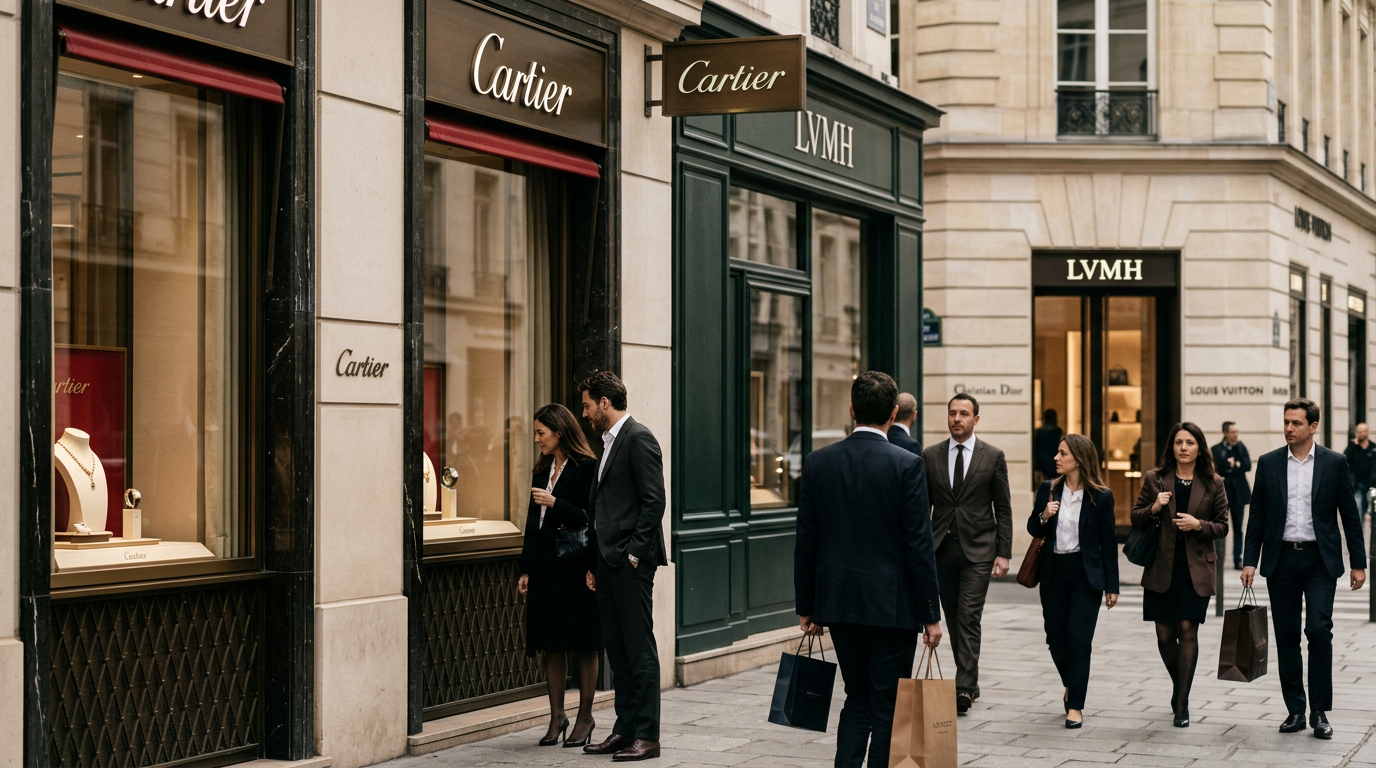
The Cartier and Van Cleef owner reported first-quarter sales of €6.33 billion — up 20% in constant currencies in the three months through the end of June. The analyst consensus, compiled by Visible Alpha, had expected €5.90 billion. One analyst at Bank Vontobel called it a “flabbergasting” result. Richemont’s shares jumped about 6% in early trading on the news. Other rivals in the sector also traded higher, including LVMH, Hermès, and Kering, while Swatch also rose.
So was this a sector signal or a Richemont-specific blowout?
Both, and the distinction matters enormously for where you put money next.
What Richemont Is Actually Selling
The jewelry division — Cartier, Van Cleef, Buccellati, Vhernier — posted quarterly sales of €4.73 billion, up 24% year over year and marking a seventh consecutive quarter of double-digit growth. That’s the most important number in the whole report. Watches grew 8% for the quarter.
Regionally, the Americas climbed 27%, accelerating sharply from 18% in the prior quarter. Asia-Pacific rose 21%, up from 14%, with strength in Hong Kong and Macau. Europe grew 11%. Even the Middle East & Africa returned to growth.
Here’s what makes Richemont different from the rest of the sector: it sells hard goods. Cartier rings, Van Cleef bracelets, Piaget watches. These are items with tangible intrinsic value, perceived as stores of wealth. The Bernstein analyst covering the sector put it plainly — when spending $3,000 to $4,000, a consumer is more likely to choose jewelry over a handbag because you wear it every day and it holds its value. That dynamic is structural, not cyclical.
The Harder Question for Luxury
Slight tangent, but it matters: what Richemont’s quarter does not prove is that the entire luxury sector has recovered. LVMH’s Q1 report in April missed expectations on organic growth, and the company noted that the global environment was impacted by the conflict in the Middle East. The fashion and leather goods segment — LVMH’s most critical, contributing about 75% of total operating profit — has been under pressure since 2024. China’s consumer confidence remains uneven.
Deutsche Bank noted after the Richemont beat that the results should support meaningful consensus upgrades. Citi flagged standout performance across all geographies in Richemont’s core division. Both banks are constructive. But LVMH is a different animal.
LVMH reports on July 27. That is the number that tells you whether the recovery is real and broad or whether Richemont is simply the best-positioned brand in a still-recovering category.
What LVMH Needs to Show
LVMH had a rough Q1. Reported revenue came in at €19.1 billion, down 6% on an as-reported basis, with organic growth of just 1%. CEO Bernard Arnault said directly that 2026 would not be simple.
What would change the story on July 27: a meaningful acceleration in fashion and leather goods — particularly Louis Vuitton and Dior — evidence that the Americas growth trend Richemont saw is filtering through to LVMH’s comparable categories, and any commentary about China returning to double-digit momentum. LVMH’s gross margin has been about 66% in recent years. The valuation has compressed significantly from its highs. If the Q2 read looks anything like what Richemont just delivered, the market reaction could be significant.
Where the Cheap Investor Looks
Richemont is the cleaner buy on fundamentals right now. Jewelry is demonstrably outperforming fashion and leather goods. Net cash stood at €9.1 billion at quarter end, up from €7.4 billion a year earlier. Deutsche Bank expects the shares to gain a high-single-digit percentage following the update, and Citi reaffirmed it as one of the sector’s undisputed growth leaders.
LVMH is the higher-risk, higher-reward read. The stock has underperformed Richemont by a wide margin over the past year. If July 27 shows acceleration, the gap closes fast. If it doesn’t, the rotation into jewelry-heavy names continues and LVMH stays in the penalty box longer than expected.
The Cheap Investor Scorecard
- Richemont Q1 sales: €6.33 billion, up 20% constant currency vs. €5.90 billion expected
- Richemont jewelry division: €4.73 billion, up 24% — seventh consecutive quarter of double-digit growth
- Americas growth (Richemont): +27%, accelerating from 18% prior quarter
- Richemont net cash: €9.1 billion, up from €7.4 billion year over year
- LVMH Q1 organic growth: +1%; reported revenue down 6%
- LVMH gross margin: approximately 66% (recent years)
- LVMH fashion and leather goods: approximately 75% of total operating profit
- LVMH H1 2026 results date: July 27, 2026
- Sector 2026 consensus growth estimate: approximately 6% to 6.5% organic
- Key watch: China consumer recovery commentary from LVMH management
The luxury trade is not a monolith. Jewelry is outperforming. Fashion and leather goods is still finding its footing. The rotation is already visible in the stock prices — Richemont up sharply on the year, LVMH trading well below its 52-week high. July 27 is when the sector either confirms the Richemont signal or reminds everyone that one strong quarter from one company does not a recovery make.