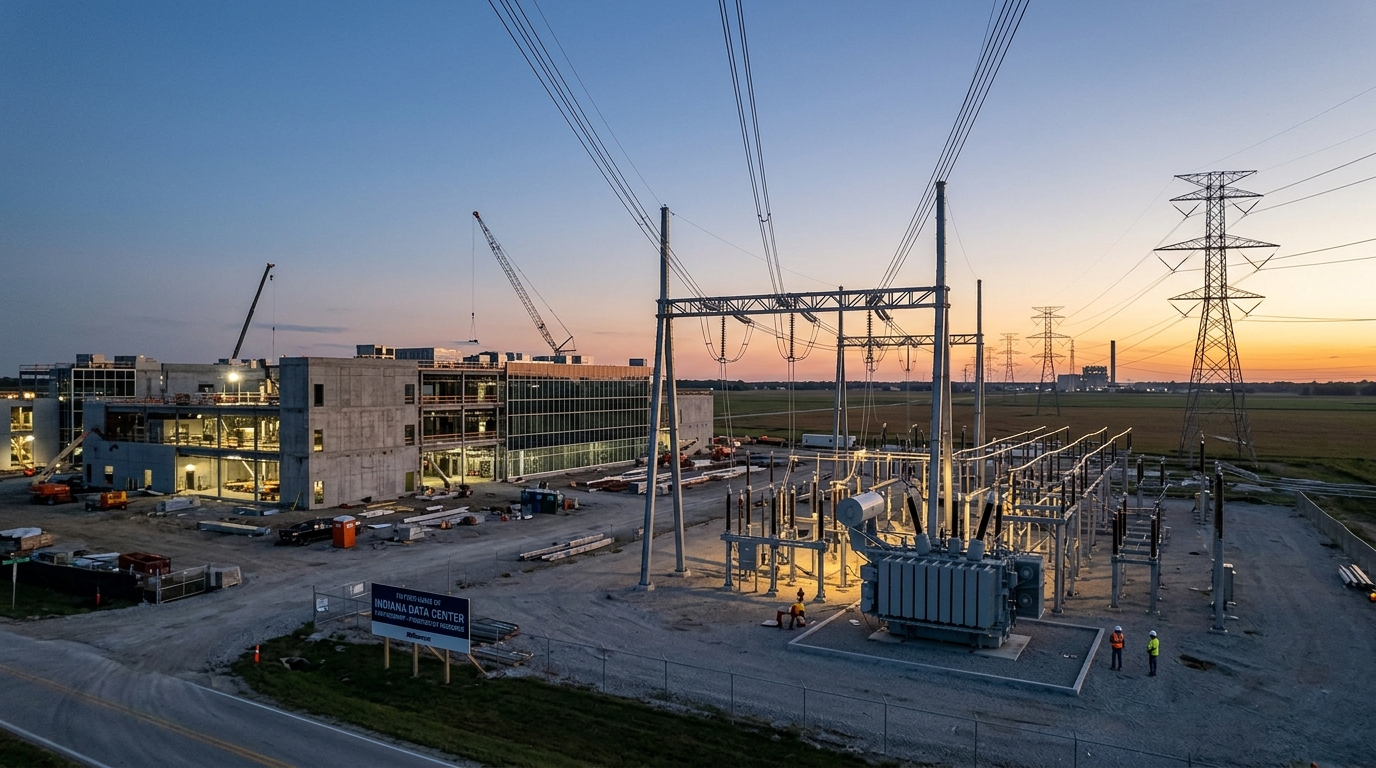
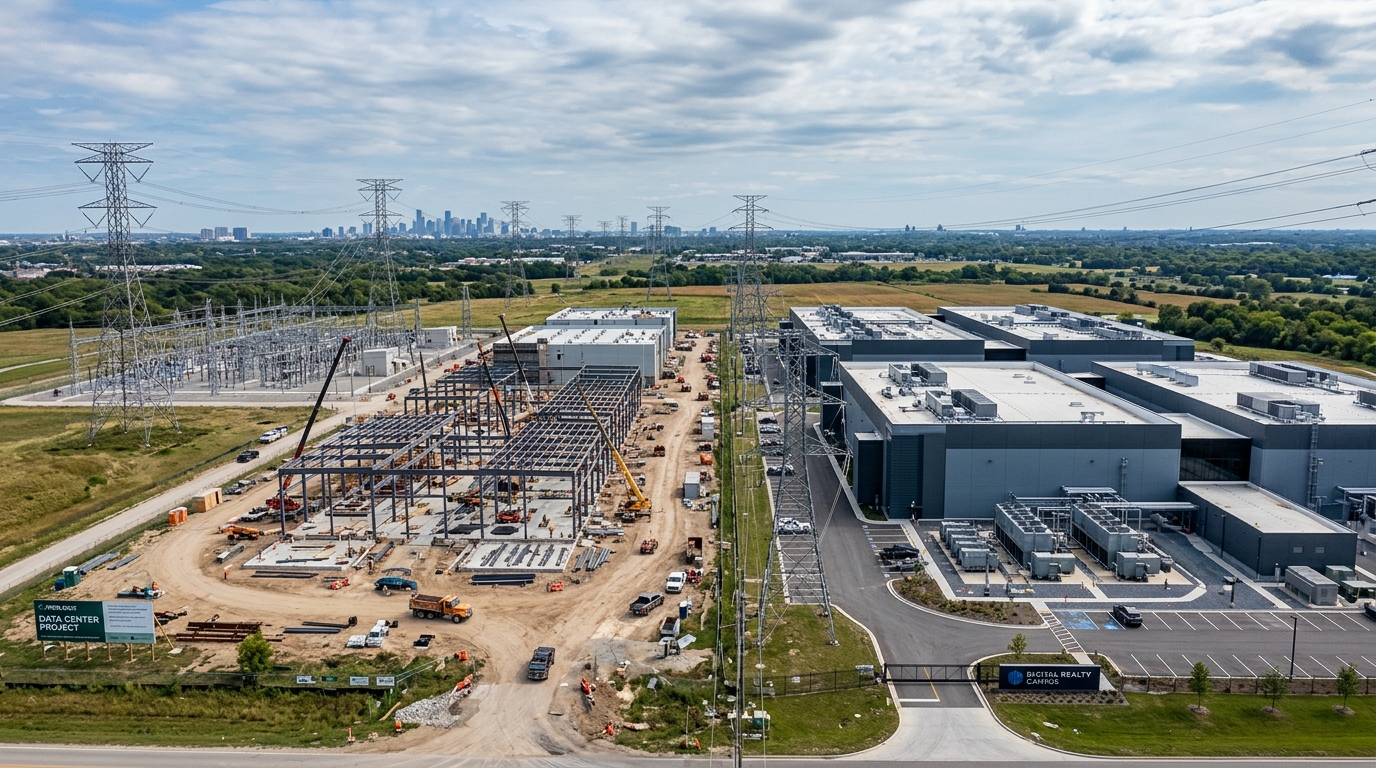
Prologis is spending years building what Digital Realty already has turned on.
That sentence captures the tension at the center of the most logical mega-deal in real estate. Prologis (PLD) has assembled a data center power pipeline of 5.8 gigawatts, secured or in advanced stages. That is an extraordinary land and energy position. The problem is the word “pipeline.” Of those 5.8 gigawatts, 1.7 GW is secured, with 680 megawatts under development. The remaining 4.1 GW sits in advanced stages, meaning hyperscaler conversations, utility negotiations, and permitting processes that take years to resolve.
Digital Realty (DLR), by contrast, operates about 3.1 gigawatts of IT capacity across 310 data centers right now, with about 8.5 gigawatts of buildable IT capacity under active development or held for future development. That is live, revenue-generating infrastructure, not a construction schedule.
The distinction matters because Prologis is running two large clocks simultaneously. Its $18.8 billion acquisition of UK logistics REIT SEGRO is expected to close in the first half of 2027, creating a European operating portfolio of 368 million square feet that will demand management bandwidth and integration capital for at least 18 months. CEO Dan Letter described data centers as “one of the largest value creation opportunities” in the company’s history, yet the SEGRO deal pulls executive attention toward European logistics at exactly the moment the AI infrastructure race is being won.
That creates a specific window. DLR is sitting around $180 a share. Its Q3 results land today after the close, with Wall Street expecting around $1.74 billion in revenue, up roughly 10.6% year over year. A record $1.9 billion backlog entered the quarter, supported by 9 to 11% positive cash renewal spreads. The business is not broken. It is simply under-owned by the company that needs it most.
Here is the specific gap Prologis cannot build its way out of quickly: DLR has said it has about 3.5 to 4 gigawatts of energy service agreements in hand supporting its land capacity, enough to potentially double its operating footprint over time. That secured-power position took years and billions to assemble. Prologis has spent considerable capital chasing exactly the same scarce resource, and its own commentary has been clear that powering and entitling sites is a key constraint and a competitive advantage when you can solve it.
Buying Digital Realty would not just add data centers. It would compress Prologis’s timeline from “pipeline” to “operating” by half a decade, add a global colocation and interconnection business that logistics warehouses cannot replicate, and create the only REIT on earth with dominant positions in both physical goods movement and digital infrastructure.
The counter-argument is debt load and SEGRO digestion. DLR had about $18.6 billion of total debt outstanding as of June 30, 2026, and Prologis put in place a committed term loan facility tied to the SEGRO transaction. Stacking a second transformational acquisition while integrating a 368 million square foot European portfolio would strain even an A-rated balance sheet. The timing is genuinely difficult.
But the window DLR is offering today, a stock off its highs with Q3 earnings due tonight and a record backlog ready to convert, will not stay open indefinitely. Prologis can build gigawatts. It cannot build the customer relationships, colocation density, and global network interconnection fabric that Digital Realty spent two decades assembling.
Watch DLR’s Q3 results tonight. If revenue and backlog conversion disappoint, the acquisition math gets easier. If they beat, the strategic case gets more urgent.