
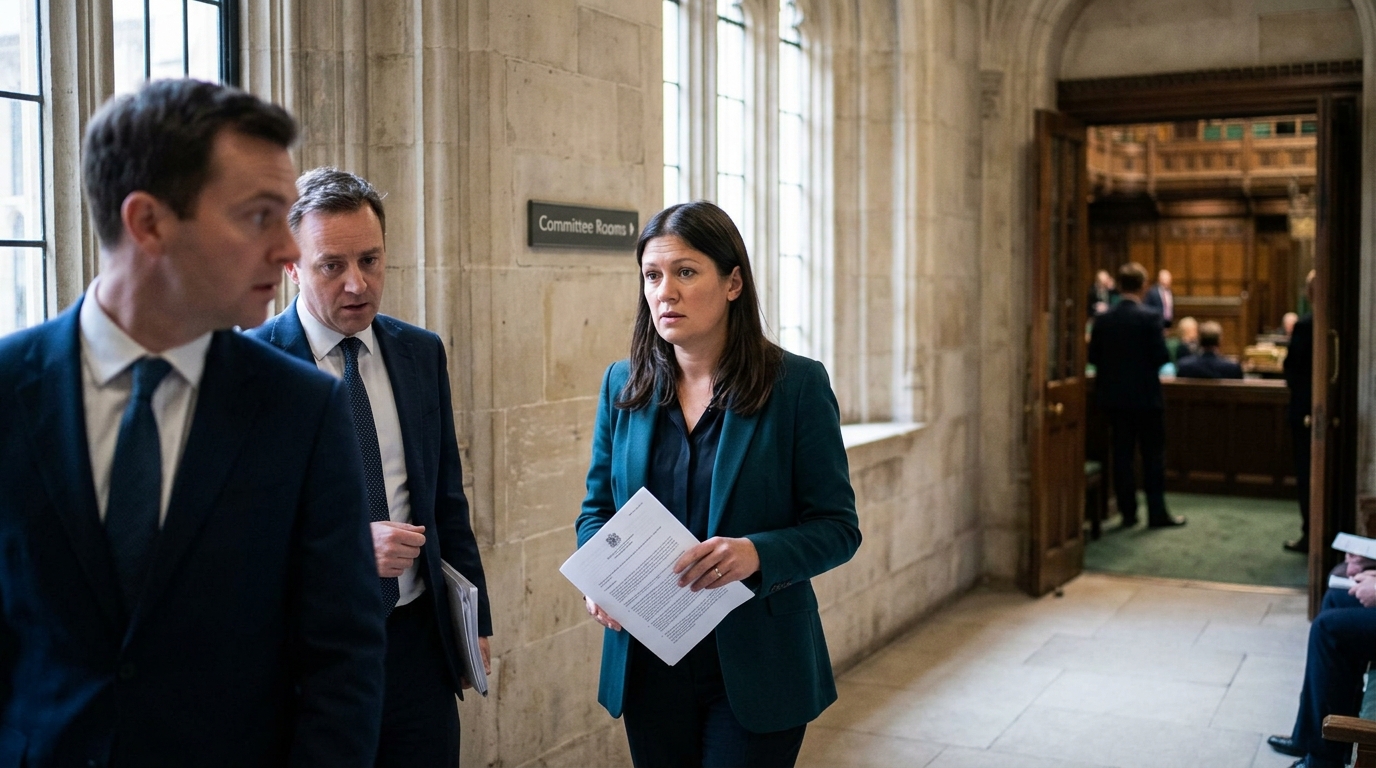
Culture Secretary Lisa Nandy walked into Parliament on October 15, 2026 and put a harder question to ITV shareholders than the market had anticipated. She said she was “minded to intervene” in Sky’s £1.6 billion agreed purchase of ITV’s media and entertainment arm, and then went a step further: if she proceeds on one of her grounds, she will bring forward legislation amending section 58 of the Enterprise Act to extend the public interest test to on-demand and streaming platforms. That is not a procedural hurdle. That is new law.
Why This Stock Now
ITV shares trade around 67p this morning, against a 52-week high of 87.35p. The deal, expected to close in the second half of 2027, is structured to return roughly £950 million to shareholders, equivalent to about 25p per share. That shareholder return alone represents more than a third of today’s share price. Sky will pay £1.2 billion in cash upfront, contribute Love Productions valued at £200 million, and there is up to a further £200 million contingent on ITV’s total advertising revenue exceeding £1.7 billion in 2027. On paper, the numbers still look compelling. The question is whether the regulatory path just got longer or got closed.
What Nandy Actually Said
Nandy issued her notice over public interest considerations including the need for free expression of opinion in news media, the need for a sufficient plurality of views in news media in each market, and the need for, to the extent that it is reasonable and practicable, a sufficient plurality of persons with control of the media enterprises serving each audience. The news plurality concern is familiar territory for any large UK media deal. The streaming dimension is not.
In her statement to Parliament, Nandy identified a gap in legislation written when viewing was predominantly through linear channels. The existing public interest consideration covering the range and quality of broadcasting does not currently cover the effect of a merger on streaming or on-demand programmes. Current legislation does not cover the effect of a merger on those services, and any intervention on that additional ground would require a legislative change. She has given Sky and ITV until 09:00 on October 20, 2026 to respond before she makes a final decision on whether to issue a formal intervention notice.
The Precedent Bulls Are Leaning On
There is a reason ITV’s statement yesterday called this intervention notice “expected” and described it as “another important milestone.” But the comparison the bulls keep reaching for does not hold up. There is no verified recent transaction called a “Paramount-Warner-Skydance” deal that Nandy previously said she was “minded to intervene” in, nor a U.S. completion “last week” tied to that claim.
In other words, investors should not treat an invented precedent as cover. If the minister chooses to proceed on the new on-demand ground, Parliament is the gating item, and that is a categorically different risk profile.
What Could Go Wrong
If Nandy decides to formally intervene, she would refer it to Ofcom to assess the public interest issues, with the CMA assessing whether a relevant merger situation has been created and any impact this may have on competition. A full CMA investigation routinely adds months to deal timelines. Combined with a legislative process, close in the second half of 2027 starts to look optimistic. Channel 4 is also publicly urging robust scrutiny of what the tie-up could mean for the advertising market, given the combined company would hold significant market power. That introduces a separate axis of regulatory friction.
And if the deal collapses entirely? The stock’s 52-week range runs from 65.70p to 87.35p. Sky would gain control of ITVX alongside ITV’s free-to-air channels under the agreed terms, while ITV Studios would remain outside the transaction. A standalone ITV Studios is a real business, but the roughly 25p-per-share return disappears with the deal, and so does a significant part of the investment thesis at current prices.
The Bottom Line
ITV is not today’s pick. The stock offers a genuine floor, a meaningful dividend yield, and a standalone ITV Studios that carries its own value. But the legislation threat is novel, the timeline to close now carries real compression risk, and the spread you earn waiting for a deal that may require an act of Parliament is not, on balance, the most compelling risk-adjusted opportunity available today. When the regulatory path clears, the thesis sharpens. Right now, it is a situation best watched rather than owned.