
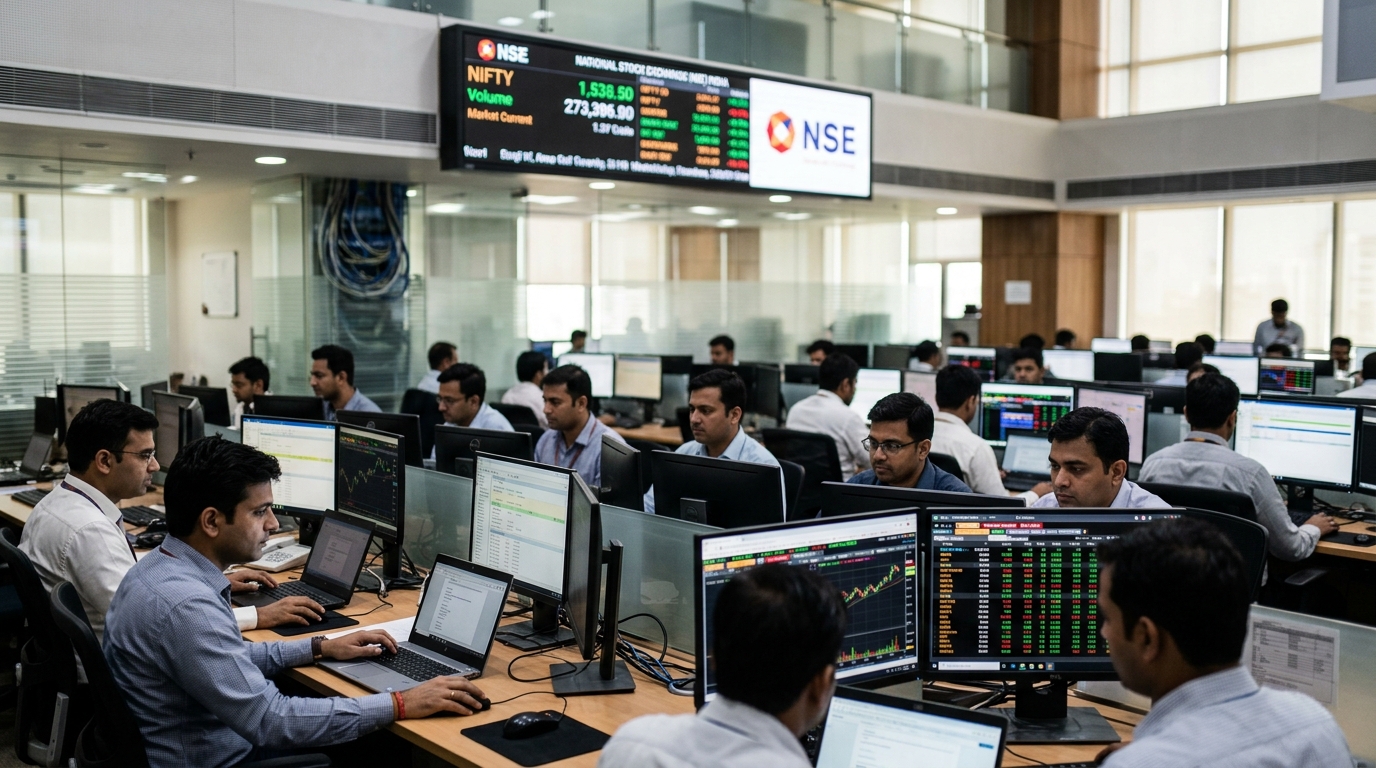
Forget the ticker for a moment. Think about the road.
Every stock trade executed in India’s cash market, nearly every equity futures contract, and a dominant share of currency derivatives flow through a single piece of infrastructure: the National Stock Exchange of India. In FY26, NSE held a 92.99% share of India’s cash market turnover and 99.79% in equity futures turnover. In exchange-traded currency options, it held a 100% share based on total premium turnover. That is not a market leader. That is a toll bridge with no alternate route.
This week, that bridge went on sale. The NSE IPO opened for subscription on September 17, 2026 and closes September 21, 2026, with shares priced at ₹1,700 to ₹1,785 each. The offering is a pure offer for sale of up to 126.44 million equity shares, aggregating ₹22,561.57 crore. NSE shares are scheduled to list on BSE on September 24, 2026. At the upper price band, the implied market value reaches roughly ₹4.42 lakh crore, about $46 billion.
The Mogul’s First Question: Is the Moat Real?
Exchange businesses are among the most durable franchises in finance, precisely because liquidity concentrates. NSE is the global leader in equity derivatives by contracts traded: 36.99 billion contracts moved through its derivatives segment in FY26 alone. That volume advantage compounds itself. Tighter spreads attract more participants, which produces yet tighter spreads. A new entrant cannot buy that flywheel.
Beyond trading, NSE holds a commanding position in passive investing: India passive funds linked to Nifty indices managed about ₹8.14 lakh crore in assets as of March 2026, representing about 72.53% of India’s passive fund AUM. Every rupee that flows into an index fund linked to Nifty keeps paying NSE’s index licensing fees, regardless of which individual stocks an investor prefers. Average monthly SIP inflows have risen sharply over the past decade, reaching roughly the ₹30,000-crore range by FY26. Nifty-linked passive funds accounted for ₹8.14 trillion, or 72.53% of India’s passive fund assets. Both of those flows run through NSE’s plumbing.
The Financial Reality
NSE has historically produced margins above 50% and reported return on equity around the low-30% range. That operating leverage is the signature of infrastructure businesses done right.
The valuation, however, demands scrutiny. At the upper price band, NSE is valued at about 42.9 times FY26 earnings. The premium to peers is real and substantial.
What Could Go Wrong
The strongest argument against simply paying up is revenue concentration. Transaction charges are NSE’s dominant revenue driver, contributing about 79% of revenue from operations in FY26. Options transaction charges alone contributed about 60.22% of revenue from operations in FY26. SEBI tightened derivatives rules from late 2024, including measures that took effect on November 20, 2024, and the regulator’s scrutiny of speculative derivatives activity creates direct risk to NSE’s greatest revenue engine. NSE’s revenue and profits declined year on year in FY26 amid that shifting backdrop.
The OFS structure adds a subtler concern. The offering is entirely a sale by existing shareholders, meaning the exchange itself receives none of the proceeds. Sellers include State Bank of India and Canada Pension Plan Investment Board. They are disciplined institutions. When disciplined institutions sell at roughly 43 times earnings, it is worth asking why.
The Long-Term Verdict
Two forces will determine whether NSE is genuinely a compounding asset at this price. NSE has a large and growing registered investor base of 132.37 million unique investors as of June 30, 2026, covering more than 99% of Indian postal codes. India’s capital markets are structurally growing faster than mature markets, and low capital-market penetration provides a long structural growth runway. Both of those statements were also true three years ago. The question is whether roughly 43 times earnings has already captured that optimism in full.
For a long-duration investor, the business quality is difficult to argue with. The moat is real, the margins are exceptional, and India’s financial deepening is a secular trend with decades to run. The price, today, reflects most of that. Patience, on a better entry or in a more forgiving market moment, is a discipline worth keeping.