Urgent Alert
Elon Musk Says AI Can Save America From Bankruptcy
But your retirement still has to survive everything between now and then.

Elon Musk issued one of his most extraordinary warnings about America: “We are 1,000% going to go bankrupt as a country … without AI and robots.”
At the time, America’s debt was approaching $40 trillion. Now it has crossed it.
On August 18, Treasury data put total U.S. debt at approximately $40.05 trillion, only five months after it crossed $39 trillion.
And Washington is still borrowing. The Treasury expects another $739 billion in privately held marketable borrowing during July – September, followed by an estimated $628 billion in Q4.
You may have 30 or 40 years of savings sitting in stocks, bonds, and dollar-denominated assets.
You may not have 30 or 40 years to recover if the debt crisis creates another period of inflation, market instability, or declining purchasing power.
Physical gold provides something fundamentally different: a tangible asset with no corporate earnings target and no promise from another party to repay.
Download Your FREE Musk Warning Report and discover why protecting part of your retirement with physical precious metals may matter more than ever. Download your free copy here!
Yes – Send Me the FREE Musk Warning Report!

| CLAIM MY FREE REPORT NOW |
Kalshi’s Court Loss May Be Sportsbooks’ Windfall
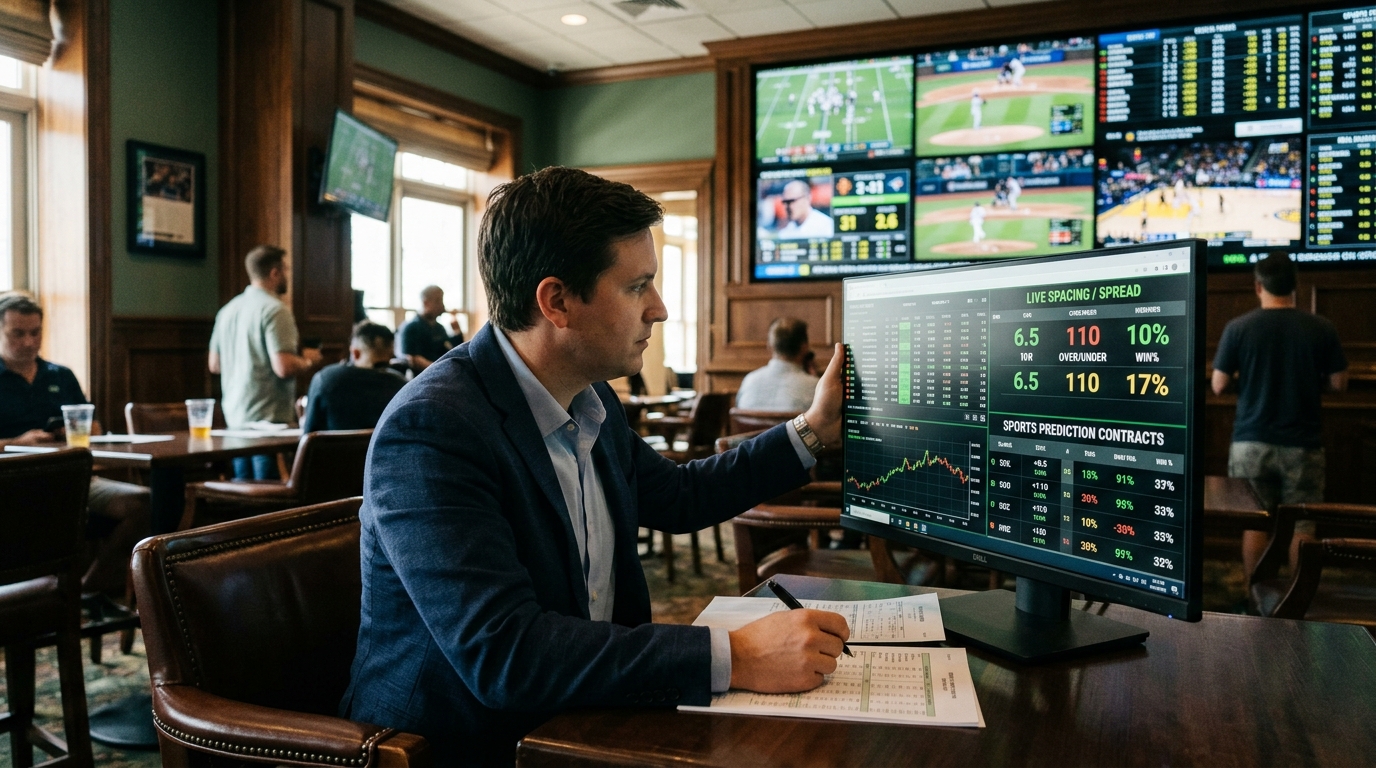
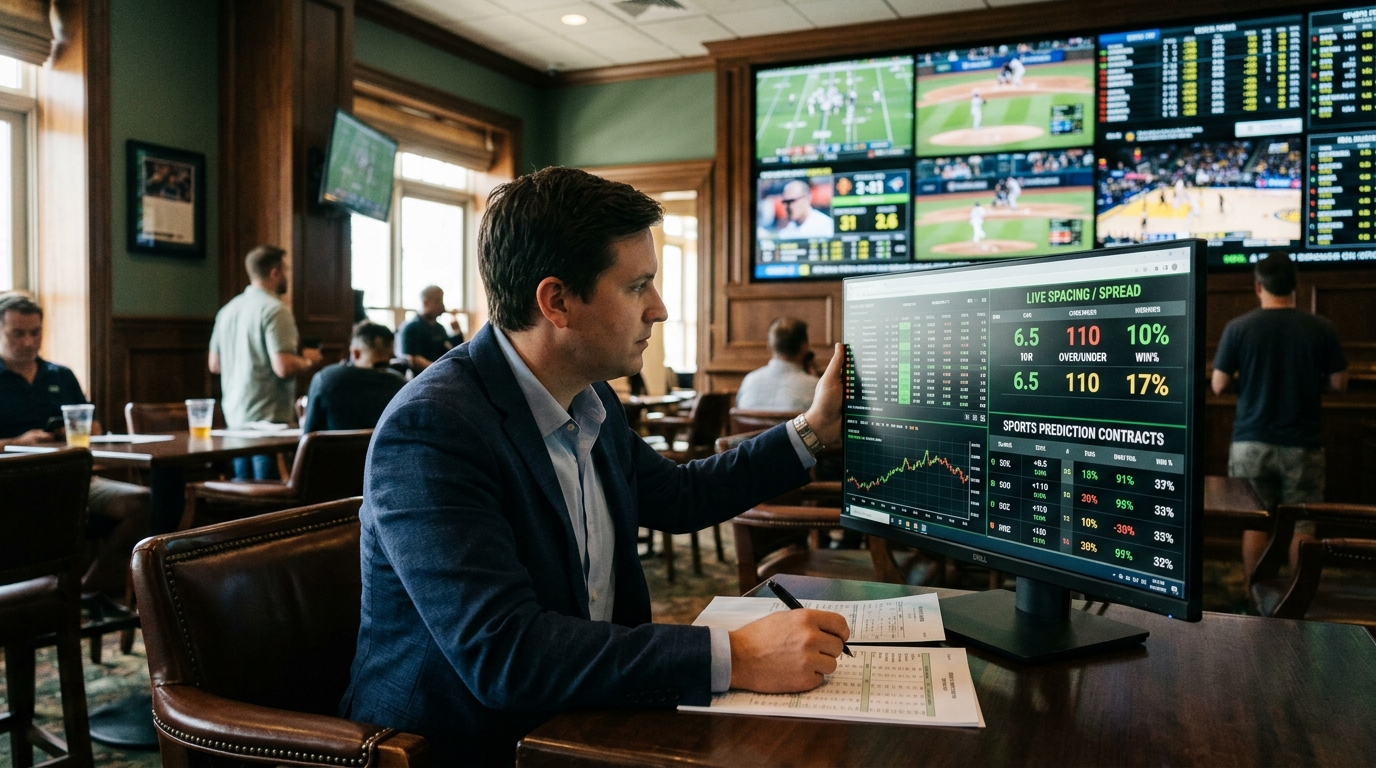
The question institutional portfolio managers should be asking after Friday is not whether Kalshi will survive. It is whether DraftKings and Flutter have been marked down for a competitive threat that state gambling law is quietly dismantling.
What the Sixth Circuit Actually Said
A federal appeals court ruled Friday that Ohio and Tennessee can enforce their sports gambling laws against Kalshi, with a three-judge panel of the Sixth Circuit unanimously holding that Kalshi has not shown those contracts meet the legal definition of a “swap.” That finding matters more than it sounds. Kalshi and other sports prediction market operators argue the CFTC’s powers under the Commodity Exchange Act preempt states from applying their gambling laws. In other words, these firms believe Dodd-Frank empowered the CFTC to become a regulator of activities that resemble sports betting. The problem for Kalshi, the panel found, is that sports prediction contracts do not involve events that qualify as swaps.
The panel also ruled that even if the contracts were swaps, the Commodity Exchange Act would not preempt either state’s gambling laws. That is a double loss, and it has structural implications.
Why the Circuit Split Forces a Supreme Court Decision
The decision deepens a conflict among the federal circuits, with the Ninth and Sixth Circuits empowering states to regulate sports prediction markets through their gambling laws, while the Third Circuit has prevented states from taking such enforcement actions on the grounds they are preempted by federal law. New Jersey Attorney General Jennifer Davenport asked the U.S. Supreme Court on September 2, 2026 to review that decision. With two circuits now aligned against the Third, the Court’s interest calculus has shifted materially. The Supreme Court often looks to see whether appeals courts have entered decisions in conflict with one another on important matters, and here the conflict is direct.
While a bipartisan group of states is pushing back on Kalshi to maintain jurisdiction over the popular platforms, President Trump has supported the rise of prediction markets and backed the CFTC having exclusive authority. Multiple states are in active litigation over whether prediction markets can be regulated by the states.
The Bull Case for DKNG and FLUT
After the Ninth Circuit’s ruling last month, shares of DraftKings jumped more than 7% and Flutter rose more than 6%, as investors interpreted pressure on prediction markets as a relative positive for traditional sportsbook operators. The rally faded, but it illustrated the reflex trade. Michael Burry said in July he bought shares of regulated sports-betting operators DraftKings and Flutter Entertainment, purchasing a full-sized position split roughly 60% in Flutter and 40% in DraftKings. He anticipated regulators would eventually crack down on prediction markets after competition from the upstarts pressured the stocks.
With DraftKings stock down about 36% year to date through Friday’s close, the latest pressure extends a decline already underway. DraftKings CEO Jason Robins told a Wells Fargo audience this week that sportsbook handle rose 15% year over year month-to-date at the start of the NFL season, and that DraftKings was up to almost double-digit share in sports prediction markets. That dual traction is exactly what Burry argued the market was ignoring.
What Investors Are Missing: The Polymarket Problem Has a Different Shape
Buried in Friday’s news cycle, Bloomberg reported that Polymarket bets on the likelihood that some of the biggest names in banking, including Wells Fargo, JPMorgan Chase, and Bank of America, will fail are drawing scrutiny from officials in Washington. Wagers on the failure of individual banks total just a few hundred dollars in many cases, though volume in some contracts ranges into the thousands for firms like Deutsche Bank and Wells Fargo. Recent trades tied to banks failing by year-end have attracted $76,000 in overall volume.
Authorities are concerned less about trading volume than about the risk that concentrated bets on a specific bank’s probability of failure could trigger a real liquidity crisis and a bank run. FDIC discussions also examined whether employees could use nonpublic information to trade the contracts, but concluded existing ethics rules already prohibit that activity. The FDIC scrutiny underscores a broader point: as prediction markets migrate from sports into financial and macro events, they attract a different class of regulator entirely, one with far more tools than a state gaming commission.
Stocks to Watch
DraftKings (DKNG) is the clearest beneficiary of a restrictive Supreme Court ruling. Bernstein’s analyst keeps an outperform rating with a $29 price target, implying roughly 32% upside from early-September levels. The core sportsbook business is growing; the regulatory headwind may be peaking.
Flutter Entertainment (FLUT) owns FanDuel and carries more balance-sheet risk from its prediction-market spending pivot, but scale advantages persist if the regulatory field levels.
Robinhood (HOOD) offers prediction-market contracts and sits in an interesting position: it benefits from prediction-market growth as a platform, yet faces fewer direct regulatory headwinds than Kalshi, which is the primary litigation target.
CME Group (CME) is the quiet winner in any scenario where federal swap jurisdiction contracts. Uncertainty over event-contract classification pushes institutional hedging flow back toward CME’s established, uncontested derivatives markets.