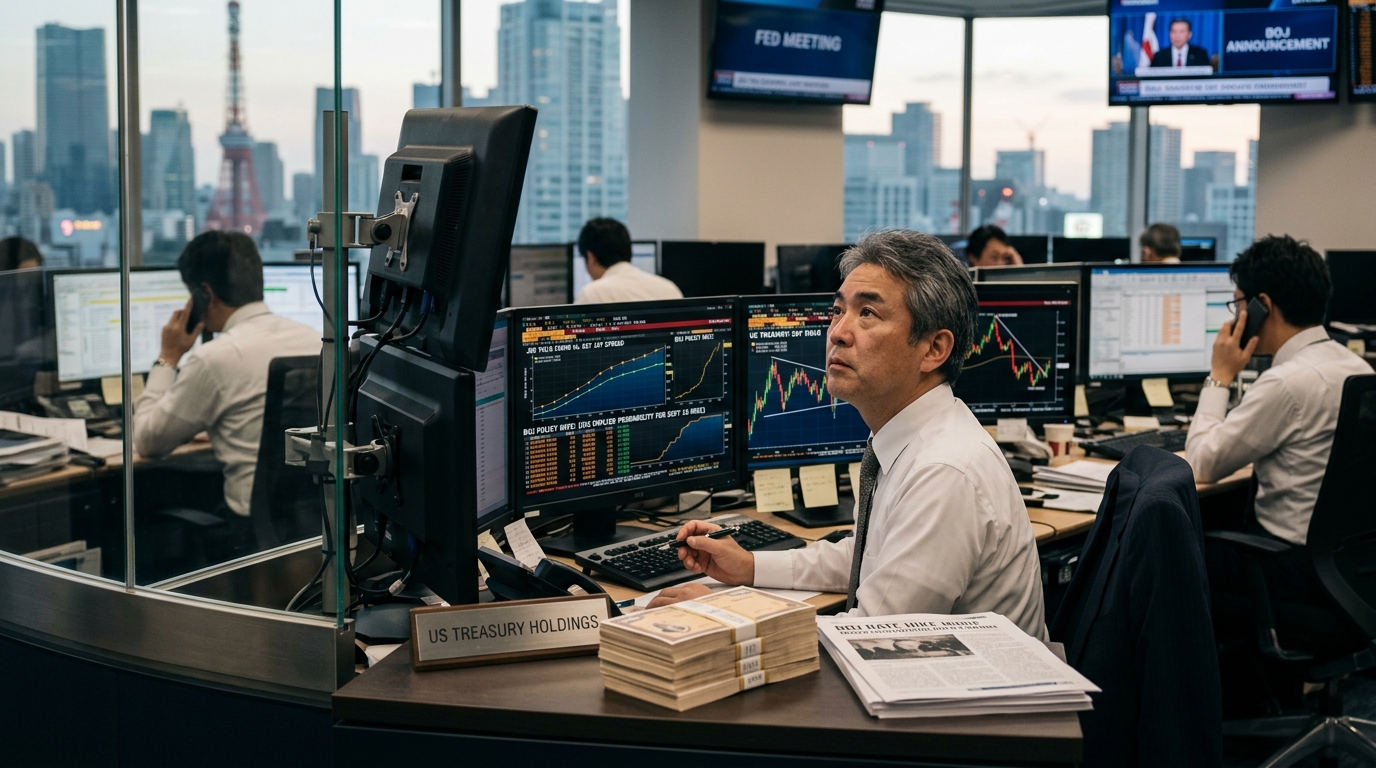
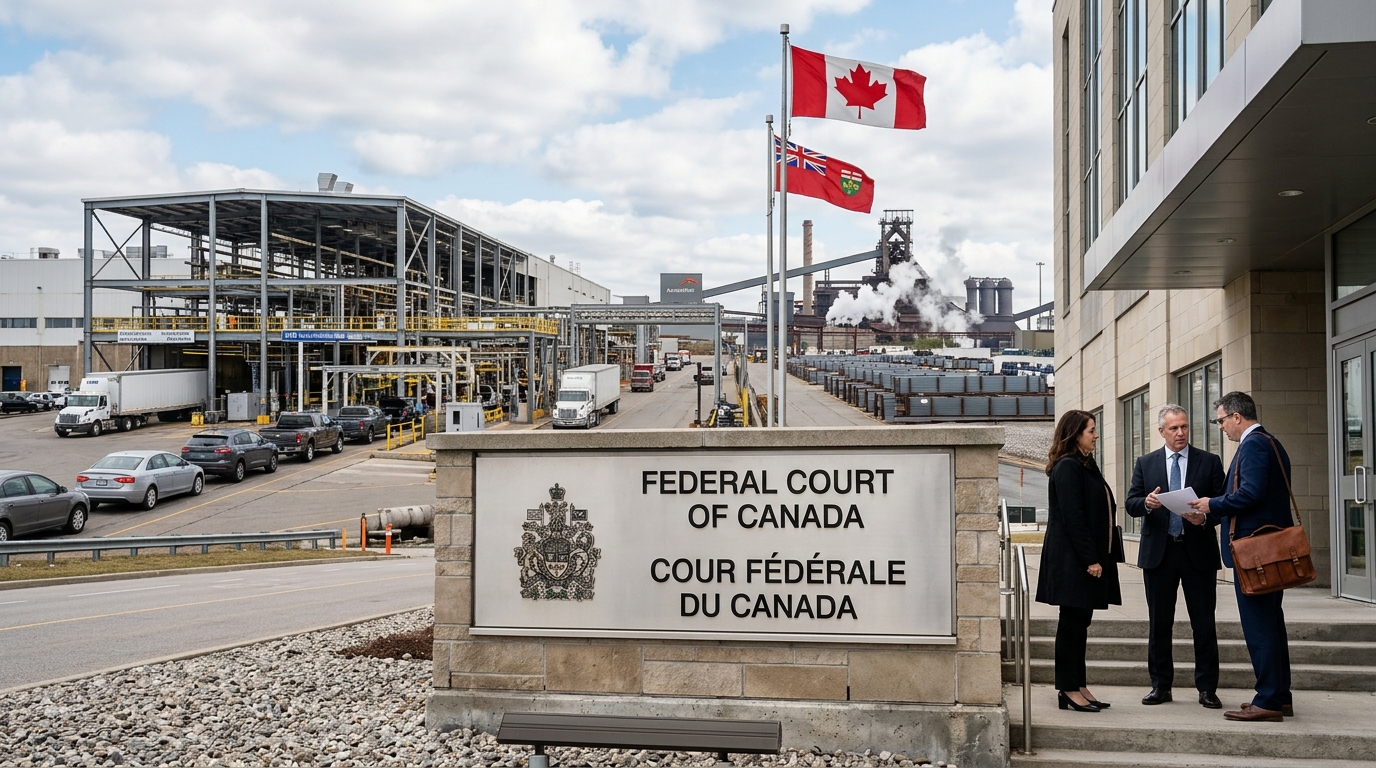
Two things happened on Wednesday that Wall Street should be reading together. Mark Carney and Ontario Premier Doug Ford unveiled a C$8.7 billion ($6.2 billion) support package for Canadian steelmakers, automakers, and critical mineral producers. Hours later, the U.S. Embassy in Ottawa released a fact sheet accusing Canadian ministers of trying to influence the November 3 midterms. The diplomatic temperature is not coming down.
The spending package is real money. C$5.2 billion goes to steel over five years, C$2.5 billion to auto, with Ottawa contributing C$1.5 billion of the auto total. Carney framed it plainly: Canadian auto exports to the U.S. have fallen more than 10 percent, while U.S. exports to Canada have dropped more than 20 percent. The same day, U.S.-owned Cleveland-Cliffs confirmed layoffs tied to its Stelco operations in Hamilton, Ontario. The damage is not theoretical.
But government subsidies do not fix a broken trade relationship, and that is what the Carney package is actually designed to manage around, not resolve. Ford acknowledged “Canada’s relationship with the United States has changed permanently.” That is not a negotiating position. That is a post-mortem.
Here is where the options angle sharpens. On October 20, a New Jersey food importer filed a lawsuit challenging President Trump’s power to invoke a Depression-era law to levy a 50% tariff on Canadian goods. The suit by Gellert Global Group asks the U.S. Court of International Trade to declare the Section 338 tariffs unlawful. Gellert is represented by the Liberty Justice Center, which previously won a Supreme Court ruling that the administration’s use of IEEPA did not authorize broad, unilateral tariffs.
Trump invoked Section 338 of the Tariff Act of 1930, marking the first time a U.S. president has invoked that authority. The complaint argues Section 338 only allows duties that offset genuine foreign discrimination, that Congress replaced it with the Section 301 procedure in 1974, and that the administration skipped the statute’s 30-day waiting period. Section 338 requires a 30-day waiting period before duties may be collected on newly enumerated products. Instead, the administration began collecting tariffs seven days after adding hundreds of products.
That procedural violation alone could be enough for a preliminary injunction. The Liberty Justice Center has already prevailed before the Supreme Court challenging tariffs imposed under IEEPA, with the Court holding that the statute does not authorize the president to impose broad tariffs unilaterally. A second courtroom win against a different Depression-era statute is not far-fetched.
The problem for options traders is timing. Liberty Justice Center counsel said the group asked the court to move quickly and hopes for a hearing within about 30 days. “About 30 days” is not a catalyst date. A preliminary injunction hearing is not a verdict. And even if the tariffs are blocked, the trade relationship has structural damage that a court order cannot price away overnight. U.S. automakers face 25% tariffs on finished-vehicle imports, including from Canada and Mexico, while vehicles from Japan, South Korea, and the EU are widely reported as facing a 15% rate under recent frameworks. That is a structural competitive disadvantage baked into the cost base of General Motors, Ford, and Stellantis.
Ford already pegged its net tariff hit at approximately $1 billion, but the company’s public guidance has focused on 2025 rather than 2026. Its Oakville Assembly plant in Ontario builds the Lincoln Nautilus, exactly the kind of cross-border production that a 50% tariff would affect significantly. GM carries Canadian assembly capacity in Oshawa, and its CAMI facility in Ingersoll has been idled since BrightDrop production ended in 2025. Stellantis is weighing options on its Brampton facility. All three names would swing hard on a favorable ruling. But the swing could come in six weeks or six months, and the options market charges accordingly for that uncertainty.
This is a situation where the thesis is clear and the trade is not. A court win on Section 338 would remove a major cost overhang from F, GM, and STLA simultaneously. It could also force refunds on tariffs already collected, which would ripple into freight and logistics names including CP and CNR. The upside scenario is genuinely asymmetric. The problem is that buying calls or call spreads on a headline with no confirmed hearing date means paying time decay every week while waiting for a docket entry that may not arrive on schedule.
The right move is to build a watch list, not a position. Monitor the Court of International Trade docket for a hearing date on the preliminary injunction motion. When that date firms up, the risk-to-reward on a defined-risk call spread in the auto names becomes far more attractive. Until then, the edge is informational, and the clock is not running in your favor.