Boeing once planned to begin delivering the 737 MAX 10 in 2020. Six years later, the jet has never carried a paying passenger. That gap may be about to close, and what happens next matters far more than the certificate itself.
On Friday, October 16, the FAA’s Type Certification Board met to review the 737 MAX 10. The board, made up of members of the FAA’s management team, is the last major step before the agency decides on certification, though a final FAA management meeting still has to happen. Reuters, citing three people familiar with the matter, reported approval could come as soon as this week.
The 737 MAX 10 is the largest member of the family, a stretch aimed squarely at the Airbus A321neo, and airlines have ordered roughly 1,500 of them, about 30% of Boeing’s outstanding 737 backlog. Major customers include United Airlines, Alaska, Ryanair, and Delta Air Lines. American Airlines also has the type on order, and Lufthansa Group ordered 20 in September 2026. That is a wide customer base with a lot of growth plans sitting in a queue.
The Cash Mechanics
Certification does not mean immediate delivery. Boeing targets first customer deliveries in 2027, even if FAA certification arrives in October 2026. But the link between this week’s expected approval and Boeing’s financial recovery is direct.
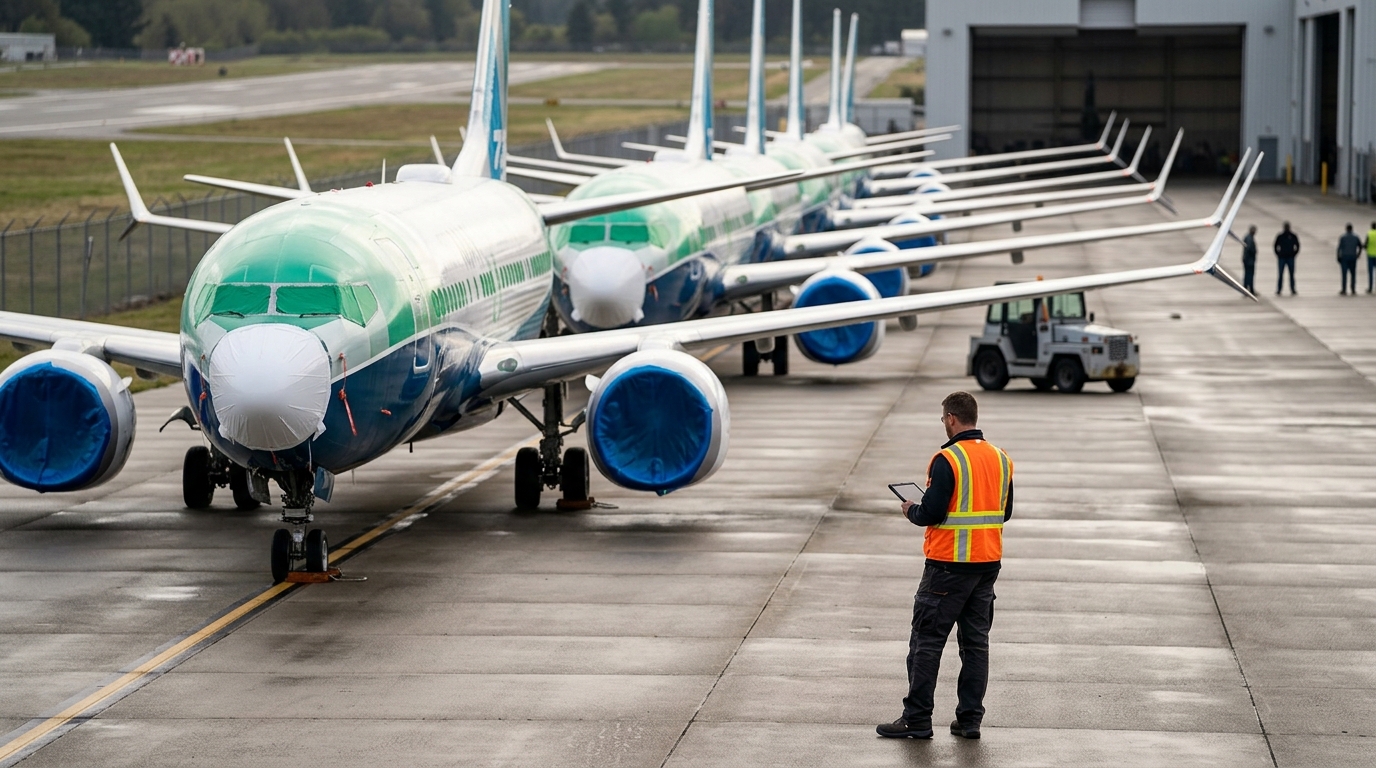
CFO Jay Malave has tied the release of stored-jet inventory to certification, which puts 2027 cash flow at stake. Malave said those jets will start delivering upon the certifications “really next year and probably over an 18-month period,” and that most of the risk sits on 2027, with Boeing describing its 2026 free cash flow outlook as “stable, steady around that $2 billion midpoint.”
Consensus puts free cash flow at around $2.3 billion in 2026 and around $6.2 billion in 2027. The jump from 2026 to 2027 is not a forecast based on hope. It is tied directly to deliveries unlocked by certification of new variants, including the MAX 10.
What Got in the Way
The road here was not clean. Between 2023 and 2026, the main obstacle was the redesign of the engine anti-ice system tied to an overheating risk involving the engine inlet inner barrel on 737s equipped with CFM LEAP-1B engines. Then, in late September, a software glitch in the flight management computer threatened another delay. On October 2, the FAA’s Corrective Action Review Board met in Seattle and determined there was no safety issue, stating that pilots retain full control of the aircraft and the indications are clear and unambiguous. The certification clock resumed.
The certification flight campaign closed on July 28 with 976 flights and more than 2,060 flight hours across three test aircraft, plus approximately 1,040 hours of ground testing. The engineering work is finished. What remained was regulatory process.
What Airlines Are Waiting For
Alaska management has said it expected approval by the end of September and targeted a first delivery in spring 2027, with passenger service between April and mid-May. Ryanair still expects its first 15 aircraft in spring 2027, Group CEO Michael O’Leary said during a late September conference. United has also indicated the type is expected to begin delivering in 2027.
Boeing’s backlog delays have forced airlines across the world to extend the lives of aging aircraft, postpone premium cabin launches, alter route plans, and reconsider future fleet purchases. Certification does not erase that damage, but it stops it from compounding.
The Risks Investors Should Weigh
Approval this week is not final until it is signed. A final FAA management meeting still has to happen, and as of Sunday, October 18, neither the FAA nor Boeing had announced an approval. A further delay, even a short one, would not be the first time in this program’s history that a near-certain milestone slipped.
Beyond certification, the delivery ramp is Boeing’s next test. The 737 program is transitioning to a rate of 47 per month this summer, with a planned move to 52 per month supported by the new Everett production line. Adding a third active variant raises scheduling complexity. Any bottleneck in that ramp caps the cash flow upside the Street is pricing in.
Bottom Line
Boeing has called the MAX 10 a major cash-flow driver for its recovery. Long-term free cash flow targets of $10 billion remain a goal management has said is attainable by the end of the decade as higher-margin backlog is delivered. Certification this week is the event that starts the clock on that sequence. The question investors should be asking is not whether the certificate arrives, but how fast the delivery ramp follows it.