Here is the question ADI investors woke up to on Tuesday: how does a company post its best annual revenue in history and still finish the day as the worst performer in the S&P 500? The answer involves a spending plan that more than doubled overnight, a January-quarter margin squeeze, and a market that had priced in something better than merely excellent.
Why This Stock Matters Now
Analog Devices reported fourth-quarter fiscal 2026 revenue of $4.37 billion, up 42% year over year, topping the analyst consensus estimate of $4.31 billion. Adjusted earnings per share of $4.06, up 80% year over year, beat the consensus of $3.88. Full-year revenue came in at a record $15.2 billion, up 38% from fiscal 2025. None of that prevented a 17% sell-off. The market was not grading the year behind; it was pricing the year ahead.
The Investment Thesis
ADI’s core argument is straightforward: it is the dominant analog and mixed-signal supplier to industrial and automotive customers in a multi-year upcycle. Industrial revenue surged 55% in Q4, and CEO Vincent Roche said more than two-thirds of total company growth came from non-AI-centric markets. That is worth sitting with. The company grew at a pace that most pure-play AI chip suppliers would envy, and the driver was factory automation, aerospace, and cars, not data centers. For the full fiscal year, industrial revenue rose 51%, communications 74%, automotive 12%, and consumer 15%.
What Changed
The selloff had three triggers, and they compound each other. First, the Q1 outlook: revenue guidance of $4.4 billion plus or minus $150 million, with adjusted EPS of $3.82 plus or minus $0.20, sat just below the $3.88 consensus. Second, margins are stepping back. Q1 adjusted gross margin is expected to moderate to approximately 74% due to planned holiday factory shutdowns and their impact on utilization. Operating expenses will also grow mid-single digits sequentially, partly due to a full quarter of costs from the Alif Semiconductor acquisition, which closed on November 3, 2026.
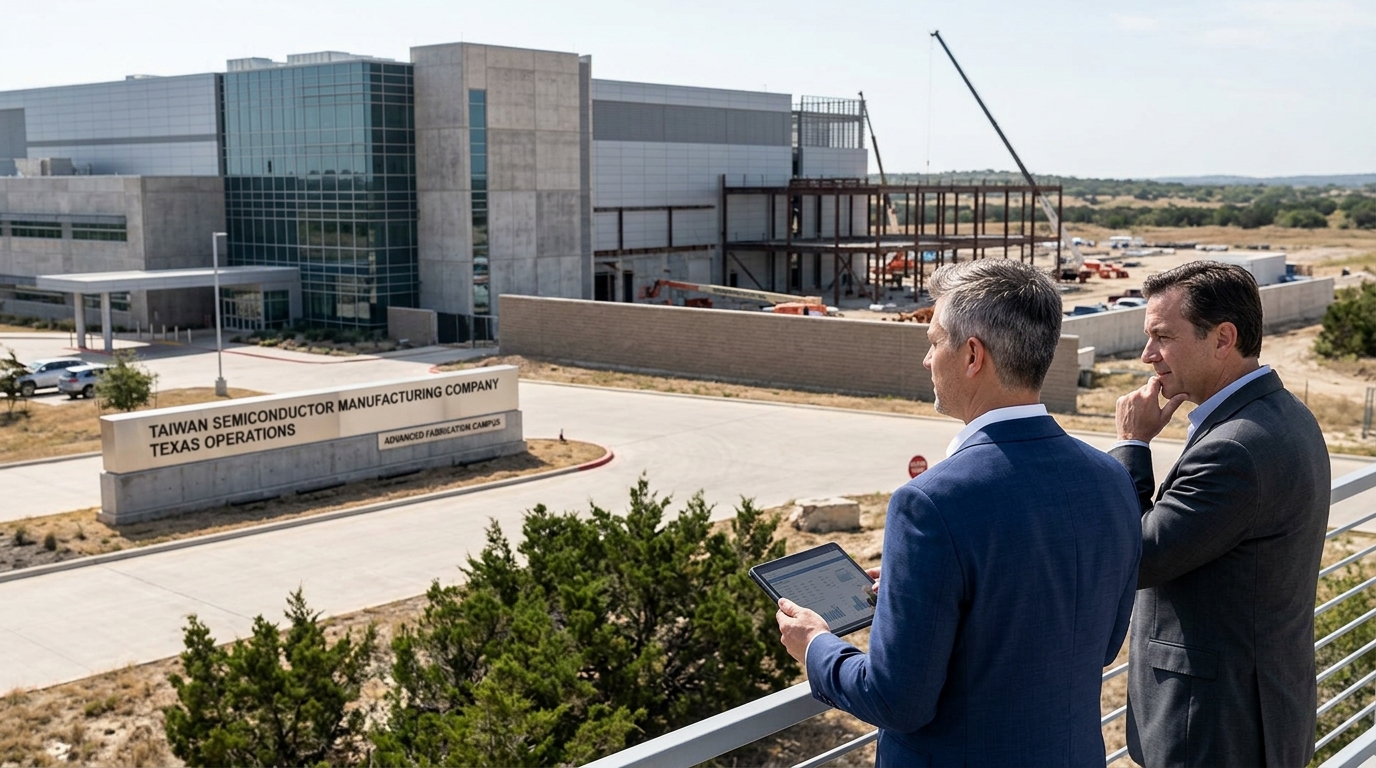
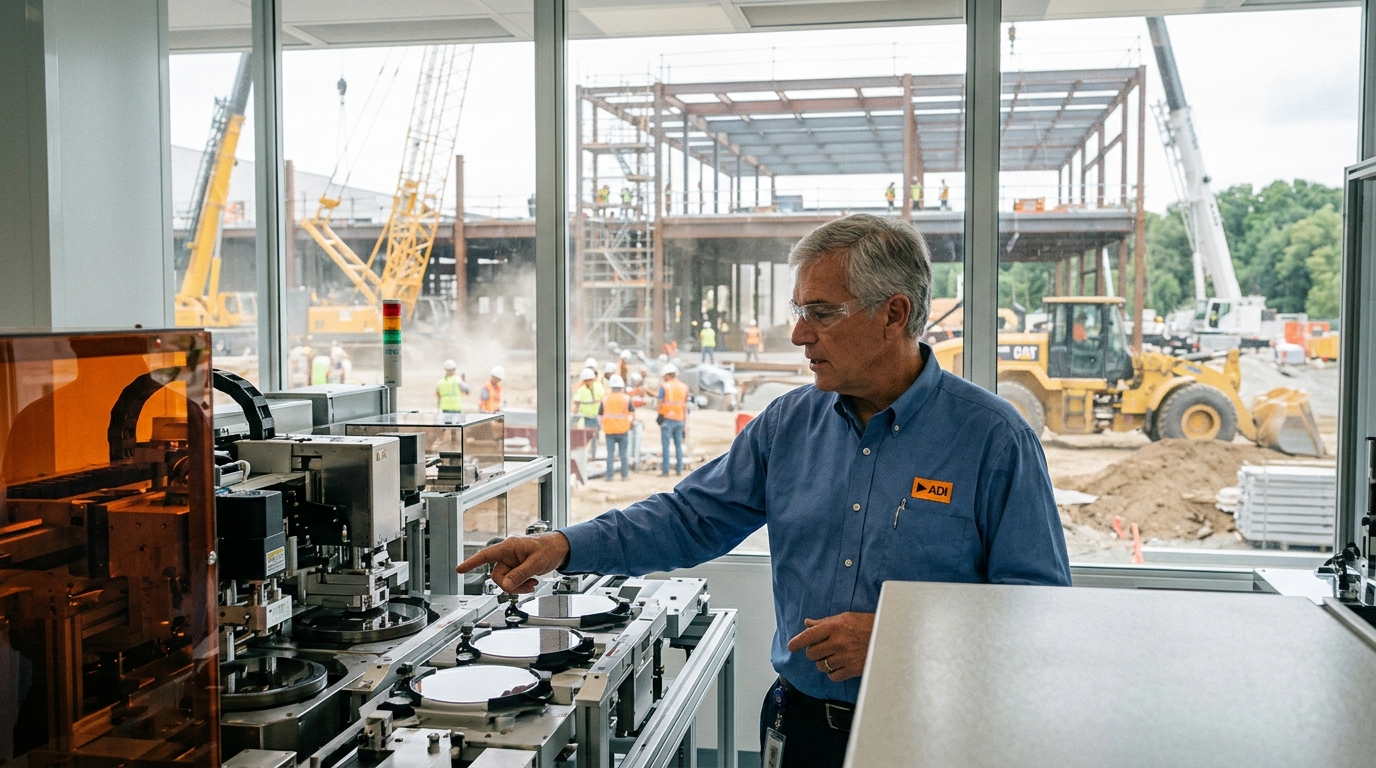
Third, and most disruptive to the free-cash-flow story investors had been rewarding: management is significantly increasing fiscal 2027 capital expenditures to approximately $1.6 billion to $1.9 billion to expand internal clean room and back-end capacity in anticipation of a long-term growth inflection. That is more than double the $733 million spent in fiscal 2026. The new production lines are expected to start coming online in stages beginning as early as Q1 fiscal 2028.
The Bull and Bear Case
The bull case is straightforward: factories are running at full utilization, orders are exceeding billings in almost every end market, and the company is investing because it has to. CFO Richard Puccio noted that part of the roughly $1 billion CapEx step-up will qualify for CHIPS Act tax credits, with new capacity coming online in stages starting Q1 2028, after which CapEx should return toward the long-term model of 4% to 6% of revenue. A constrained-supply environment is not the same as weakening demand.
The bear case is about timing and valuation. Days inventory outstanding rose to 141 from 134 the prior quarter, and the fiscal 2027 capex plan is more than double the prior year, pressuring near-term free-cash-flow conversion. Automotive is expected to decline in the low single digits in Q1, and consumer revenue is expected to fall 10% to 15% seasonally. With automotive at 24% of quarterly revenue, even modest sequential deterioration matters. Peers Texas Instruments and NXP Semiconductors face the same industrial and automotive crosscurrents, so any sector-wide inventory rebuild will show up across the group.
What Investors Should Watch
The two numbers that will determine whether Tuesday’s selloff was an overreaction or a warning: free cash flow conversion in Q1 2027, and whether industrial sequential growth in Q1 lands above or below the guided low-to-mid single-digit range. Key items include the trajectory of inventory days and free-cash-flow conversion amid sharply higher capital spending. If orders stay ahead of billings and margins stabilize in Q2, the capacity investment reads as a confidence bet. If demand softens before those fabs open, the spending locks in cost with nowhere for the product to go.
Bottom Line
ADI’s fiscal 2026 was genuinely exceptional. The industrial and automotive recovery is real, the Maxim synergies are tracking above plan, and adjusted gross margins at 74.5% reflect a business with real pricing power. The honest tension is that the company is spending aggressively into peak demand, before it can verify that demand holds through 2028. Patient investors who believe the industrial upcycle has years to run just received an entry that wasn’t available a week ago. Those who need near-term free cash flow or margin expansion in Q1 should wait for the February results.