
Brent crashed to $94, then crossed $100. Neither price is safe.
With tanker mine claims and Oman-Iran diplomacy both live at once, energy exposure requires a plan for two completely opposite outcomes.
Crude oil just delivered one of the cleaner lessons in how quickly geopolitical risk can reverse. On Wednesday, Brent plunged 8.7% to $94.62, while WTI declined 8.3% to $88.12. By Friday morning, Brent crude exceeded $100 per barrel and WTI approached $92, following reports of tanker attacks in the Strait of Hormuz. That is a round-trip of more than $6 in under 72 hours, and the catalyst on each leg was a different variable entirely.
Wednesday’s collapse was political. Energy markets reacted after Democrats swept both chambers of the US Congress, a shift markets took as raising the odds of pressure to pull back from the Iran war. The price drop also followed remarks by US Vice President JD Vance that the war was a key factor in the Republican losses. Markets read a weaker mandate and quickly sold the war premium.
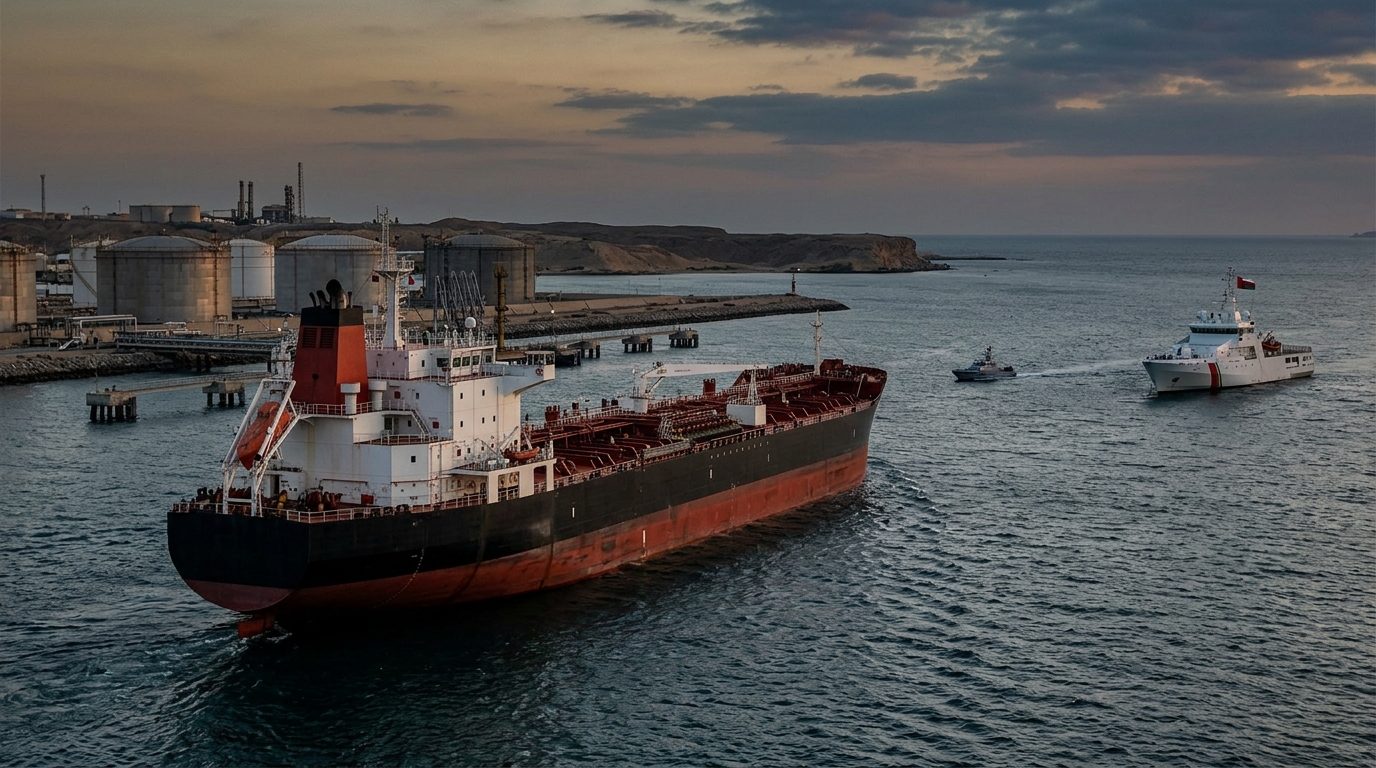
Thursday and Friday’s rebound had a different author. Iranian state media reported the Islamic Revolutionary Guard Corps said on Thursday that two oil tankers and a tugboat caught fire in separate incidents after attempting to use unauthorised routes through the Strait of Hormuz. On Friday, Iranian state-linked reports said the IRGC claimed additional mine strikes, but as of November 6, CENTCOM and major independent maritime authorities had not confirmed the mine-strike details as described in IRGC announcements. Unverified or not, Andy Lipow of Lipow Oil Associates said such reports continue to unsettle the market.
The diplomatic track remains open but fragile. Oman has said shipping through the strait would have to follow a route agreed upon by Iran and Oman, and past reporting has described talks on a joint mechanism to manage navigation. Progress is real but reversible, as the latest mine claims made clear.
OPEC+ is not adding supply to ease the tension. On November 1, seven OPEC+ oil-producing countries held their monthly meeting, reaffirming that they would maintain September 2026 required production for December 2026. Saudi Arabia, Russia, Iraq, Kuwait, Kazakhstan, Algeria, and Oman again emphasized market stability and adherence to the Declaration of Cooperation, which means quota levels are largely academic for now.
The asymmetry in analyst forecasts is worth internalizing before sizing energy positions. Eurasia Group probability figures and the specific $110 to $125 upside range cited here could not be independently verified from publicly available reporting as of November 7, 2026, so treat those precise numbers as directional rather than definitive. The broader point stands: even after a sharp down day, any escalation that credibly threatens Hormuz flows can still put a fast, sharp bid back into Brent.
On the equity side, XLE on November 5 opened at $64.13 and closed at $61.63, down 2.98%, reflecting how sharply energy stocks tracked Wednesday’s crude selloff. Specific claims about a five-day net AUM change of roughly -$893 million could not be verified from primary fund reporting here, so it is best read as evidence that flows were soft rather than a precise figure.
That is precisely the tension traders must manage. Diplomacy and mine claims are not running on separate tracks; they are competing in real time. Any session that opens with concrete Oman-Iran framework progress could push crude back toward the $90s. Any session that opens with independently confirmed mine strikes on a major tanker could retest $110 quickly. The correct response to this environment is not to pick a direction and hold, but to define the levels where the thesis breaks in both directions and size accordingly before the next headline lands.