November 4, 2026
Bonus Content: Boeing’s Wing Problem Is Bigger Than the Headline Miss
Hi,
Quick question: when did you last pay for pest control?
A termite inspection. A mosquito treatment for the yard. A can of bug spray under the sink.
Whatever it was, you’ll pay for it again. And that’s the part most people miss.
When the public turns on a product, people usually stop buying it. But some things can’t be quit.
Termites still eat houses.
Rodents still get into food plants.
Crops still need protecting.
And the mosquito still bites.
So as conventional pesticides face more scrutiny, from health research and lawsuits to regulators and corporate buyers rewriting their standards, the need doesn’t go away. The spending may simply move.
Our new investor letter follows where it could go, and introduces a small company that has spent years building botanical products for exactly that shift.
Where does that money go next? →
P.S. The letter also covers what most stories skip: the counterarguments. You may not agree with the conclusion. Read it and decide →
Boeing’s Wing Problem Is Bigger Than the Headline Miss
Boeing conceded the obvious on its October earnings call: the 737 program will not reach 500 deliveries in 2026, and the production system is still not stable at a rate of 47 aircraft per month. Shares fell about 10 percent after CEO Kelly Ortberg acknowledged the ramp is taking longer and investors digested weaker-than-expected results and delivery momentum. The stock reaction was swift and deserved. What is less obvious is what, precisely, is breaking down.
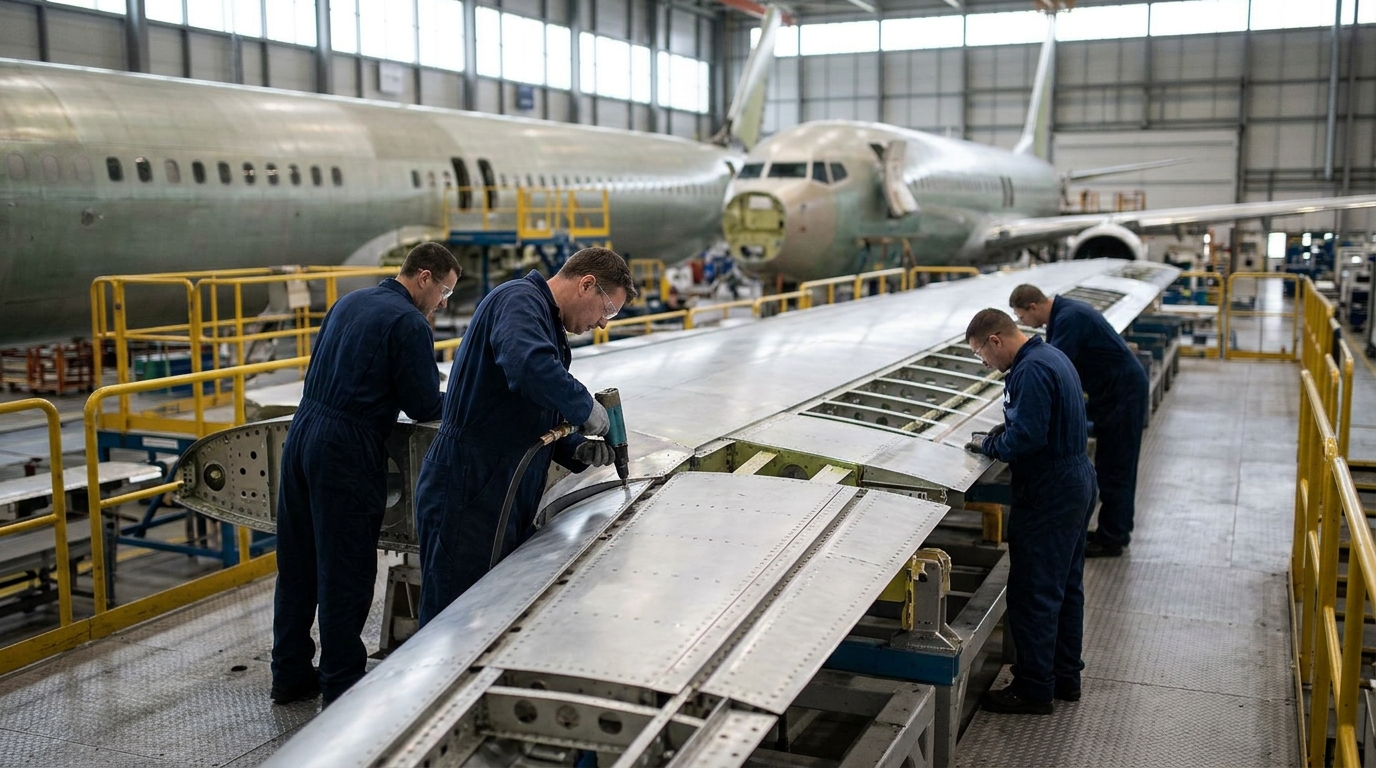
In recent investor remarks, Ortberg has pointed to wing production as the biggest near-term constraint on 737 MAX output. That is a specific, structural problem. Wings are not bolted on at the end; they gate the entire flow of the assembly line. Raising and sustaining a 47-per-month pace is difficult until wing throughput matches final assembly capacity. Boeing also needs to ensure that fuselage supply out of Wichita, Kansas, can support higher volumes and that its new North Line in Everett, Washington, is ready to contribute. These are not problems one quarter of focus can fix.
The manufacturer delivered 124 737s in the third quarter. That works out to just over 41 deliveries per month, below the roughly 44 per month it would need in the fourth quarter to reach 500 for the year. That math has effectively closed. First-nine-month 737 deliveries rose from 330 in 2025 to 367 in 2026, which shows real progress. It just is not enough progress, fast enough, to close the gap.
The more consequential number for institutional investors is not 2026 deliveries at all. Management has lowered its expectations for cash generation, outlining a path of approximately $3 billion in free cash flow in 2027. Every month that the 737 system runs at 41 or 42 instead of a stable 47 is deferred revenue on a $745 billion company backlog that Boeing cannot touch.
The commercial logic behind pushing to 47 per month is plain when you look at Boeing’s order position. As of Sept. 30, Boeing reported more than 6,300 airplanes in its commercial backlog, valued at $612 billion. Airlines want those jets. The demand is not the debate. The factory is.
Boeing has spent years rebuilding confidence in its manufacturing processes. Rushing to meet production targets before its factories and suppliers are ready could undermine that effort. Ortberg appears to have absorbed that lesson, but the tradeoff is real: a measured ramp is paid for in cash flow delay, and Boeing’s balance sheet has little margin for patience.
The gap between a headline backlog number and what actually converts to funded revenue is a recurring problem in large industrial programs. RTX’s $20.7 billion AMRAAM contract illustrates how a generational commitment can still leave shareholders waiting on cash.
What most commentary misses is that the fourth 737 line, the North Line in Everett, must obtain FAA approval before aircraft assembled there can be delivered to customers. Low-rate initial production is a step toward demonstrating conformity to the regulator, not the end of it. Even once wings flow freely, the new line cannot add deliveries until the FAA signs off. That is a second-order constraint the market may not be fully reflecting in 2027 estimates.
The FAA approval constraint on the North Line is not the only regulatory gate standing between Boeing and its 2027 cash targets. Stored 737 MAX 10 jets cannot generate revenue until certification clears, tying a second tranche of 2027 cash flow to regulator timing.
Beating production and delivery targets likely means beating free cash flow targets as well, and with a company backlog of $745 billion, Boeing has an opportunity to deliver for investors. The question is whether the wing line in Renton cooperates before management’s credibility runs out entirely.