
October 29, 2026
Bonus Content: Shell Is Giving Its Record Refining Quarter Back to Shareholders
Dear Reader,
Marc Chaikin just issued a shocking warning about AI stocks.
And it’s one we think every American needs to hear – right now.
“A very strange day is coming for AI stocks,” says the market veteran. “I’ve never seen anything like this in my career.”
Marc has circled November 16 on his trading calendar, he says.

Which is the date he anticipates a major potential announcement…
One that could kick off a $248 trillion AI White Swan event…
And a complete and instant revaluation of the entire AI stock market.
“If you own AI stocks, or you’re thinking about owning them, you need to know what’s coming,” Marc says.
What’s coming is the launch of a whole new class of AI technology.
It’s being developed at a highly secretive laboratory in the hills of Tennessee…
By a team of government scientists and an obscure AI company many Americans know nothing about.
The technology is a new type of data-center Marc calls AI “micro clusters.”
Micro clusters use 99% less electricity compared to today’s AI data centers.
They take up 99% less real estate.
Yet they’re up to 1 trillion times more powerful at generating AI breakthroughs… in energy, medicine, materials, quantum, and AI itself.
One project insider claims this technology will accelerate AI breakthroughs by 360X.
Which is why Marc says this could reset the AI industry instantly when the first micro cluster comes online, which could happen just days from now.
This event could also deliver historic gains for folks who get in early – before the announcement.
Keep in mind:
Marc is a 50-year Wall Street veteran and quantitative trading legend.
His Chaikin Money Flow indicator is built into every Bloomberg terminal on Wall Street.
His former clients include billionaires such as George Soros, Paul Tudor Jones, and Michael Steinhardt.
Mad Money’s Jim Cramer says: “I learned a long time ago not to be on the other side of a Chaikin trade.”
Andin the past, when Chaikin’s Power Gauge system turned bullish on an AI stock like this…
It led to 50,001% gains on a then-obscure AI company called Nvidia.
Which is why we suggest you act on this intelligence immediately.
Hit this link for Marc’s full presentation – including his No. 1 stock for riding this revolution starting now.
Vic Lederman
Publisher, Chaikin Analytics
P.S. Marc’s Power Gauge system flashed bullish on Nvidia right before it rose 50,001%. And it just flashed bullish on another off-the-radar AI stock poised to solve America’s data-center crisis as soon as November 16. Click here now for Marc’s research and free recommendation.
Shell Is Giving Its Record Refining Quarter Back to Shareholders
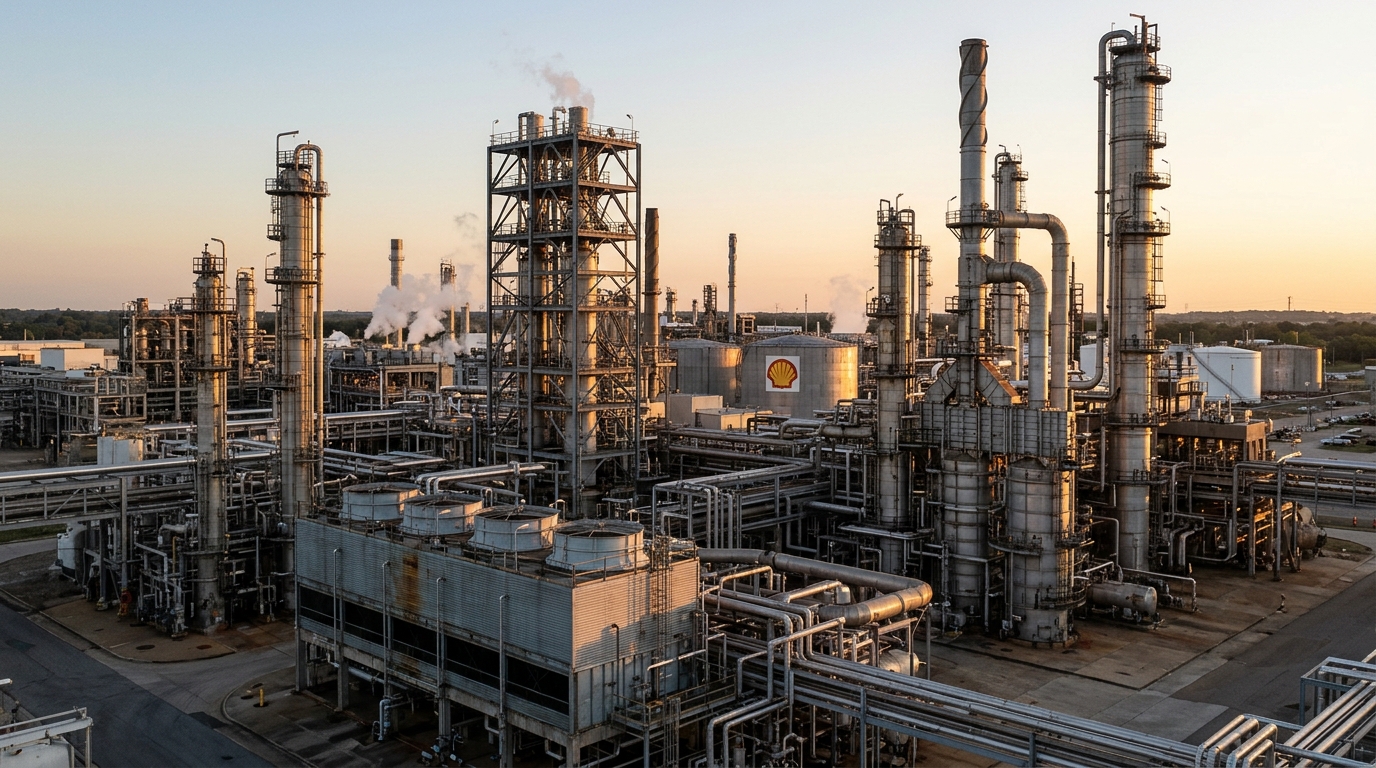
The central question in energy investing this morning is not whether Shell had a good quarter. It did. Shell reported adjusted earnings of $10.8 billion for Q3 2026, reflecting strong operational performance in a continued volatile and elevated commodity price environment with record refining margins. The more revealing question is what the company chose to do with that money, and what that choice signals about where management believes the cycle is heading.
CEO Wael Sawan pointed to strong operational performance and announced a $5 billion share buyback programme, up from the previous $3 billion. That 67% jump in the buyback is not a routine capital allocation update. It is a statement that Shell sees no better use for a record cash windfall than retiring its own stock.
The Refining Windfall
Shell’s global indicative refining margin was $42 a barrel for the quarter, up sharply from $24 a barrel in the second quarter. Shell itself described the quarter as one with record refining margins. The fuel supply crunch driving those margins has been tied to the continued severe disruption to the global energy system linked to the Middle East conflict.
So Shell captured a genuinely exceptional moment in downstream economics, delivered $10.8 billion against a company-compiled consensus of about $10.33 billion, and then handed the excess straight to shareholders rather than directing it into new barrels. For institutional energy investors, that sequencing matters.
How TotalEnergies Answered Differently
The contrast became sharper within hours. TotalEnergies said third-quarter 2026 adjusted net income rose to $9.1 billion from $6.03 billion in the second quarter, driven by record European refining margins and surging gas prices. But the French major’s capital allocation response tells a different story. TotalEnergies has said it expects to keep oil and gas production at around 3 million barrels of oil equivalent per day through 2035, supported by projects in Namibia, Nigeria, Libya, Malaysia, Mozambique, and Papua New Guinea. The company has also said it plans net investments of $14 to $17 billion a year between 2027 and 2032 to support its production and power expansion.
TotalEnergies unveiled a new capital increase reserved for employees at a 20% discount, maintained its interim dividend at €0.90 per share, and plans $2.5 billion in share buybacks over Q4 2026 and Q1 2027. That $2.5 billion covers two quarters combined. Shell is committing $5 billion in a single programme expected to be completed by the fourth quarter 2026 results announcement. The ratio captures the strategic divergence precisely: one company is buying future production, the other is buying back its past.
What Investors Are Missing
The debate among portfolio managers this morning will focus on whether Shell’s buyback aggression is a sign of discipline or a quiet admission that the company sees limited high-return investment opportunities at scale. Shell previously flagged that its Integrated Gas volumes were affected by Middle East conflict impacts including Qatar. The company has also guided to cash capital expenditure in the mid-$20 billions for 2026, while its ARC Resources deal was a much larger, cash-and-share transaction valued at roughly $22 billion including assumed net debt (with an equity value around $13.9 billion), adding Canadian gas volumes rather than new exploration capacity.
The reliance on a $42 per barrel refining margin to drive current performance creates significant downside risk if macroeconomic volatility forces these margins back toward historical norms. TotalEnergies is betting that investing through the peak builds a production base that earns through the next trough. Shell is betting that returning capital now outperforms the risk-adjusted return on new projects. Both can be right simultaneously, which is precisely why this is a genuine investment debate rather than an obvious call.
Stocks to Watch
- SHEL: The $5 billion buyback compresses the float aggressively. If refining margins hold into Q4, the per-share earnings effect accelerates. If margins revert toward $24, the buyback looks like poorly timed capital deployment.
- TTE: The production roadmap through 2035 is a longer-duration bet. Investors who believe the Middle East disruption is structural, not cyclical, may find TotalEnergies the better vehicle.
- BP: Reports tomorrow, Friday, October 30, 2026. Its refining exposure and capital allocation posture will either confirm Shell’s buyback-first logic or complicate it, depending on whether BP leans toward investment.
- XOM and CVX: Also reporting tomorrow, Friday, October 30, 2026. Both have been more explicit than European peers about volume growth targets. Their responses to the same refining windfall will clarify whether the buyback-versus-production divide is a European supermajor phenomenon or an industry-wide shift.