October 26, 2026
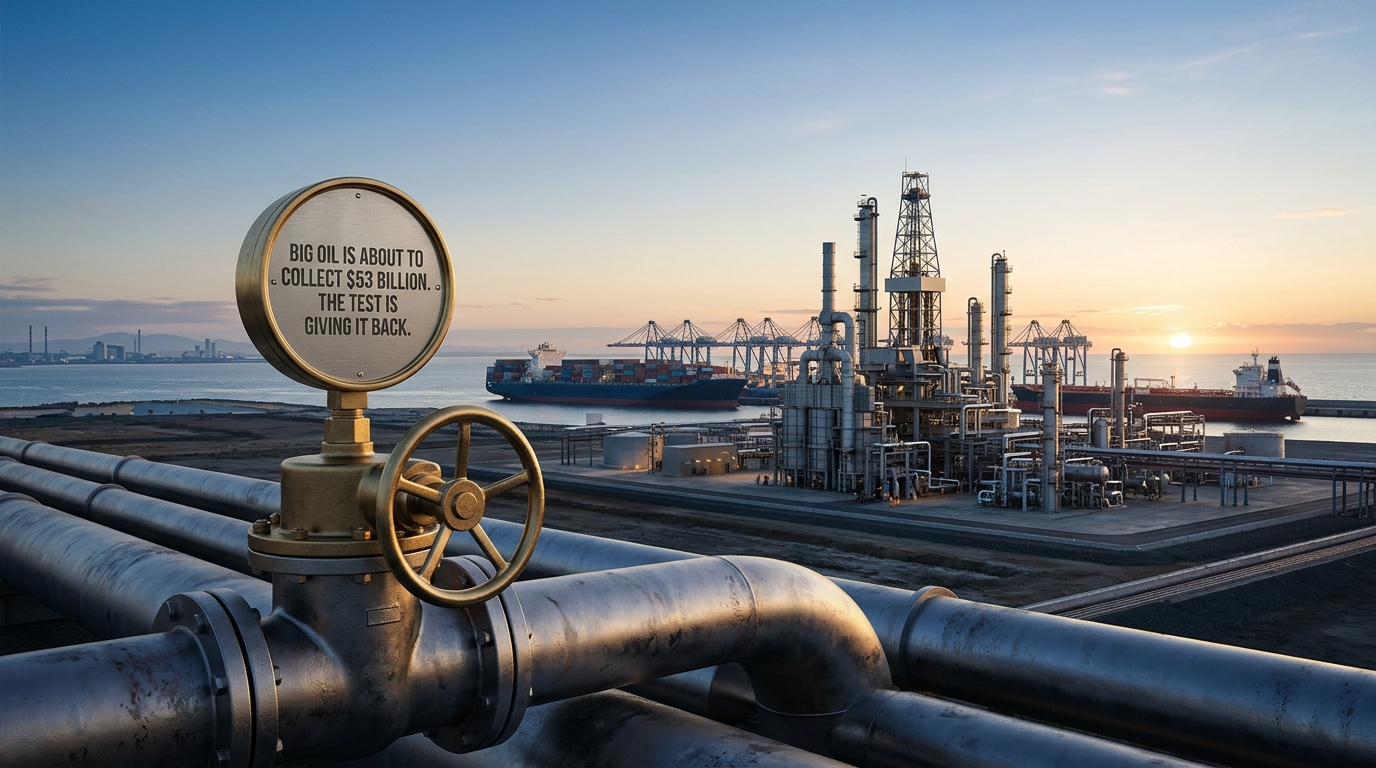
Bonus Content: Big Oil Is About to Collect $53 Billion. The Test Is Giving It Back.
Today, mining represents just 1% of global equities – the lowest level in more than a century.
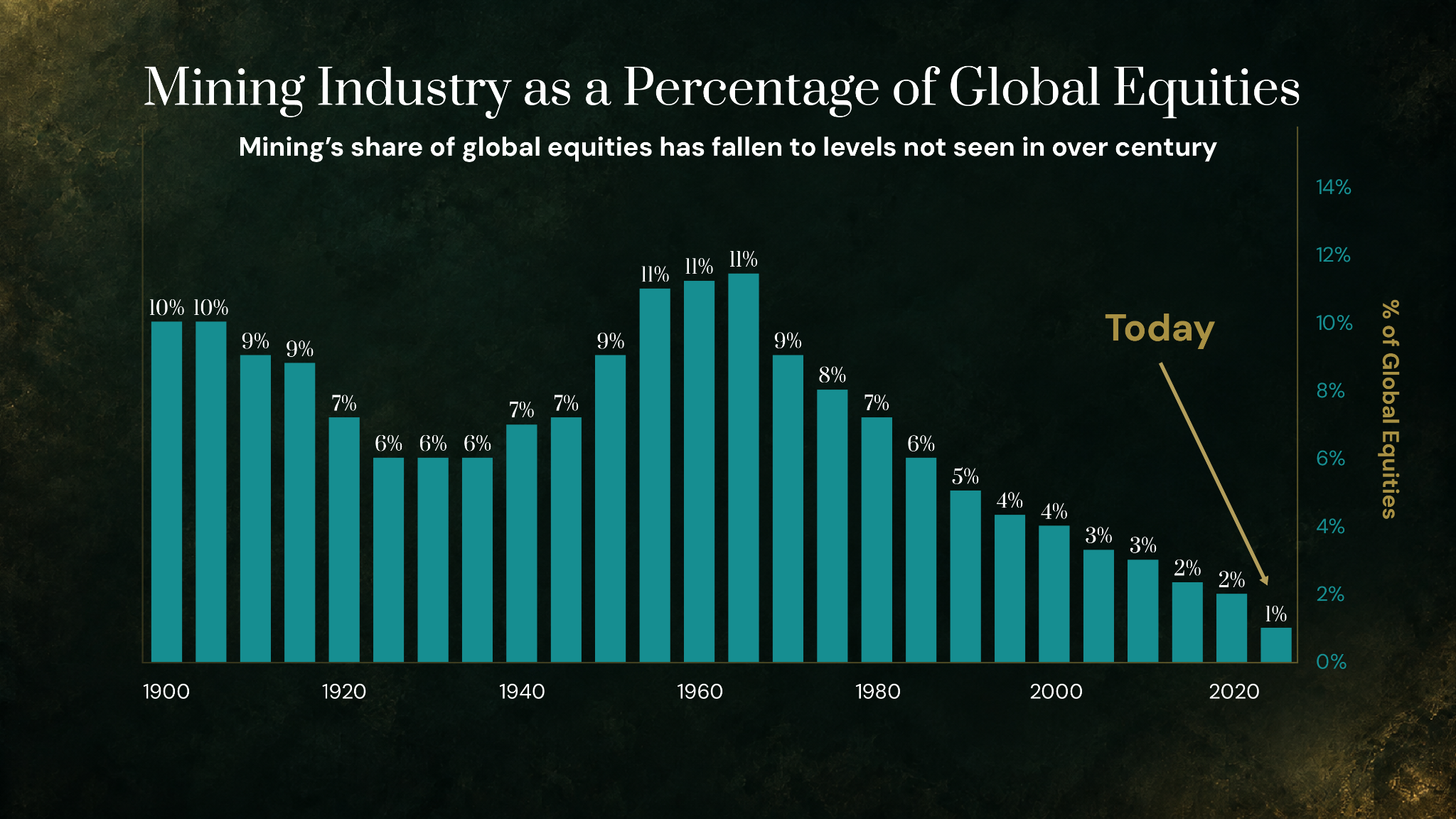
Almost nobody owns them. Now consider…
What happens if even a small amount of the enormous capital currently chasing AI/tech/growth stocks starts looking for somewhere else to go…
I call this a “Great Rotation” – when money flees growth stocks looking for undervalued hard assets.
Bottom line: The trillions of dollars currently betting on AI cannot flow into the tiny universe of gold stocks without making early investors very rich.
Now…
If you think money from growth/tech/AI isn’t going to flood into gold stocks in the coming market correction… think again.
It’s happened three times before.
I’ve spent more than 20 years studying gold and mining companies – traveling to mines around the world.
If you want to potentially profit when the AI trade finally goes off the cliff, here’s all you need to know:
Only a small percentage of an enormous pool of money in AI/tech has to rotate into gold stocks for this tiny sector to hand early investors a generational fortune.
For details on my top four miners, go here.
Regards,
Garrett Goggin, CFA, CMT
Lead Analyst and Founder, Golden Portfolio
Big Oil Is About to Collect $53 Billion. The Test Is Giving It Back.
Every energy portfolio manager watching this week’s results already knows the profit number. RBC Capital Markets estimates that BP, Chevron, ExxonMobil, Shell and TotalEnergies will report combined third-quarter profit of around $53 billion, up from $48 billion in the second quarter and more than double the level of a year earlier. What none of them knows yet is what the companies plan to do with it.
Why This Quarter Is Different
The refining windfall driving these numbers is extraordinary by any measure. Shell expects its indicative refining margin for the third quarter to have jumped to $42 per barrel, up from $24 per barrel for the second quarter. TotalEnergies reported its European refining margin climbed to $33.20 per barrel, nearly triple the $13.50 recorded in the second quarter and roughly four times the $8.40 margin seen in the same period a year earlier. BP is not far behind: its average refining margin rose from $29.6 per barrel in the second quarter to $46.7 in the third quarter.
ExxonMobil flagged that stronger refining margins could add about $4.5 billion to its third-quarter earnings, a disclosure that reset expectations across the whole sector before a single full result was published. Chevron is expected to post quarterly earnings of $4.78 per share, representing a year-over-year change of roughly 158%, and shares hit a 52-week high of $225.67 earlier this month ahead of its October 30 report.
The Capital Discipline Argument
Through the first two quarters of the Iran conflict, the majors held the line. Most producers had already entered 2026 with a strong focus on capital discipline and shareholder returns, and that framework did not disappear simply because geopolitical tensions drove prices higher. Since the Iran war began in late February, the majors have largely reacted cautiously, directing billions toward debt reduction instead of major new investments.
Exxon CEO Darren Woods has been explicit. He said production growth would remain “grounded in value, not volume,” repeatedly emphasizing shareholder payouts and cash flow growth. Shell’s CEO has been equally direct: Wael Sawan said the company’s commitment to returning 40% to 50% of cash flow to shareholders is “sacrosanct,” and announced a 5% dividend increase alongside $3 billion in buybacks in the second quarter.
Where the Tension Is
The bull case for sustained discipline is straightforward. While the oil majors have not abandoned longer-term commitments, their investment priorities have clearly shifted, with capital increasingly redirected toward higher-return upstream and LNG opportunities rather than broad volume growth. That is a shareholder-friendly posture dressed in strategic language, and markets have rewarded it.
The bear case is subtler. Big quarters do not automatically lift oil majors’ valuations: markets often discount windfalls they see as temporary unless they translate into a stronger balance sheet or more predictable cash returns. If management teams signal even modest capex acceleration in response to a quarter this large, the market will need to recalibrate what the promised discipline was actually worth.
Pure-play refiners strip out the upstream noise and make the margin question harder to avoid. Valero, which holds no upstream assets and converts crude spread directly into earnings, is pricing in margins that nearly doubled year over year.
What Investors Are Missing
The debate about buybacks versus capex obscures a more consequential question: whether refining margins near these levels are sustainable into Q4. Shell linked the margin surge to supply disruptions that tightened fuel markets, a driver that can reverse faster than it arrived. If crack spreads compress in the fourth quarter, the $53 billion windfall becomes a one-time event rather than a new earnings floor. That distinction changes the entire valuation argument for the group.
The supply disruption behind the margin surge has its own unresolved structure. The Hormuz diplomatic process is producing a new sovereignty arrangement, not a restoration of prior shipping order, and that distinction governs how quickly the crack-spread tailwind can reverse.
Stocks to Watch
- BP (BP): Reports Friday. BP has said it will provide a strategy and outlook update on December 15. The refining beat is already flagged; capital allocation language on the call is the real read.
- Shell (SHEL): Reports Thursday. The $42-a-barrel refining margin is already public. Shell has tied buybacks to its 40% to 50% of cash flow distribution policy, and the floor is what matters if management wants to lean into the moment.
- ExxonMobil (XOM): Cumulative cost savings have reached $16.3 billion since 2019, giving Exxon more balance-sheet flexibility than its peers. Any hint of upstream acceleration would carry outsize weight given the company’s scale.
- Chevron (CVX): Investors will closely monitor production growth, refining profitability, cash flow and shareholder returns, alongside progress integrating Hess and expanding production in Guyana.
- TotalEnergies (TTE): Refining and chemicals cash flow is expected to rise by about $2 billion from the second quarter, aided by a 10% increase in refining throughput that let the French major capture historically high margins in Europe and worldwide.