October 11, 2026
Golden Week spending just hit a four-year low. Tonight we find out what that means for luxury.
Every quarter, the investment committee debate over Chinese luxury demand gets kicked forward to the next data point. Tonight it runs out of road.
NASA Is Paying Elon Musk $843 Million to DESTROY a $150 Billion Space Station
It cost $150 billion and took 16 nations 13 years to build.
It is the most expensive object human beings have ever made.
Now SpaceX has been hired for what one outlet calls “the most expensive demolition job ever commissioned.”
But here is the part almost nobody has caught yet.
Elon is NOT building the replacement.
That job is poised to go to a company less than half a percent the size of SpaceX.
It is the real winner in this deal.
Former Wall Street CEO Dylan Jovine has laid out the whole story, including the tiny firm’s name.
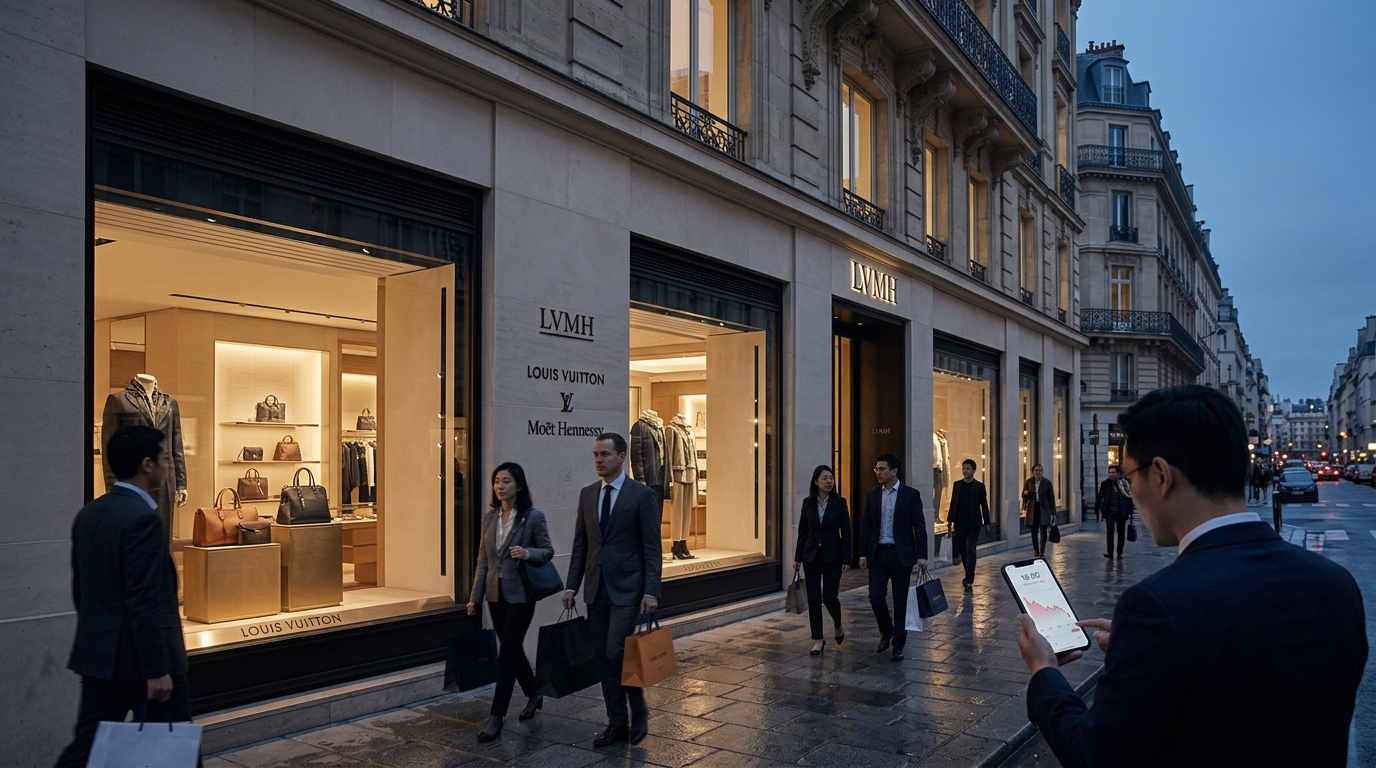
LVMH has pencilled in October 12 for its third-quarter 2026 revenue release, scheduling the disclosure after the close of Paris trading at 18:00 (Paris time) via live audio webcast. The number matters well beyond LVMH itself. It is the first hard revenue read that covers the Golden Week holiday period, and the holiday delivered something fund managers have spent months hoping to avoid confirming.
Chinese travellers’ average spending per trip fell to a four-year low during this year’s seven-day Golden Week holiday. Average spending per domestic trip fell 1.9% to 893.92 yuan ($133.51) from 911.04 yuan a year earlier. That was the lowest since 2022, when spending collapsed under China’s Covid-19 restrictions. Outbound travellers went farther, stayed longer, and spent thinner. Just 5% of Chinese travelers planning an outbound trip during this year’s Golden Week expected to stay in a luxury hotel, according to Dragon Trail Research.
Why Wall Street Cares
The luxury sector has spent two years arguing with itself about China. Analysts have highlighted that slower growth in China, long a pillar of luxury sales, and weaker margins contributed to sector pressure. Some strategists described the sell-off as a possible cyclical correction, while others cautioned it could signal a longer-term adjustment as luxury houses navigate changing consumer habits and macroeconomic pressures.
The distinction is not academic. A cyclical problem requires patience. A structural one requires revaluing the entire growth model that justified luxury valuations for a decade.
In China, structural challenges, particularly among younger and middle-income consumers, suggest the era of sustained double-digit expansion is over for now. The property downturn removed the wealth effect that once pushed aspirational buyers into Louis Vuitton stores. One of the most consequential structural shifts in China’s luxury landscape is the visible contraction of the aspirational consumer base. After a decade in which middle-class shoppers powered much of the sector’s expansion, their participation has weakened markedly. Years of aggressive price elevation have now collided with slower income growth, rising financial pressures, and a more cautious social climate.
Elon Musk’s Secret Resource … Could It Be the Next Oil?
Oil powered the industrial boom. Could Computium help power the next decade of AI growth?
A massive infrastructure buildout is underway – and little-known companies could stand to benefit from surging demand.
Chris Graebe explains the opportunity and why he’s watching Oct. 12.
The Bull Case
Bulls argue that the Q3 report reflects a temporary compression, not a demand ceiling. LVMH’s second quarter already showed sequential improvement. In its first-half 2026 results, LVMH said revenue rose 2% organically to 38.6 billion euros, with second-quarter growth accelerating to 3%, as strong demand in jewelry, Sephora and parts of fashion helped offset currency pressure and softer conditions in some regions. Jewelry continues to outperform. LVMH said Tiffany and Bvlgari drove double-digit growth in the Watches and Jewelry division in the first half. Bulls contend that aspirational spending is merely delayed, and that ultra-high-net-worth Chinese clients, who drive a disproportionate share of Hermès and Richemont demand, remain largely intact.
The Bear Case
Three brokerages cut their targets in the weeks before tonight’s release. RBC Capital Markets downgraded LVMH to “sector perform” from “outperform” and cut its 12-month price target to €475 from €575, citing a weaker macroeconomic and luxury demand environment that it expects to persist into fiscal 2027. Jefferies moved the same day, reducing its target to EUR 440 from EUR 510 and sticking with a neutral stance.
The stock has already priced considerable pain. LVMH’s shares finished Friday at about EUR 380, leaving them down roughly 40% year-to-date and near their 52-week low around EUR 376. Bears argue that even at these levels, estimates are still too high if Fashion and Leather Goods growth turns negative in the low-to-mid single digits.
What Investors Are Missing
The more interesting divergence is not between LVMH bulls and bears. It is between LVMH and Richemont. Richemont, led by its flagship Jewellery Maisons Cartier and Van Cleef and Arpels, reported 20% sales growth at constant exchange rates for its fiscal first quarter ended June 30, 2026, which covers calendar Q2 2026. Luxury stocks are increasingly diverging in 2026. Richemont, Brunello Cucinelli and Ferrari continue to deliver strong growth, while LVMH, Kering and Burberry remain under greater pressure.
The split suggests the China problem is more precisely a middle-market problem. Hard luxury, sold to wealthy buyers who do not check property prices before buying a Cartier bracelet, is holding. Soft luxury, dependent on aspirational consumers stretching for a Vuitton bag, is not. Tonight’s number will confirm how far LVMH’s Fashion and Leather Goods division sits in that second camp.
Nuclear Energy’s Comeback Could Spark Before 2026
Global energy demand is surging and one overlooked power source is quietly returning to the spotlight. New policy support and supply constraints are setting the stage for a surprising shift in the energy markets.
Stocks to Watch
LVMH (MC.PA) is the obvious one. The key line to watch is Fashion and Leather Goods organic growth. Any acceleration back toward 5% changes the conversation. Negative territory deepens the structural argument and keeps the stock under pressure well into 2027.
Hermès trades at a premium precisely because its client base skews toward the ultra-wealthy Chinese buyer. Hermès said first-quarter 2026 revenue rose 6% at constant exchange rates, with Asia excluding Japan up 2%, supported by local client demand. A weak LVMH number can reinforce Hermès’ relative positioning rather than damaging it.
Kering has the least margin for error. In its first-half 2026 results, Kering reported a return to modest comparable growth, while Gucci remained down year-on-year. A soft LVMH release will raise fresh questions about whether Gucci’s tentative stabilization can survive another quarter of Chinese hesitation.
Richemont is the quiet beneficiary of tonight’s result. If LVMH confirms that soft luxury is struggling while hard luxury holds, Richemont’s premium multiple becomes easier to defend, not harder.