
Dear Reader,
Imagine showing up to the airport just 20 minutes before your flight…
No long lines. No busy terminals. No chaos.
You step into a calm private hangar, sink into a leather chair, sip a gin & tonic…and land feeling like a VIP…
Sounds like a fantasy? It’s not.
Because today, you can fly private with a “$169 private-jet secret!”
I’m Jennifer Stevens. I’m the Executive Editor of International Living, and I’ve been a travel writer for the past 30 years…
…and I’m going to share Over 100 Travel Secrets, Tips, and Tricks inside my “tell-all” book.
It’s called: Secrets Travel Writers Never Share.
|
|

I want to send you a paperback copy today for free… with a special membership offer…
Sincerely,

Jennifer Stevens
Executive Editor, International Living
Copper Is at $6.66. The Escondida Clock Is Running Out.
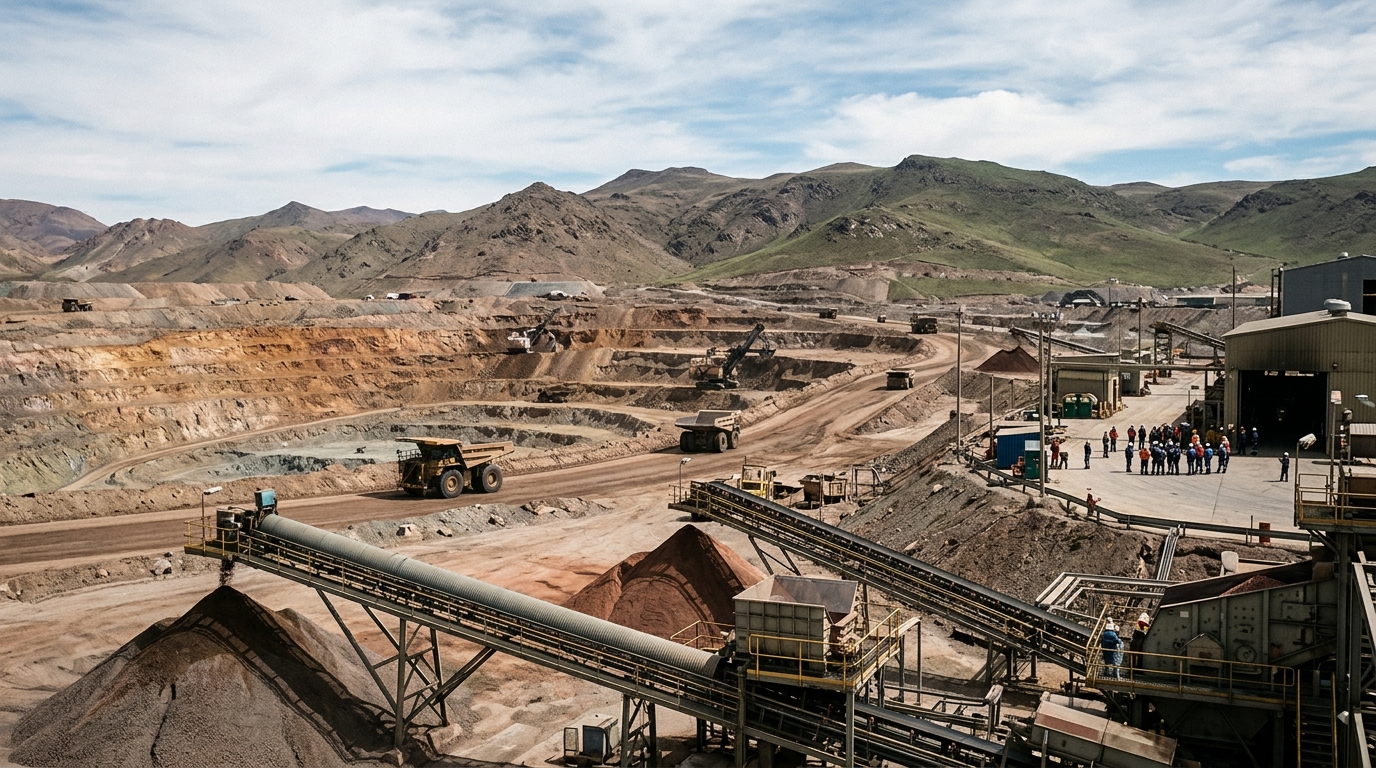
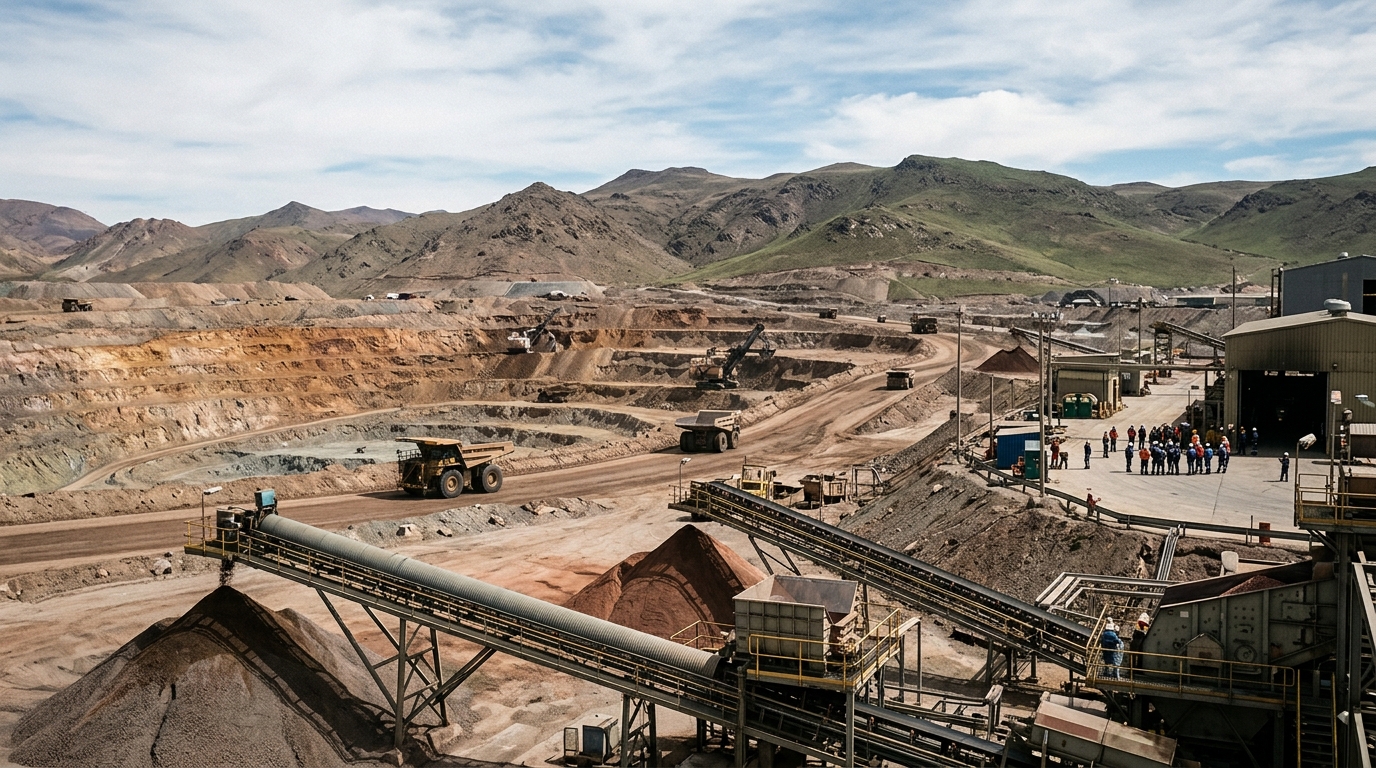
The conversation in copper markets this week is not whether Chile has a labour problem. It clearly does. The real question for institutional investors is whether the two live disruptions at Centinela and Escondida are tradable events or confirmation of something slower and larger that the market has only partially absorbed.
What Is Actually Happening
Workers at Antofagasta’s Centinela copper mine began a legal strike on October 7 after mandatory mediation ended without agreement, adding to labour tensions in the world’s biggest copper-producing nation. The stoppage escalated quickly. By Friday, October 9, union members had begun a hunger strike as labour leaders sought to pressure the company back to the negotiating table. Unions have warned the effects could worsen over time and could materially reduce copper output at the mine if the stoppage extends into November 2026.
At the same time, BHP formally requested government mediation on October 5 in its collective bargaining dispute with Escondida’s supervisors’ union. Under Chilean labour rules, the process temporarily suspends any strike for at least five working days, allowing both sides to continue negotiations. Around 95% of participating union members previously voted to authorize a strike, so the risk has not disappeared; rather, the immediate threat of a stoppage has been pushed back. That window expires this week.
The Bull Case: Structural, Not Cyclical
Copper rose to $6.66 per pound on October 9, up 2.21% from the previous day. Elevated prices have not solved Chile’s underlying supply problem. Strikes, severe weather, accidents and geological problems put an average 5.2% of production at Chile’s largest copper mines at risk, according to a new assessment. El Teniente ranked highest at 9% risk, followed by Los Pelambres at 8% and Escondida at 7.5%.
The production backdrop makes that risk index credible. Chile’s mine copper production fell about 9% from January through July versus the same period in 2025, based on Cochilco data cited in local reporting, and July output was reported as the lowest monthly level since 2011. Escondida itself has been guided to 1.0 to 1.1 million tonnes for fiscal 2027 in BHP materials, below the mine’s recent run-rate. Falling ore grades, not labour contracts, drive that decline. Strikes amplify a problem that was already compounding.
The Bear Case: Events Over Trend
The counter-argument is that labour disputes at Chilean copper mines resolve, eventually. History is instructive here. The 2017 Escondida strike lasted 44 days and still settled. Processing plants at Centinela can continue operating in the near term even without miners on site, which is why BMO Capital Markets noted the impact on copper production could become more visible from November if the stoppage continues. The market is pricing disruption risk, not confirmed output loss.
Sceptics also point out that copper prices in 2026 have been running roughly 40% above 2025 levels in some widely cited market measures, and unions at several Chilean mines are bargaining hard precisely because they see an opportunity created by high metal prices. That dynamic produces hard rhetoric and ultimately negotiated settlements more often than prolonged stoppages.
What Investors Are Missing
The Escondida mediation’s outcome will dominate headlines, but the more durable insight lies in ownership structure. Rio Tinto owns 30% of Escondida and Japan-based JECO holds 12.5%, so any disruption would hit multiple major mining firms’ copper supply simultaneously. Rio Tinto does not operate the mine but carries the volume exposure.
The second-order effect is what this does to Freeport-McMoRan. FCX targets 2026 copper sales of 3.1 billion pounds, and company materials have shown that at $6 per pound copper, annual EBITDA can approach the high teens in billions of dollars. Every dollar the Chilean situation adds to spot prices flows directly to Freeport’s Grasberg and Americas operations. The company’s 2026 planning assumptions were set before copper hit $6.66. The gap between that assumption set and today’s market is the unlocked value that Chilean disruptions are now widening.
Stocks to Watch
- BHP: The Escondida operator carries direct operational and reputational risk if mediation fails. Fiscal 2027 production guidance of 1.0 to 1.1 million tonnes is already below recent output levels, leaving no buffer if a strike extends.
- Antofagasta: This is being described in market coverage as the first strike at Centinela and only the second in Antofagasta’s corporate history, which makes the reputational dimension as significant as the production impact.
- Freeport-McMoRan (FCX): The price beneficiary. Higher copper prices resulting from Chilean supply disruptions accrue to FCX’s non-Chilean production at minimal incremental cost.
- Glencore: Holds copper assets across multiple jurisdictions and benefits from tighter concentrate markets, while also running copper trading operations that profit from price volatility.
- Codelco: State-owned and already dealing with its own production pressures. Codelco temporarily suspended the Andes Norte project at El Teniente in August 2026 over deep seismic risks, adding a third simultaneous Chilean disruption that is receiving far less attention than Centinela or Escondida.
The mediation clock at Escondida runs out this week. If talks extend by mutual consent, the market gets five more days of uncertainty. If they collapse, investors will discover very quickly how much of the $6.66 price was already for this moment, and how much further it can run.