
September 18, 2026
Completions down 27% and pending sales 30% below pre-pandemic norms
The debate about whether the housing market has found a floor closed this week. Freddie Mac’s Primary Mortgage Market Survey, released Thursday, put the 30-year fixed-rate mortgage at 6.95% as of September 17, up from 6.76% the week before. That is the highest level since late June 2025, and it extends a run of weekly increases. Mortgage News Daily was quoting 7.24% on Thursday. That is not a rate environment in which a bottom gets called.
Your Power Bill Is Funding the AI Boom
The bulk order that keeps the lights on across 13 states just jumped from $2.2 billion to $14.7 billion – nearly 7x in one year – because data centers are draining the grid. There’s one energy source that runs 24/7 with no fuel, and Washington just preserved its tax credits through 2033 while terminating everyone else’s. Google signed for 15 years. Bill Gates invested $100 million. One company has spent sixty years building it.
Market coverage tied this week’s jump to the Federal Reserve’s September 16 rate increase, alongside an elevated 10-year Treasury yield around 5%, which influences mortgage pricing. A year ago the 30-year averaged 6.26%. Buyers who waited for rates to fall got the opposite.
What the Construction Data Actually Says
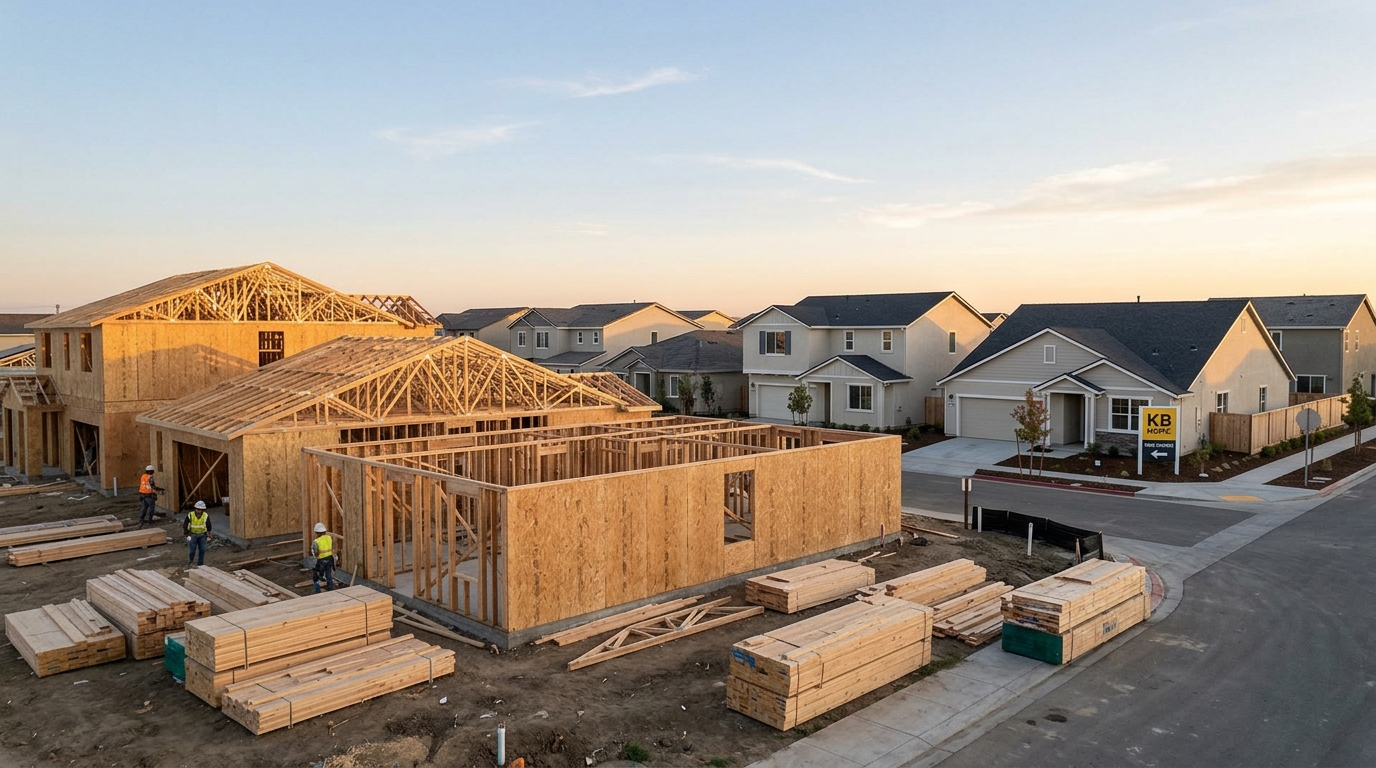
The housing starts report from the Census Bureau and HUD, published the same morning, complicated the simple bull case further. Total housing starts declined 2.6% in August to a 1.275 million annual pace. Single-family starts did rise 7.6% to 918,000, a figure bulls will cite, but it arrived alongside a completions number that is hard to spin. Privately owned housing completions in August ran at a 1.128 million annualized rate, 27.1% below the August 2025 rate of 1.548 million units. That means builders are breaking ground while finishing far fewer homes, a sign of cost pressure and margin management, not a confident ramp-up in supply.
Cotality Chief Economist Selma Hepp projected housing starts will drop 2% in 2026 and 4% in 2027, calling it a “perfect storm” of rising costs, labor shortages, and potential crowding out of residential construction by data centers. She noted that 80 to 90 percent of new home sales now require mortgage rate buy-downs, a cost builders absorb directly out of margin.
Most Options Courses Start in the Wrong Place
Most beginner options courses lose people in the first lesson. Greeks. Spreads. Implied volatility. It doesn’t have to be that way. This free guide starts with the basics first-so you can finally understand how options work before risking real money.
The Demand Side Is Not Recovering Either
NAR reported pending home sales rose just 0.3% in August from July, but remain 4.7% below August 2025 levels, with NAR Chief Economist Lawrence Yun attributing sluggish sales to elevated mortgage rates offsetting income growth and job gains. Yun added that contract signings are running roughly 30% below where they were in the years leading up to the pandemic. A 0.3% monthly uptick against that backdrop is stabilization at a low level, not a turn.
The Builder Trade Before KB Home Reports
This is the environment KB Home steps into when it reports fiscal third-quarter results on September 22. KBH is expected to deliver a year-over-year decline in earnings on lower revenues, with the consensus estimate at $0.88 per share. Revenue estimates of $1.30 billion would imply a decline from the year-ago quarter. The question for professional investors is not whether the quarter beats by a few cents; it is what management says about order trends and cancellation rates heading into a fall selling season with rates near 7%.
D.R. Horton’s most recent quarterly report showed a 20% cancellation rate, up from 17% a year ago, reflecting both affordability constraints and cautious consumer sentiment. That number is the institutional community’s real benchmark for KB Home next week.
Stocks to Watch
KBH is the immediate catalyst. The September 22 report is effectively a sector referendum: if orders held and cancellations stabilized despite rising rates, the group could catch a bid. A miss on either metric into a 6.95% rate environment could accelerate the sector’s 2026 drawdown.
10 Companies Powering the AI Infrastructure Buildout
Our analysts did a deep dive into what it will take for the entire AI industry to scale simultaneously and identified 10 companies that are crucial to the AI infrastructure buildout that is underway. From memory, storage and connectivity to fabrication and beyond, these companies are building the ecosystem that will power the next round of growth for the AI industry.
DHI and LEN carry the heaviest institutional weight. Over 90% of DHI is owned by institutions. Lennar is down about 23% year to date in 2026 and about 40% over the past 12 months.
PHM is the relative hold. PulteGroup is slightly positive year to date in 2026, bucking the negative trend. Its build-to-order model reduces speculative inventory risk in a rate-volatile market.
XHB is the instrument worth watching for institutional conviction. Because the ETF blends builders with home retailers and building products companies, a sustained outflow signals broad sector capitulation rather than single-stock rotation. XHB is down in 2026 year to date. At 6.95% and climbing, there is no obvious catalyst to reverse that before KB Home speaks on Tuesday.