
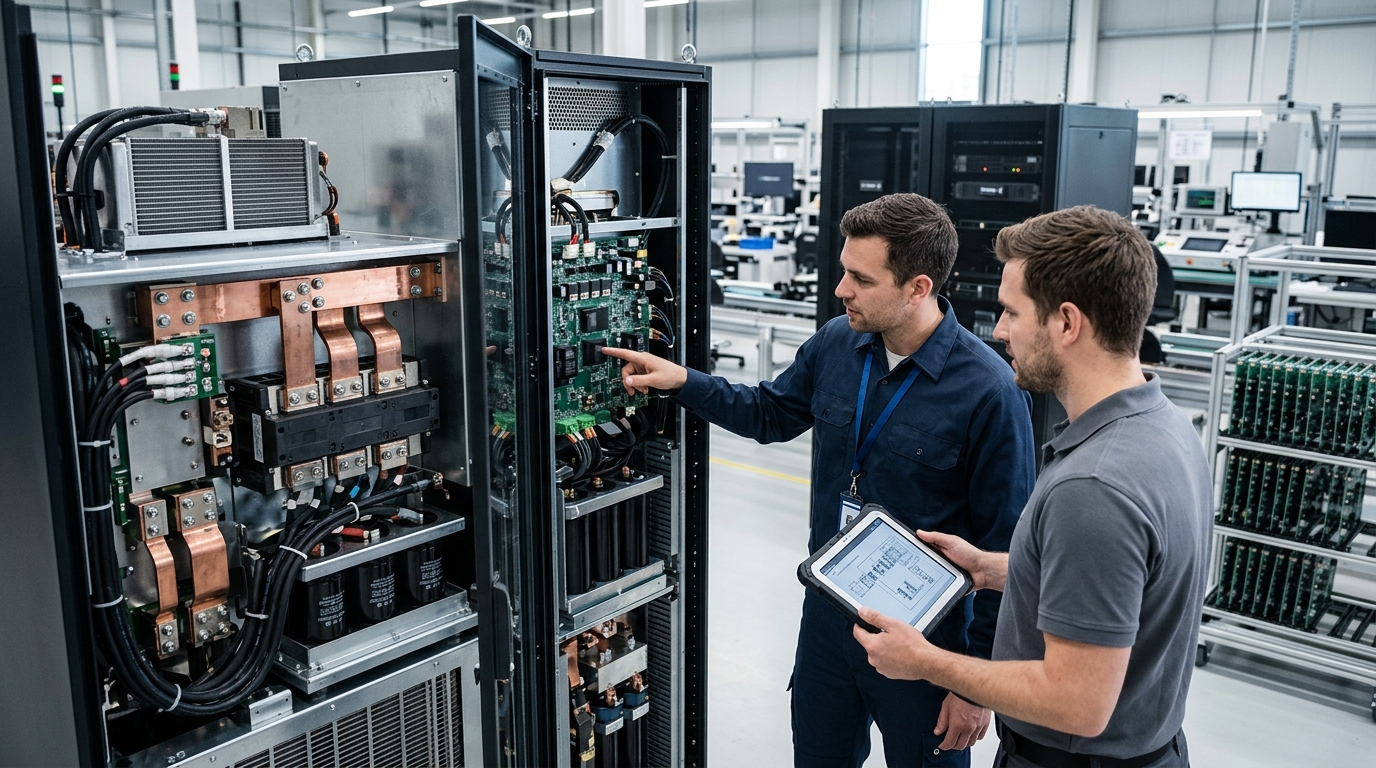
The most constrained asset in the AI infrastructure race is not a GPU. It is not a data center campus or a fiber network. It is the hardware that stands between a utility substation and the chips that actually run the models. Flex understood this on September 3, 2026, when it announced it would pay $4.4 billion for EPC Power, a U.S.-based power conversion specialist that very few investors had been tracking. That decision deserves more scrutiny than it has received.
Flex is not a flashy company. With a global footprint spanning about 30 countries, it has built its reputation on advanced manufacturing and supply chain solutions. Contract manufacturers are not supposed to own the technology; they are supposed to build it for others. This deal is a deliberate break from that logic.
Founded in 2010, EPC Power is based in Poway, California and is a leading provider of software-defined power conversion solutions for data centers, utility-scale energy storage, and microgrids. The company combines internally developed hardware, software, and controls with U.S.-based engineering and manufacturing. That combination of markets is not an accident. The same hardware that stabilizes a grid can also condition power for a hyperscale rack running thousands of GPUs. AI infrastructure needs both.
Why the Scarcity Is Real
EPC Power’s platform is engineered for next-generation 800V data center power architectures, enabling more efficient power delivery for higher-density AI infrastructure, with capabilities across rectifiers and DC-DC conversion and a stated roadmap for solid-state transformers. The shift to 800V is not cosmetic. Higher-density AI clusters demand cleaner, more precise power than yesterday’s data centers could accept, and the existing base of power conversion equipment largely cannot deliver it. That structural gap is what Flex is paying to own.
EPC Power’s technology includes Agile Grid Forming capabilities for on-site energy storage and microgrid configurations. Grid-forming is genuinely differentiated. Most inverters follow the grid’s signal; a grid-forming device can generate that signal itself, which matters enormously when you are trying to run a 500-megawatt data center campus that cannot tolerate an interruption.
Goldman Sachs Asset Management and Cleanhill Partners acquired a majority stake in EPC Power in 2022. Their exit at $4.4 billion reflects how quickly the category has changed as AI power demand became undeniable. EPC Power is expected to generate approximately $800 million of revenue in calendar 2026, with organic revenue growth of approximately 40% expected in 2027, and EBITDA margin expanding by double-digit percentage points to approximately 30% in 2027. Those are not contract-manufacturer economics. They are software-adjacent margins on hardware that nobody can easily replicate.
The Mogul Mindset
The question a disciplined long-term investor asks here is whether Flex has bought a durable competitive position or an expensive commodity business at the top of a cycle. Several things argue for the former. Power conversion for AI data centers requires deep software integration, U.S.-based manufacturing, and grid-forming capability that competitors have not demonstrated at scale. EPC Power’s grid-forming power conversion capabilities complement Flex’s existing Critical Power and Embedded Power businesses, together positioning the combined entity to support the full power chain from grid to chip, delivering 800V power conversion today through active digital rectifiers and building toward solid-state transformers.
Flex plans to separate its Cloud and Power Infrastructure segment into an independent publicly traded company in the first calendar quarter of 2027. That timeline matters. Flex is not merely integrating an acquisition; it is assembling a standalone power infrastructure business that will enter public markets carrying EPC Power’s growth profile. The bet is that investors will value a dedicated power-conversion company far more generously than they would value the same assets buried inside a diversified contract manufacturer.
What Could Go Wrong
The valuation demands delivery. At roughly 5.5 times projected 2026 revenue, EPC Power is priced for the 40% growth Flex is promising. If AI capital expenditure slows, if a larger competitor enters 800V conversion at scale, or if Flex’s own balance sheet is strained by the debt and equity financing needed to close the deal, those projections become fragile quickly. The planned spinoff adds execution risk on top of integration risk: Flex must build a coherent standalone company while simultaneously absorbing a fast-growing target with a very different culture.
These are real risks. But the underlying scarcity of grid-forming power conversion for high-density AI infrastructure is not likely to resolve itself quickly, and Flex has now secured one of the few companies that has already proven the technology works at utility scale. Whether the price is right will depend on how fast the grid must change. The current evidence suggests: very fast indeed.