
August 21, 2026
Nvidia Is Now a Power Broker
Three power-infrastructure bets in one month suggest a supply-chain strategy that many investors are treating as philanthropy.
First a note from Profits Run
Before you place another trade…
…make sure you use this 5-part formula that makes every trade a SAFE trade:

Why are we giving this away?
Because we think you’ll love it so much that you’ll come back to us down the road for more advanced training.
Make sense?
Click here to download the Safe Trade Options Formula…
Good Trading,
Bill Poulos
P.S. Take 5 seconds and get your free copy of the “Safe Trade Options Formula” right now before you close this email.
Nvidia Is Now a Power Broker
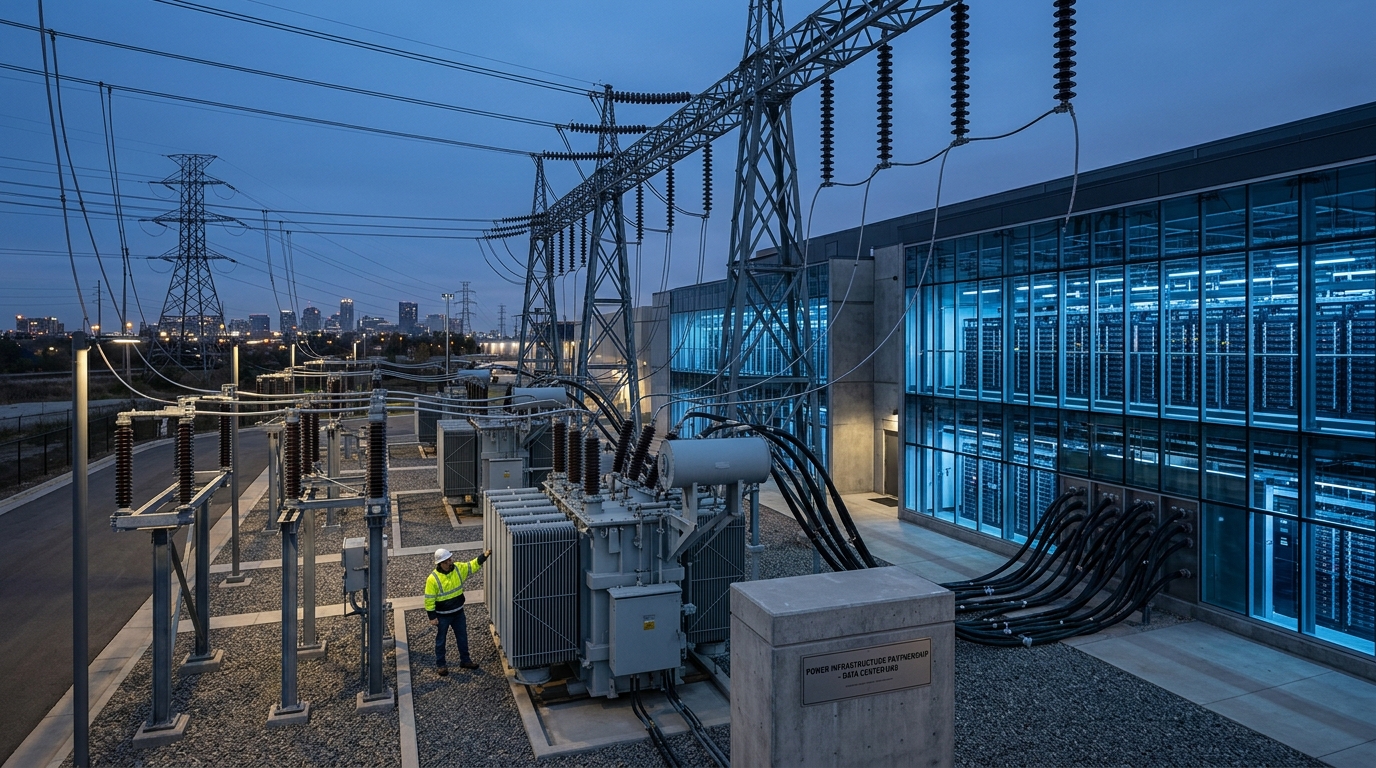
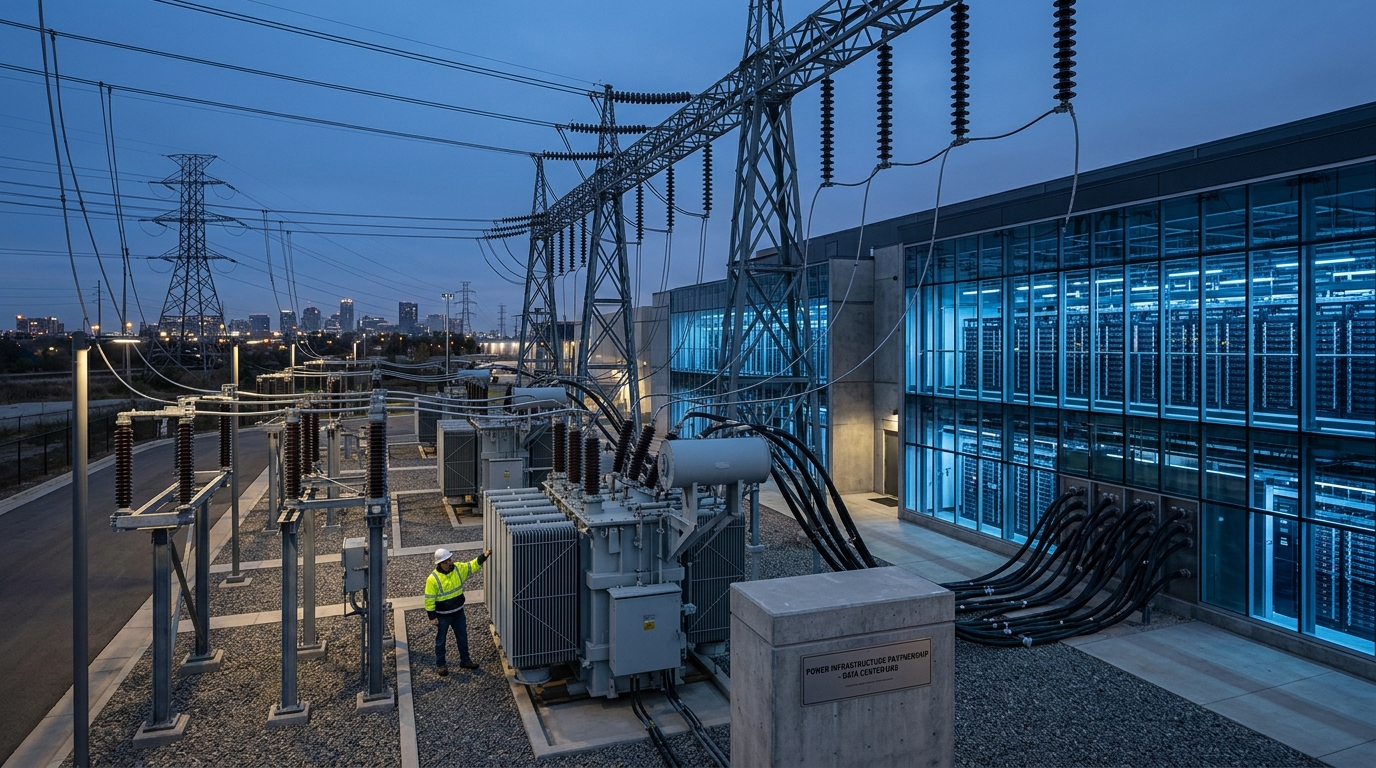
The Cloverleaf deal announced this morning is not, on its own, a particularly large number for Nvidia. Several hundred million dollars against a balance sheet generating tens of billions in free cash flow barely registers. What matters is the pattern it completes.
The Big Question
Is Nvidia building a vertically integrated AI supply chain that stretches from the GPU to the utility meter, and if so, who controls pricing power as that chain lengthens? Three power-infrastructure bets in fewer than 30 days have forced a real answer.
Why Wall Street Cares
This is Nvidia’s third known infrastructure power investment in a compressed period. Earlier this week the company announced it would invest $1.5 billion in SB Energy, a SoftBank Group company, tied to a large Ohio campus that OpenAI has leased for 20 years. Earlier this month Nvidia announced plans to invest up to $3 billion in Lancium, the power developer behind a campus in Abilene, Texas, where OpenAI rents computing capacity from Oracle.
One notable connection across all three investments is OpenAI, which appears as an anchor customer at each location. Whether this reflects a broader commercial arrangement or simply overlapping infrastructure requirements is not yet clear, but the pattern illustrates how closely Nvidia’s growth prospects are tied to the expansion of large-scale AI computing.
Portfolio managers who priced Nvidia as a semiconductor company missed the last transition. Those pricing it purely as a chip company may be missing this one.
The Bull Case
The Cloverleaf deal reflects Nvidia’s strategy of getting involved in data center development long before construction begins. Committing capital to power companies at such an early stage lets Nvidia work to guarantee that future data center supply keeps pace with demand for its chips.
Cloverleaf’s specific model makes that logic concrete. The company, which launched in 2024, focuses on securing contracts with utility companies that give data center developers confidence they can connect to the grid before breaking ground.
The DSX layer adds a second dimension. Cloverleaf will apply Nvidia’s DSX platform to bring site, power, cooling, computing and facility decisions together earlier in the design phase. By aligning every layer of the stack across compute, software, facilities, and partner technologies, DSX provides infrastructure builders with a framework to design, deploy, and operate AI factories at scale. Every powered site that runs DSX is a site that runs Nvidia’s software operating system, not just its chips.
Hyperscalers including Microsoft, Amazon, Google, and Meta have each committed hundreds of billions of dollars in data center capital expenditure over the next several years, yet grid interconnection queues and utility permitting timelines remain persistent bottlenecks. Companies like Cloverleaf, which do the slow upstream work of locking in utility agreements before a developer breaks ground, have become structurally valuable precisely because that bottleneck is not going away quickly.
#1 Stock to Own as Trump Launches Historic Mission Backing “Medical AI”
In the biggest federal push since the Apollo program that landed on the Moon… Trump is now pouring the full support of the federal government into a new type of AI that could soon be worth 500 times more than ChatGPT. It works 10,000 times faster than human PhDs… and Elon Musk calls the underlying tech “the most disruptive force in history.”
Click here to learn about the #1 stock to own as this new AI goes live.
The Bear Case
The skeptical read is straightforward: Nvidia is deploying capital into private, illiquid positions at undisclosed valuations, in an asset class it does not operate. Infrastructure investments could strengthen the argument that Nvidia is building exposure to the AI expansion beyond its core semiconductor operations. However, the financial merits of any Cloverleaf deal will depend partly on the valuation assigned to the private company compared with its previous financing.
Cloverleaf raised over $300 million in July 2024 from energy investors NGP and Sandbrook Capital. The potential Nvidia investment also comes as Cloverleaf explores its strategic options. Press reports say the company has been working with JPMorgan Chase in recent months on alternatives that included a possible sale of the entire business. Nvidia is stepping in precisely when a banker is shopping the asset to the highest bidder. That timing raises the question of whether this is strategic conviction or competitive necessity dressed up as strategy.
There is also a concentration risk the bulls have not fully addressed. OpenAI as a recurring anchor tenant across Lancium, SB Energy, and now Cloverleaf means Nvidia’s infrastructure portfolio is, in aggregate, a leveraged bet on one customer’s continued capital deployment.
The Evidence
In early August, Nvidia announced plans to invest up to $3 billion in Lancium. The initial investment of $2 billion would secure a roughly 20% stake, with an additional $1 billion contingent on the company achieving specific milestones. Press reports pegged the implied valuation for Lancium and its asset portfolio at roughly $10 billion.
Nvidia also committed $1.5 billion in SB Energy, joining existing investors SoftBank Group and OpenAI. Add in the Cloverleaf commitment and Nvidia has placed roughly $4 billion to $5 billion into power infrastructure in under a month, none of it in chip fabs or software products.
The demand backdrop justifies urgency. The U.S. Energy Information Administration forecasts electricity use will hit a record 4,268 billion kilowatt-hours in 2026, rising to 4,391 billion kWh in 2027. AI and data centers are key drivers of this growth in industrial and commercial demand.
For enterprise procurement and operations leaders, Nvidia’s infrastructure investments carry a signal that goes beyond any single deal. When the world’s dominant GPU supplier starts writing nine-figure checks to secure electricity capacity, it confirms that compute availability is no longer just a function of silicon supply. It is a function of megawatts, transmission lines, and land.
The Mavens’ View
Nvidia’s willingness to back these operators financially reflects a calculated bet that supply-chain control will prove as important as product superiority in the AI infrastructure race. That view is gaining traction among the institutional investors who have spent the last 18 months watching chip delivery dates slip while utility interconnection queues stretched to years.
Nvidia’s chips power the AI training runs at the core of OpenAI’s business, and securing the physical infrastructure around those deployments gives Nvidia unusual visibility into, and leverage over, the capacity pipeline. The leverage point is less about profit from the land and more about knowing, earlier than anyone else, which sites are getting powered and which aren’t. That is information that feeds directly into chip allocation decisions.
The minority-stake structure matters too. Rather than acquiring Cloverleaf outright, Nvidia’s proposed investment would give it a substantial financial interest in a company positioned near the front end of the rapidly expanding AI infrastructure supply chain. Nvidia gets the informational advantage and the upside without taking the full operating risk of a power developer onto its balance sheet.
What Investors Are Missing
The conversation is focused on whether Nvidia should be in the power business at all. The more interesting question is what Nvidia gets that no one else can buy.
Every Cloverleaf site that deploys DSX becomes a node where Nvidia’s software stack controls optimization of power, cooling, and compute simultaneously. Nvidia’s DSX platform is designed to enable physically accurate AI factory digital twins, and Nvidia has positioned DSX as an end-to-end framework to design, simulate, build, and operate gigawatt-scale AI factories.
That is not an energy investment. It is a data collection and software lock-in play embedded inside an energy investment. The utility agreement gets Nvidia to the site. DSX keeps it there. When the next GPU generation ships, Cloverleaf’s customers will be running Nvidia’s simulation environment for every upgrade decision they make. No competitor has that position.
There is a second hidden implication. Nvidia GPUs underpin much of the computing capacity used to train advanced AI models. By investing in the electricity and physical infrastructure surrounding those deployments, the company could gain greater visibility into future capacity requirements while helping remove potential obstacles to demand for its processors. Removing obstacles to demand is not a sideshow to chip sales. It is chip sales, one step upstream.
Stocks to Watch
Nvidia (NVDA). The primary beneficiary, though the market has not yet priced in the DSX software layer that accompanies each infrastructure deal. The stock’s AI factory ecosystem ambitions stretch well beyond what the chip multiple captures.
Eaton (ETN). Eaton has described an “Eaton Beam Rubin DSX” platform, built with Nvidia, as an end-to-end standard implementation enabling rapid, repeatable deployment of AI factories on the Nvidia Vera Rubin platform. Every DSX-aligned site powers more Eaton hardware through the facility lifecycle.
Vertiv (VRT). Vertiv has described “Vertiv OneCore Rubin DSX” as a converged physical infrastructure design aligned with the Nvidia Vera Rubin DSX AI factory reference design and the Omniverse DSX blueprint. As Cloverleaf sites move from powered land to operating facilities, thermal management becomes the constraint, and Vertiv is positioned directly inside the Nvidia reference architecture.
Oracle (ORCL). Oracle sits at the intersection of Nvidia GPU supply, OpenAI’s computing demand, and U.S. infrastructure policy. The Stargate connection running through Lancium’s Abilene campus makes Oracle a recurring name in every layer of this ecosystem.
Vistra (VST) and Constellation (CEG). The ultimate beneficiaries of any model that locks in utility agreements years before construction. The answer to where new power generation capacity comes from could be a wave of co-located or even behind-the-meter power plants, as regulators push grid system operators to streamline the pathway for more decentralized and yet gigawatt-scale power generation. The utilities that move fastest to accommodate AI data loads will command premium interconnection terms for years.