
July 25, 2026
The Debate Behind SpaceX’s Slide
Featured: The Debate Behind SpaceX’s Slide
Dear Reader,
Do you hold any of these AI stocks?
Wall Street insider Jason Bodner – the man who called Nvidia at $4.50 – says today’s AI stocks are about to hit a wall.
And a completely different group of AI firms… names Wall Street is starting to ignore… are about to take off.
This has nothing to do with SpaceX…
A new chatbot…
Autonomous robots…
Or anything you’re likely hearing about.
It has to do with a brand-new “light-speed” device turning AI as we know it into “Accelerated AI”…
Making it 100 times faster…
And 100 times more energy efficient – right here, on Earth.
Already, some of the biggest tech investors like Elon Musk, Mark Zuckerberg, Cathie Wood, and Bill Gates are moving money into it.
Just to name a few…
They’re all moving money to prepare for what’s coming.
But you won’t hear anything about it in the mainstream news…
In fact, TV pundits spent most of this past year talking about AI worries and its “existential risk” to jobs…
Or arguing whether we’re in an AI bubble and when it would pop…
That’s why most Americans won’t see it coming until it’s too late.
Don’t be one of them…
Because if you’re holding the wrong AI stocks when “Accelerated AI” goes mainstream…
You could spend the next decade just trying to claw back to even…
But if you make the one move Jason reveals in this urgent video message…
The next 12 to 24 months could hand you bigger gains than the entire AI boom of the last three years.
Click here to hear the full story and get ahead of the crowd.
But hurry, because this opportunity won’t stay hidden much longer.
We have so much to look forward to,
Jeff Brown
Founder & CEO, Brownstone Research
P.S. Jason also shares details on 10 popular AI stocks he says you must dump before this shift goes mainstream. Names sitting in millions of 401(k)s, IRAs, and brokerage accounts. Click here to see if yours made the list.
The Debate Behind SpaceX’s Slide
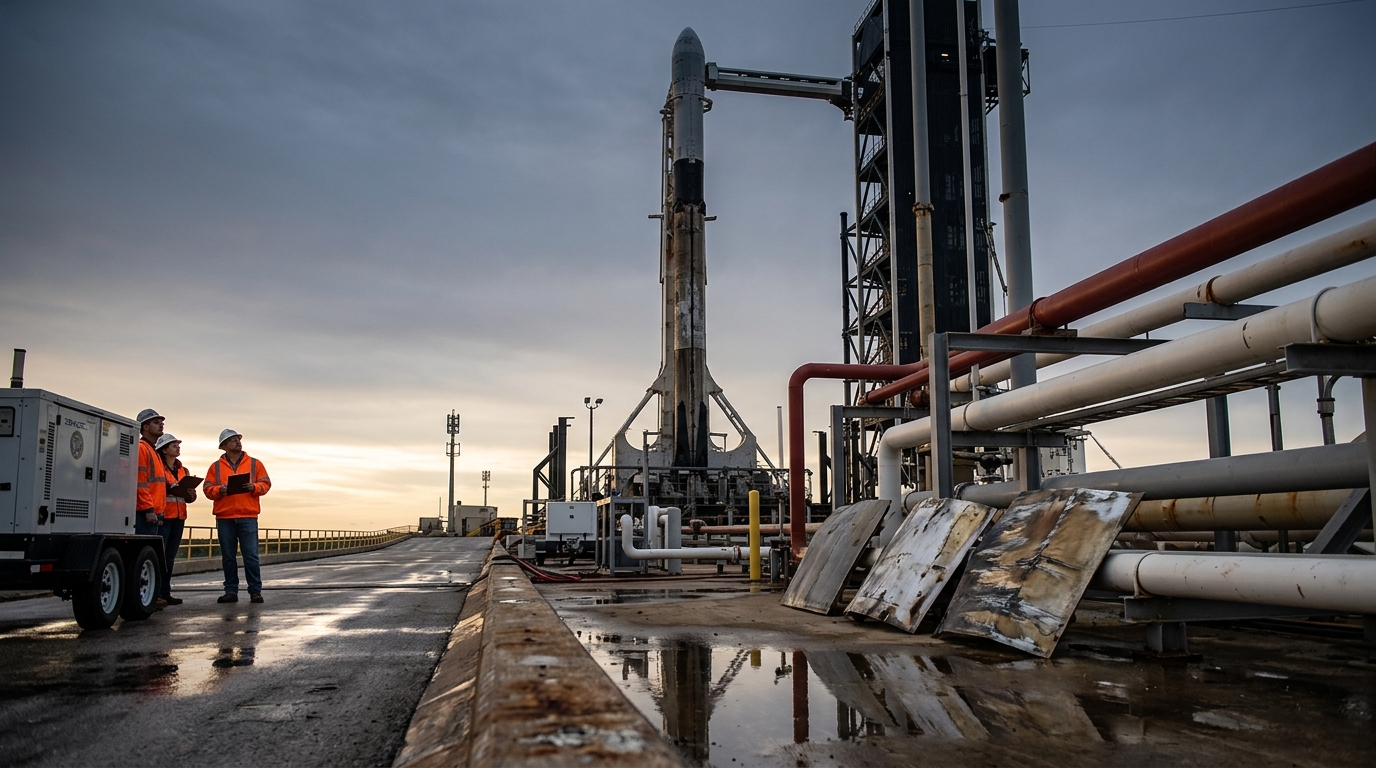
The big question in investment committee rooms right now: is SpaceX a scalable communications platform that happens to own the world’s best launch system, or is it a capital-intensive aerospace project that markets briefly treated like a mega-cap software company?
The timing is not subtle. SpaceX went public in mid-June (ticker: SPCX). ([ir.spacex.com](https://ir.spacex.com/updates/releases-details/2026/Space-Exploration-Technologies-Corp–Announces-Pricing-of-Initial-Public-Offering/default.aspx?utm_source=openai)) The stock has since slid to fresh lows this week, even as Starship Flight 13 successfully flew on Friday, July 24 and deployed 20 next-generation Starlink V3 satellites. ([apnews.com](https://apnews.com/article/2d1f10bd676c296bc7db5e0c56cb9a4e?utm_source=openai))
So the debate is not “did the rocket fly.” It did. The debate is what that flight does to the long-term cost curve, and whether public investors are paying too much (or finally less) for a business that mixes recurring connectivity revenue with enormous R&D spend.
Why Wall Street Cares
Institutions care about SpaceX for one reason: it is one of the few large companies where technological progress can change unit economics fast. If fully reusable heavy lift becomes routine, launch turns from a constraint into a lever. That hits SpaceX’s own satellite network first, then the rest of the space ecosystem.
Flight 13 matters because it was a real systems test, not a concept video. SpaceX’s plan called for a Super Heavy booster splashdown in the Gulf and a Starship splashdown in the Indian Ocean after a suborbital arc. It also included an in-space relight and the first deployment of 20 Starlink V3 satellites. ([apnews.com](https://apnews.com/article/2d1f10bd676c296bc7db5e0c56cb9a4e?utm_source=openai))
Professionals are also watching the calendar. The first post-IPO earnings date and subsequent lock-up dynamics can matter as much as fundamentals in the early public life of a stock. (If you have ever traded a high-demand IPO with a tiny float, you already know the feeling.)
The Bull Case
1) Starlink looks like the real business. In the company’s filings, Starlink subscriber count is already measured in the tens of millions, and management discloses subscriber ARPU methodology, which is a subtle but important sign: they want investors to model it like a scaled service business, not like aerospace. ([sec.gov](https://www.sec.gov/Archives/edgar/data/1181412/000162828026036936/spaceexplorationtechnologi.htm?utm_source=openai))
2) Starship progress can drop internal costs first. The market tends to think about Starship as “future revenue.” Many pros frame it differently: a cost and capacity unlock for SpaceX’s own constellation. If V3 satellites can be deployed in volume, you are not just selling more service. You are improving the network and defending pricing.
3) The test flight delivered the specific milestones institutions were waiting for. Controlled splashdowns, satellite deployment, and the relight were all on the list. That reduces the probability of “it never works,” even if it does not answer “when does it work at cadence.” ([apnews.com](https://apnews.com/article/2d1f10bd676c296bc7db5e0c56cb9a4e?utm_source=openai))
What’s interesting is how quickly the conversation flips if you assume Starship is not an external launch product first, but an internal supply chain advantage. That is the pro argument for why the multiple could stay elevated even with ugly near-term GAAP results.
You’re Being LIED To About The Iran War
Forget EVERYTHING you’ve heard about the Iran war.
Especially the reasons why we’re bombing the country.
The Bear Case
1) Execution risk is still the whole ballgame. A successful test flight is not a high-cadence operational system. Institutions that have lived through “next year” stories (think: new airframes, new fabs, new drug platforms) stay skeptical until repeatability shows up in the numbers.
2) The public-company wrapper changes behavior. Once you list, quarterly scrutiny is constant. That pushes management teams toward cleaner disclosures, but it also makes every delay louder. Starship is inherently a program where setbacks are part of the process, which is a mismatch for some public-market time horizons.
3) Lock-up overhang can dominate price action. Early IPO moves are often about float, not the business. That can keep a stock pinned lower even if the fundamental story improves, simply because supply keeps hitting the market.
A small aside, but it matters: the market loves to say “this is the next Apple.” A lot of professionals think more in terms of “this is a capital cycle story with a consumer subscription engine attached.” Same company, very different valuation instincts.
The Evidence (What We Actually Know)
We know Starship Flight 13 launched Friday, July 24, deployed 20 Starlink V3 satellites, and ended with splashdowns. ([apnews.com](https://apnews.com/article/2d1f10bd676c296bc7db5e0c56cb9a4e?utm_source=openai))
We know the IPO was priced for trading beginning June 12, 2026. ([ir.spacex.com](https://ir.spacex.com/updates/releases-details/2026/Space-Exploration-Technologies-Corp–Announces-Pricing-of-Initial-Public-Offering/default.aspx?utm_source=openai))
We also know SpaceX’s SEC filing (covering the March 31, 2026 period) discusses Starlink subscriber totals and ARPU calculation explicitly. ([sec.gov](https://www.sec.gov/Archives/edgar/data/1181412/000162828026036936/spaceexplorationtechnologi.htm?utm_source=openai))
What we do not know, at least from verified public sources this week: the exact “record low” share price you referenced, the current market cap figure, and the precise lock-up schedule details by dollar value. Those are all items I would confirm against the latest close and the prospectus before sending a number to readers.
The Mavens’ View (How Pros Are Framing It)
In plain terms, the Street is splitting SpaceX into two mental models.
Model A: Starlink is the core. Starship is a scale advantage. Under this model, volatility around test flights is noise, and the key questions are subscriber growth, churn, ARPU, and enterprise mix.
Model B: SpaceX is still an aerospace program with a subscription business subsidizing it. Under this model, each additional dollar of R&D is a tax, not an investment, until the company proves cadence and reliability in a way that can be underwritten.
Consensus has quietly shifted from “Starship will fix everything” to “show me the cadence.” Flight 13 helps, but it does not end that conversation.
What Investors Are Missing
The overlooked implication is not about rockets. It is about bargaining power.
If SpaceX can regularly lift heavier satellites cheaper, it can choose where profits sit in the stack. It can push value into Starlink service pricing, into enterprise contracts, into government payload capacity, or into upstream manufacturing. That flexibility is why institutions care, and why the market argument about “what multiple should this trade at” is so intense.
And it cuts both ways. If cadence does not materialize, the company may face a long stretch where Starlink carries the funding load while public investors argue about patience.
Gold Traders Are Missing This
If you’re trying to trade gold… You might be focusing on the wrong asset. Because the real opportunity isn’t always in gold itself. There’s another “player” in the market that tends to move faster. React earlier. And offer a different kind of exposure altogether.
Most traders never connect the dots. Which is why they miss a big part of gold’s move.
This free report shows exactly what to look at instead – and why it matters now.
Stocks to Watch (Who Is Most Exposed)
Not recommendations, just the names that come up when pros map second-order effects:
- SpaceX (SPCX): obviously. The debate is the valuation model, not the headline.
- AST SpaceMobile (ASTS): direct-to-device ambitions depend on launch cadence and satellite economics, even if it is not tied to SpaceX alone.
- Rocket Lab (RKLB): if Starship expands capacity massively, it changes pricing and customer expectations across launch services.
- Iridium (IRDM): a reminder that satellite connectivity can be a steady cash business, but also a ceiling on ARPU in certain markets.
- Maxar (MAXR) or other satellite builders: lower launch costs tend to pull forward demand for larger, more capable spacecraft.
If I were in the committee meeting today, the conclusion would be simple and slightly uncomfortable: SpaceX is not a single bet. It is a bet on whether a recurring connectivity business can keep scaling fast enough to finance an unprecedented launch cost curve improvement inside the public market’s patience window.
Flight 13 moved the probability needle. The next move comes from the numbers, not the rockets.