May 18, 2026
The $67B Utility Merger Built for AI Power
NextEra buys Dominion. What it means for the grid and your money.
Hey there, bargain hunter.
Let me start with something that almost got buried in the Monday morning noise: two of the largest electric utilities in America just agreed to become one. NextEra Energy is buying Dominion Energy in an all-stock deal worth roughly $67 billion. Both boards signed off. The filings hit the SEC on May 18. Dominion was up more than 14% before the open. This is real, and it matters more than the number suggests.
What’s interesting is that most people will read this as a utility story. It isn’t. Not really.
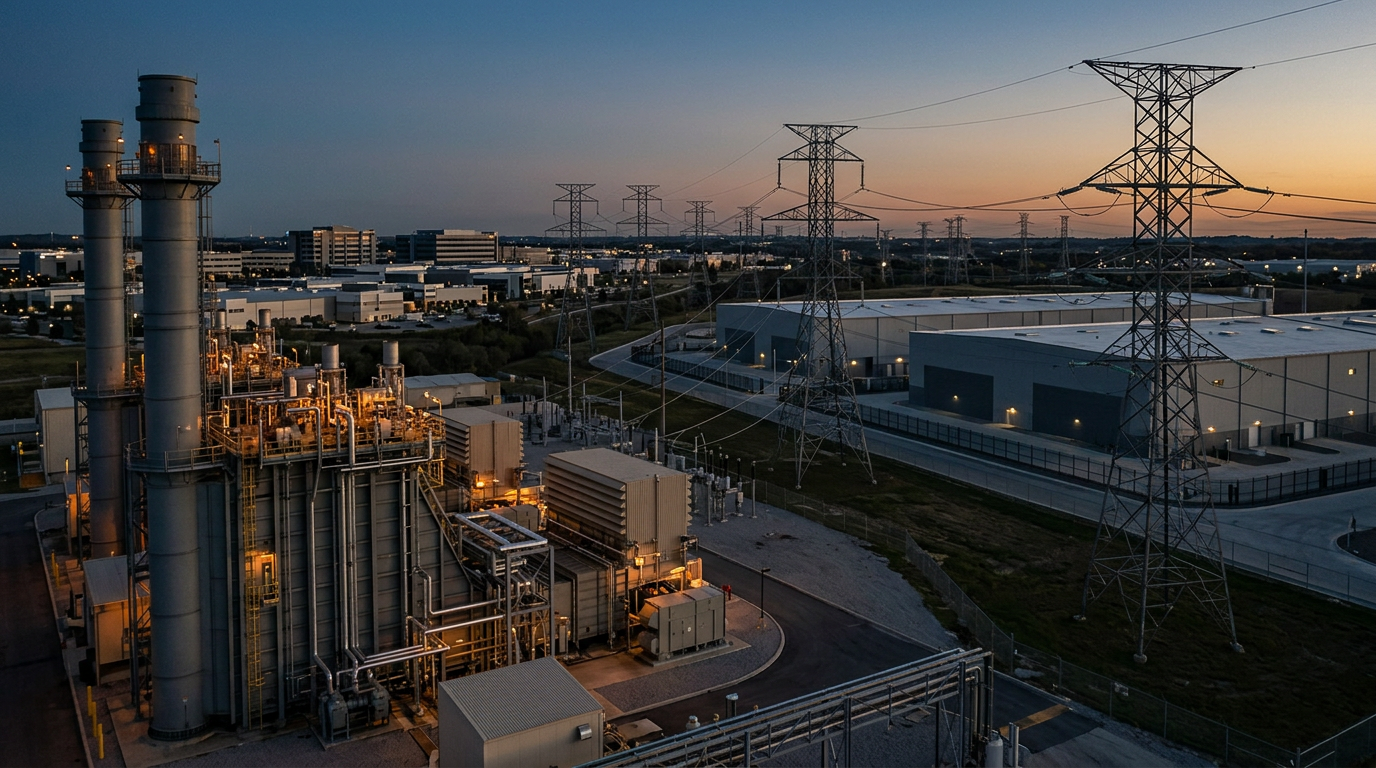
This is an AI infrastructure story wearing a utility’s clothes. The entire logic of this merger sits on one uncomfortable fact: the electricity grid along the East Coast was not built to handle what AI is about to throw at it. Data centers in Virginia alone consumed roughly 26% of the state’s total electricity supply in 2023. That share has been climbing every quarter since. The IEA’s numbers show global data center electricity demand soared 17% in 2025, with AI-focused facilities growing faster than that. Their base case has total data center consumption doubling by 2030. PJM, the regional grid operator that covers Virginia and much of the mid-Atlantic, projected 32 gigawatts of new peak load between 2024 and 2030 — and attributed 94% of that growth to data centers. The grid stress isn’t theoretical. PJM capacity market clearing prices for the 2026–2027 delivery year hit $329.17 per megawatt, compared to $28.92 per megawatt just two delivery years prior. That’s not a rounding error. That’s a structural break.
Dominion is sitting right in the middle of it.
From a $10M Acquisition to a $220M+ AI Platform – and the Window is Nearly Closed
A few years ago, RAD Intel quietly made a foundational acquisition – Atomic Reach – valued at $10M. What followed wasn’t incremental growth, but a rebuild around its AI engine, AIBO, designed to power content, data, and decision-making for modern brands.
Fast forward to today: that engine sits at the center of a growing portfolio, a 20,000+ shareholder base, and long-term contracts with major enterprise customers. Along the way, the company has moved from early private pricing to a significantly higher valuation trajectory driven by adoption, not projection.
Now, the Reg A+ round that helped fuel this expansion is nearing its final capacity, with less than 5% remaining before it fully closes.
Join the remaining allocation before this chapter closes to new investors
DISCLOSURE: This is a paid advertisement for RAD Intel’s Reg A+ offering and involves risk, including the possible loss of principal. Please read the offering circular and related risks at invest.radintel.ai.
Dominion serves roughly 3.6 million electric customers across Virginia and the Carolinas — the heart of what people in the industry call “data center alley.” The company’s own 2024 resource plan acknowledged it would need nearly 27 gigawatts of new generation by 2039. Almost all of it driven by data center load. The problem is Dominion didn’t have the capital machine to execute that buildout fast enough on its own. Enter NextEra.
NextEra already runs Florida Power and Light, which serves around 6 million customers, and carries a market cap in the neighborhood of $195 billion. They’ve spent years building out utility-scale renewables, battery storage, and nuclear restart projects at a pace most regulated utilities can’t match. Their Duane Arnold nuclear plant in Iowa — being brought back online with more than $800 million in investment — already has a power agreement with Google. They know how to talk to hyperscalers. They know how to build at scale. The combination with Dominion isn’t subtle: one company brings the load, the other brings the execution.
Slight tangent, but it matters: the Duane Arnold restart is worth watching on its own. Nuclear power agreements with big tech are becoming a template across the industry. Microsoft, Amazon, Google — they all want clean, always-on power that doesn’t depend on weather. Utilities that can offer that have pricing power the others don’t. That context makes NextEra’s move into Dominion’s territory read differently than a standard consolidation play.
Back to the deal itself. Each Dominion shareholder gets 0.8138 shares of NextEra plus a slice of a one-time $360 million cash pool. NextEra holders end up with 74.5% of the combined company, Dominion holders with 25.5%. John Ketchum, NextEra’s current CEO, stays on to run the combined entity. The ticker stays NEE on the NYSE. The combined company will serve about 10 million utility customer accounts across Florida, Virginia, North Carolina, and South Carolina, with 110 gigawatts of generation capacity. Management is targeting 9% adjusted EPS growth annually through 2032 and 11% annual regulatory capital growth over the same window.
The termination fees are worth knowing. Dominion pays NextEra $2.24 billion if it walks. NextEra owes Dominion up to $6.52 billion in a reciprocal scenario, or $4.83 billion if specific regulatory conditions fall apart. Those asymmetric fees say something about where the leverage sits.
Trump Just Executed a Bloodless Coup. Nobody Noticed.
For the first time ever, a sitting U.S. President has effectively seized control of the world’s most powerful financial institution.
Trump didn’t just stack the Fed board.
And when it starts on May 15th…
A handful of little-known stocks could deliver 1,000%+ gains in 12-24 months.
Discover details on 3 stocks that could explode imminently – and get one FREE ticker symbol today.
Here’s where it gets interesting on the risk side. The regulatory path is genuinely complicated. This deal needs shareholder votes from both companies, HSR antitrust clearance, FERC approval, Nuclear Regulatory Commission sign-off, and individual utility commission approvals in multiple states. Virginia’s commission in particular is worth watching closely — state regulators there have already been fielding pressure from consumer advocates over data center cost allocation. Dominion proposed its first base-rate increase since 1992 earlier this year, adding roughly $8.51 per month for a typical Virginia household. Merging into a larger entity while raising rates is not a straightforward conversation to have with a state commission.
There’s also a timing question that doesn’t get discussed enough. New data center deal activity fell more than 40% between Q3 and Q4 of 2025. Some analysts have flagged that hyperscaler infrastructure capex could soften in 2026. The long-term demand thesis is intact — but load growth that was supposed to arrive in 2027 arriving in 2029 instead changes the return math on $419 billion in combined enterprise value. The deal is built for a specific trajectory. That trajectory has wobbled before.
NextEra’s stock dipped slightly on announcement day. Common in all-stock deals — the acquirer absorbs dilution and the market waits for the synergy math to hold up. Dominion’s 14% jump tells you where the market thinks the value is transferring. That gap tends to close slowly, over quarters, not days.
What to track from here:
- Virginia utility commission filings — the first real signal on regulatory friction
- PJM interconnection queue data — your real-time proxy for data center load growth
- NextEra free cash flow per share — dilution absorption is the quiet variable
- The $2.25 billion in customer bill credits — needs to survive the commission process intact
- Hyperscaler capex guidance — any material pullback from Amazon, Microsoft, or Google changes the math
- Duane Arnold restart timeline and any new nuclear agreements under the combined entity
- EPS delivery vs. the 9% annual target — management credibility depends on this holding
If the regulatory process goes reasonably clean, the combined NextEra–Dominion entity is probably the most credible infrastructure answer to AI’s power problem on the East Coast. The 9% EPS growth target through 2032 is achievable if load growth tracks even close to the projections. But there’s 12 to 18 months of commission hearings, rate debates, and hyperscaler capex revisions standing between today and that outcome. The more interesting question isn’t whether this deal eventually closes. It’s whether the regulatory discount that opens between now and close is the actual opportunity.
Something to keep watching.
– Wall St Mavens