
October 24, 2026
Bonus Content: China’s CSI 300 Is in a Bear Market. The Plenum Won’t Change What Matters.
Dear Reader,
$60 trillion.
That’s how much new wealth could pour into U.S. stocks between now and 2029.
It’s a number so huge… it’s hard to imagine.
If you split it up evenly?
Every household in America would get more than $400,000.
It’s enough money to make 60 million people millionaires. That’s more than double the number of millionaires in America today.
But America’s Economist, Dr. Mark Skousen, says – what happens next could be even stranger than that.
Recently, he laid out his thoughts in a new broadcast.
For the time being, you can watch it free, right here.
Good investing,
Rachel Gearhart
Publisher, The Oxford Club
P.S. The last time Skousen was this excited… it was 2009. That’s when he told anyone who would listen to buy stocks with both fists. Those who listened could have turned every $10,000 into more than $77,000 in the years since. And now, the same signal is triggering once again.
China’s CSI 300 Is in a Bear Market. The Plenum Won’t Change What Matters.
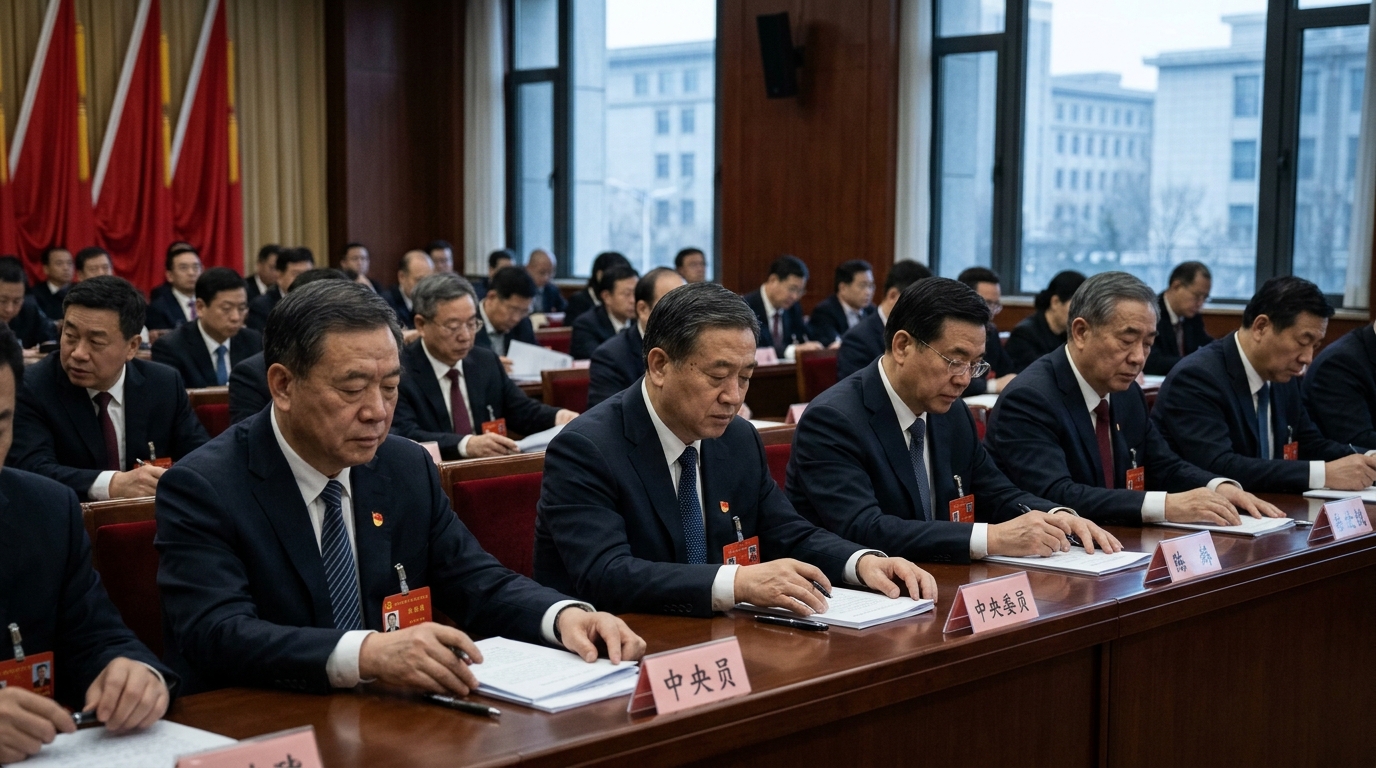
The Fifth Plenum of the 20th Central Committee opens Monday in Beijing and runs through October 29. It will likely be an unusually potent barometer of Chinese politics because this plenum kicks off the run-up to the 21st Party Congress in 2027, when the next leadership lineup will be decided. That context alone is enough to put it on every global allocator’s calendar.
Here is the problem: markets are treating this meeting as an economic catalyst, and it almost certainly is not one. The fourth plenum in October 2025 already adopted recommendations for China’s 15th Five-Year Plan covering 2026 to 2030, a task usually reserved for the fifth gathering. Instead, the upcoming meeting will focus on party governance. The four-day meeting comes as investigations continue across the party, government, and military, with officials expected to discuss stricter oversight of political power.
So the investment debate is not really about the plenum at all. It is about what the 15th Five-Year Plan, already adopted in March, actually means for a CSI 300 that has nowhere to go but sideways.
The Bull Case: Policy Is the Price Floor
China’s CSI 300 entered bear market territory on October 22 after a 20% drop from its June peak. It has fallen for 10 straight weeks, its longest losing streak on record, and sits at a roughly 15-month low. Forward valuations have contracted to roughly 13 times earnings, almost wiping out gains made after Beijing’s September 24 stimulus package.
Bulls argue the plan itself is the backstop. AI appears 52 times in the 15th Five-Year Plan document, up from 11 in its predecessor, and an “AI+” initiative targets integration across 90% of China’s economy by 2030. The plan targets the digital economy’s core industries at 12.5% of GDP. That is not rhetoric, it is directed capital. Morgan Stanley recommended a barbell approach, overweighting high-quality internet and tech leaders, AI frontrunners, financials, and dividend stocks, alongside thematic opportunities aligned with the 15th Five-Year Plan.
Global active long-only funds have raised their average allocation to Chinese equities to benchmark-neutral from underweight since June, according to Bank of America’s analysis of 2,767 global funds managing $562 billion in Chinese stocks. That is a genuine positioning shift, not a headline.
The Bear Case: Policy Names Sectors the Market Is Already Selling
The plan’s preferred sectors, semiconductors, AI, advanced manufacturing, are precisely where the current rout has been most severe. Technology stocks led the decline, with semiconductor and AI shares suffering heavy losses. Bloomberg linked the broader drop to fading stimulus hopes, weak earnings, and worries over the global AI trade.
State buying has not worked. Central Huijin has been associated with large-scale ETF support efforts, but analysts have warned that state buying alone may not deliver a lasting recovery. September industrial-profit growth was the weakest recorded this year. China’s second-quarter data showed its slowest growth in more than three years, linked to a multiyear property slowdown and extended weakness in consumer demand.
The plenum itself will not fix any of that. As Ruby Osman, senior policy adviser at the Tony Blair Institute, put it: “This plenum is probably less about deciding individual promotions, more about signalling the system-wide changes Xi wants ahead of a competitive 2027 Party Congress.”
What Investors Are Missing
The crucial distinction professionals should be making is between what the 15th Five-Year Plan names and what it can actually lift right now. AI is no longer just one priority sector among many in the plan; it is the organizing logic for a broad industrial transformation. But the market is repricing AI valuations globally, and Chinese AI stocks are not immune to that.
The overlooked beneficiary is not the technology sector that the plan headlines. It is the industrial and manufacturing layer beneath it. Frontier sectors such as advanced manufacturing, semiconductors, next-generation information technology, and aerospace rise to the top because they offer both strategic resilience and growth multipliers. Robotics and power equipment, which Invesco’s Liu Hui specifically flagged, sit at that intersection and carry less of the pure AI-valuation risk that is driving the current selloff.
The split between AI infrastructure winners and legacy-revenue losers is already visible in Chinese company results. Baidu’s GPU cloud revenue surged while its core ad engine missed for a fifth straight quarter, illustrating exactly how uneven the industrial-layer thesis plays out at the stock level.
Stocks to Watch
CSI 300 / MCHI. The broad index. BlackRock remained neutral on Chinese equities but saw opportunities in physical AI as of its fourth-quarter global outlook. Neutral is the honest position at about 13x forward earnings with earnings momentum still deteriorating.
FXI. FXI has heavy exposure to Chinese financials and other large state-linked companies. That concentration insulates it from some pure AI-valuation risk but also means it captures relatively little of what the 15th Five-Year Plan is trying to accelerate. A defensive position, not a growth one.
KWEB. The purest expression of the bull case and the bear case simultaneously. KWEB is down roughly the mid-to-high teens year-to-date, with concentrated exposure to Chinese internet companies led by Tencent near 10% and Alibaba in the high single digits. If consumption recovers and AI sentiment stabilises, KWEB captures both. If neither happens before the 2027 Party Congress reshuffles domestic policy attention, the downside is extended.
The plenum opens Monday. Watch the communique language on economic governance, not the personnel moves. The Five-Year Plan is already written. The question for global allocators is whether Chinese equities at roughly 15-month lows are pricing in a recovery the plan can actually deliver.