
Amazon, Microsoft, Alphabet, and Meta have signaled a combined roughly $700 billion to $725 billion in capital expenditure for 2026, much of it for AI infrastructure including data centers. That figure dominated every earnings call from February onward. It underpinned the bull case for transformer makers, power developers, and construction names riding what looked like the most durable infrastructure wave in a generation.
Now comes a number that belongs in every one of those models: $260 billion.
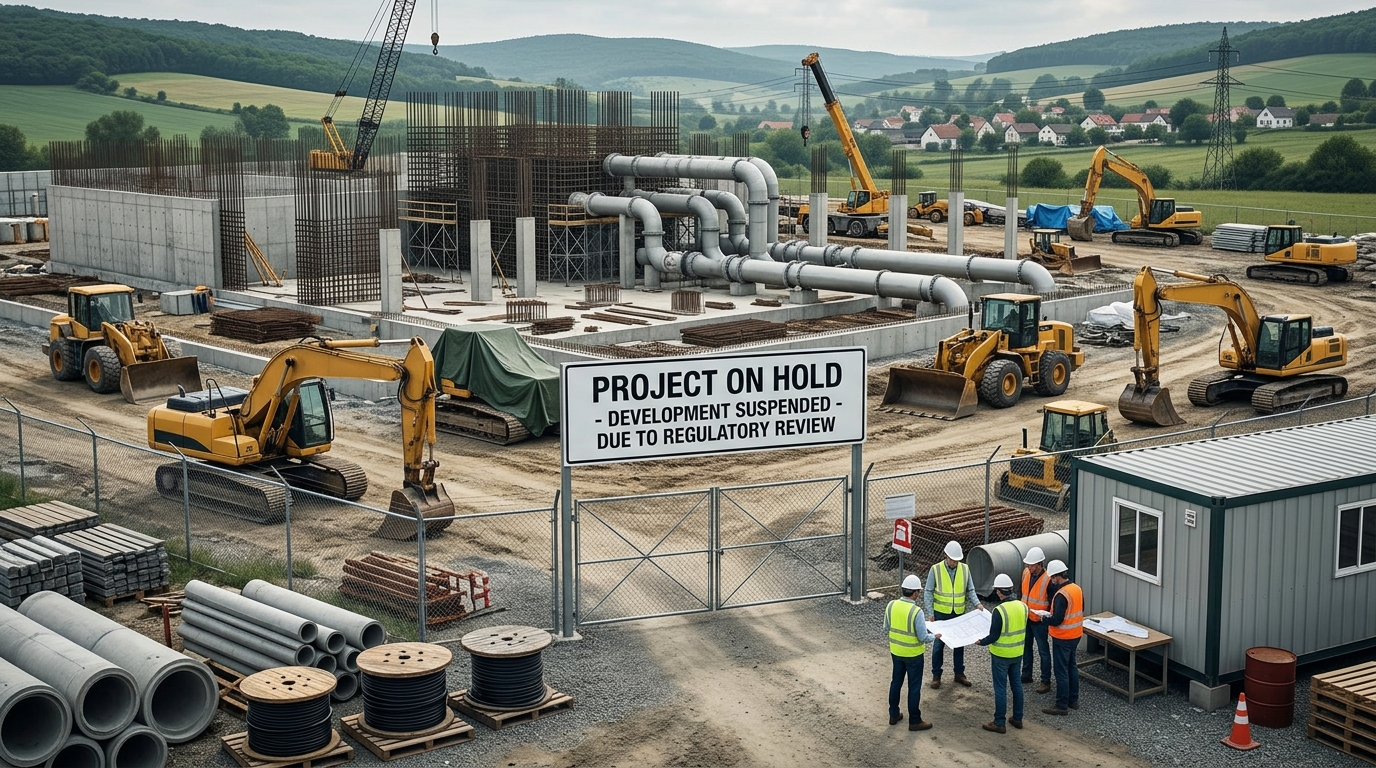
At least $260 billion of data center investments were canceled this year after sustained local opposition, according to new Heatmap Pro data. The pace is accelerating: about $130 billion was canceled in the three months ending September 30 alone. In dollar terms, cancellations in the third quarter of 2026 exceeded the total for all of last year. That is the number that rewrites the thesis for anyone who bought the buildout through downstream beneficiaries.
What Changed, and Why It Kept Getting Worse
This is not a new story that arrived suddenly in October. The opposition has been building for two years, but its character shifted this year. Data Center Watch described the first quarter as “a structural shift rather than a cyclical spike,” with communities internalizing an opposition playbook and the number of active opposition groups more than doubling to 833 across 49 states.
Most canceled projects are terminated because they fail to secure a local permit or face a hostile local government action, and a growing number of towns and counties are adopting bans or moratoria on data center construction. New York launched a statewide one-year moratorium in July 2026. The politics cross every line: even in ruby-red Stokes County, North Carolina, where Donald Trump won by about 60 points in 2024, the data center backlash crossed party lines.
A Heatmap Pro poll conducted by Embold Research in mid-August 2026 found that 75% of Americans would oppose a data center being built near where they live, a striking change from roughly a year earlier, when Americans were close to evenly split. That polling shift is not trivial. It means the political cost of approving a project has risen while the cost of blocking one has dropped. Local officials are responding accordingly.
The Risk Nobody Built Into the Model
The standard AI infrastructure thesis rested on a simple chain: hyperscaler capex goes up, physical buildout follows, and the power and construction complex captures the spending. Google, Amazon, Microsoft, and Meta collectively plan roughly $700 billion to $725 billion of capex in 2026, up about 60% to 77% from last year’s roughly $410 billion, based on company guidance tracked by outlets including the Financial Times. Those commitments are real. The problem is that capital commitment and physical delivery are increasingly different things.
Roughly $1 trillion in data center investment now faces some kind of sustained or meaningful local opposition, Heatmap Pro reports, and about half of all projects that have met local backlash this year were ultimately canceled in its dataset. The cancellation rate matters more than the gross opposition figure. Half of contested projects dying is not a friction cost. It is a structural constraint on how much of the announced capex actually flows to transformers, grid connections, and site construction.
Layering in the power infrastructure bottleneck makes the picture worse. Industry trackers and reporting this year have put transformer delivery times at roughly three to five years for the biggest units, with some suppliers effectively booked out on certain switchgear categories into 2028. Local opposition kills projects before they ever reach the equipment queue. The two constraints compound: communities block the permit, so the equipment order never gets placed, so even projects that do survive face years of delay in the physical supply chain.
Where Investors Need to Look Again
For investors who own the AI buildout through power developers, transformer suppliers, or construction companies, the $260 billion figure is not an abstraction. It represents canceled demand that was never placed. Heatmap Pro also cautions its figures are likely an undercount because many proposals never disclose a dollar investment estimate, especially early in the process when they are most likely to stall.
The hyperscalers themselves are not the primary risk here. Amazon can redirect a canceled Virginia project to a compliant jurisdiction. What cannot redirect as easily are the suppliers, utilities, and local contractors whose order books were built around a geography that is now pushing back. Position sizing in those names deserves a hard look, not because AI demand is going away, but because the gap between announced capex and delivered concrete is wider than anyone modeled at the start of the year.
The Wealth Builder Takeaway
The lesson is not to exit the AI infrastructure trade. It is to hold the thesis at one level of abstraction higher. The hyperscalers writing the checks are better positioned to absorb geographic disruption than the companies building in specific zip codes. When a trend this large meets a constraint this structural, diversification across the value chain is not a hedge: it is the difference between owning the wave and owning a specific beach that just banned construction.