August 1, 2026
GM’s Hybrid Bet Is Hiding in a Corvette
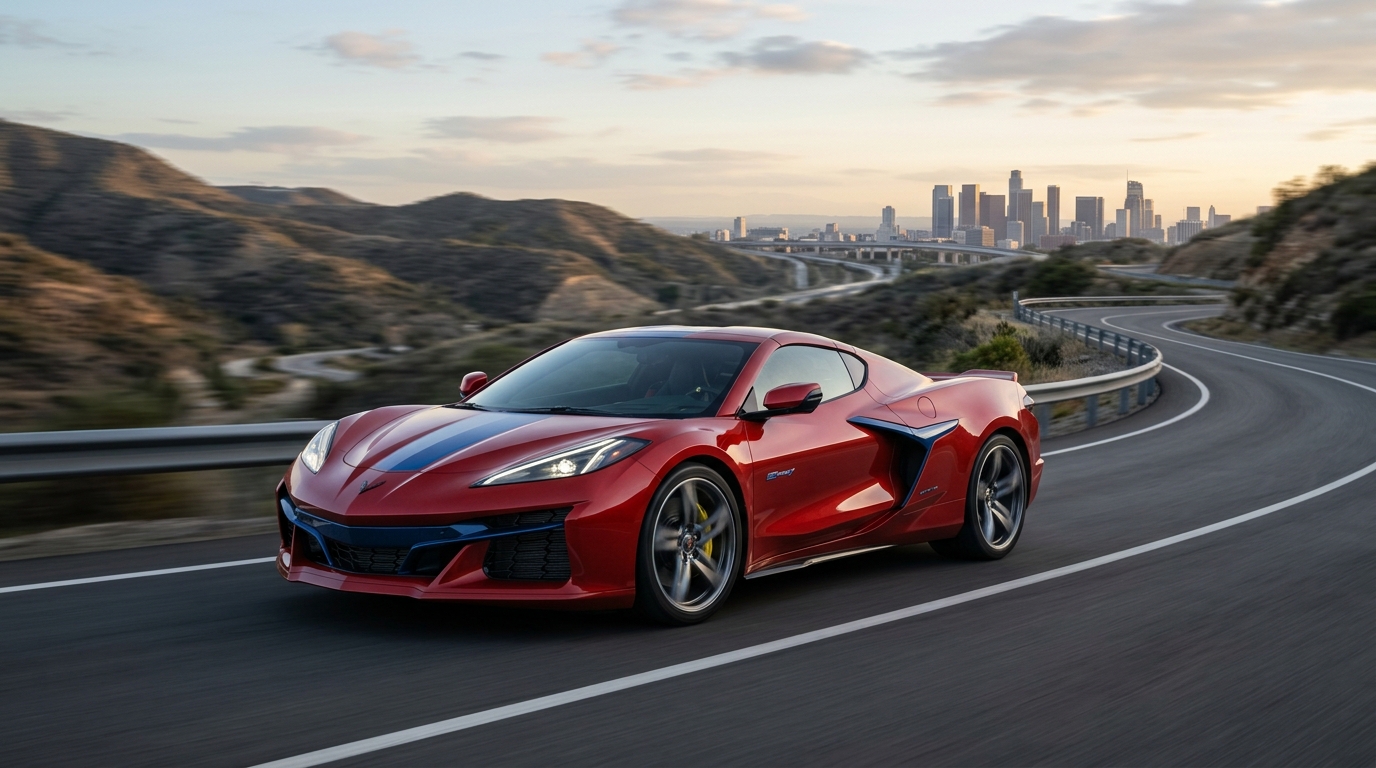
The Grand Sport X is the only hybrid GM sells in the U.S. That says more about electrification credibility than a dozen press releases.
First a note from Base Camp Trading
Fellow Investor,
Most traders don’t know it, but there’s a window of time every day that has a history of predictable price movements…
And I’ve developed a way to profit from them.
I’m not talking about picking up a few bucks here or there…
The kind of money you can make with my strategy is truly astonishing.
In fact, one user who I’ll call Jim, let me know he made…
- $6,702 in his first month
- $4,710 in his second month
- $12,475 in his third month.
Now, of course, I can’t promise you’ll have the same level of success…
But it wouldn’t shock me one bit if you did… or even made more than that…
Because Jim raked in those paydays without having any special advantages over you…
Or any other regular trader.
Discover how to get in on the action here.
To your investing success,
– Dave Aquino
Partner, Base Camp Trading
GM’s Hybrid Bet Is Hiding in a Corvette
The investment committee question is not whether the 2027 Corvette Grand Sport X is a good car. First drives confirm it is. The real question is what it reveals about General Motors’ electrification posture at exactly the moment Wall Street is trying to figure out whether GM has a hybrid strategy or just a hybrid press release.
The Big Question
GM absorbed roughly $7.1 billion in EV-related writedowns and charges in late 2025, then spent the first half of this year narrowing those losses and raising guidance. The Q2 beat landed two weeks ago: GM reported Q2 adjusted EPS of $3.57 on revenue of $48.03 billion, both above expectations, as strong pricing and cost discipline carried the result. The automaker attributed its guidance improvement to consistent vehicle transaction prices, lower warranty costs, and narrowing EV losses as it wraps up a multibillion-dollar pullback in EVs.
So GM is cutting EV losses, raising earnings guidance, and sitting on a stock that trades around $88.86, with the market still skeptical. And the Grand Sport X is one concrete reason to evaluate whether that skepticism is earned.
You’re Being LIED To About The Iran War
Forget EVERYTHING you’ve heard about the Iran war.
Especially the reasons why we’re bombing the country.
Why Wall Street Cares
The Grand Sport X is the only hybrid GM currently sells in the U.S., though the company has said it wants to add more to its lineup. That sentence is the crux of the debate. GM has spent years telling investors it will lead in electrification. The product reality today is a single electrified vehicle, priced at $112,195, in a sports car segment that barely moves the revenue needle for a company generating nearly $50 billion a quarter.
GM retained the top spot in U.S. auto sales for Q2, but still saw a 4.2% year-over-year decline and an especially sharp drop in EV sales. The automaker pointed to a shrinking EV market and economic uncertainty. At the same time, GM failed to take advantage of a surge in U.S. hybrid sales this year. The automaker has no mainstream hybrids available in this market.
The Bull Case
Bulls argue the Grand Sport X matters for a reason beyond the unit count: it proves the technology works and validates a platform that can scale. The Grand Sport X combines the LS6 6.7L V8 with a front-mounted electric motor, delivering 721 horsepower and 665 pound-feet of torque along with all-wheel-drive capability.
The eAWD hardware migrating from the ZR1X down to the Grand Sport X is the real signal. GM is industrializing a modular hybrid system across its highest-visibility product line. The “X” designation brings consistency in the Corvette C8 naming convention to denote electric all-wheel drive, following the ZR1X. That kind of naming architecture suggests engineering intent, not a one-off.
On earnings, the picture has improved meaningfully. GM has said it expects EV losses to improve by $1 billion to $1.5 billion this year compared with 2025. JPMorgan raised its price target to $120, reiterating an Overweight rating while citing continued strength in GM’s truck and SUV franchise. Bank of America maintains a Buy rating with a $107 target, arguing that premium vehicle demand and healthy margins continue to offset challenges associated with the EV transition.
The Bear Case
Bears make a simpler point: one $112,000 sports car is not a hybrid strategy. Plug-in hybrids are historically much pricier, which still leaves GM vulnerable in segments where cheaper, self-charging hybrids are thriving. Toyota sells hybrid Camrys, Rav4s, and Highlanders by the hundreds of thousands. GM sells a hybrid Corvette to a rarefied audience.
Investors will be keeping a close eye on GM to gauge whether expanding its hybrid lineup comes quickly enough to capitalize on a thriving segment or if the company relies too heavily on an EV segment that has slowed. That timing gap is real. GM has said its next plug-in hybrids for North America are targeted for 2027, which means a full model year of missed hybrid market share.
The man CNBC calls “The Prophet” says: “This is the most important retirement stock in America right now.”
A little-known company that beat Apple, Amazon, and the S&P 500 – combined.
It doesn’t drill for oil… build A.I. chips… or write code.
Yet the White House invoked emergency powers to protect what it controls – and one billionaire just put half his $9 billion fund into it.
Right now, it’s trading at a rare discount.
The writedown history underscores the execution risk. GM recorded about $6 billion in fourth-quarter charges tied to scaling back EV plans in the U.S., with another $1.1 billion linked to restructuring in China. Most of the EV-related hits stem from contract cancellations, supplier settlements, and asset writedowns as demand for battery-powered cars sputtered. A company that took a roughly $7.1 billion combined EV and China hit in late 2025 and then pivoted to a single hybrid Corvette faces a credibility burden that one first-drive review cannot fully resolve.
The Evidence
The Grand Sport X’s engineering is legitimate. Chevrolet paired the 6.7-liter naturally aspirated V8, rated at 535 horsepower, with a permanent-magnet electric drive unit mounted on the front axle. The electric motor adds 186 horsepower and 145 pound-feet of torque, bringing combined output to 721 horsepower. A 1.9-kWh lithium-ion battery provides short EV-only travel at speeds up to 50 mph.
Critically, the packaging does not compromise the car’s identity. The high-voltage battery is low and centered in the car to preserve the agility of the mid-engine platform. The front motor enables near-instant access to 145 pound-feet of torque on the front axle, and an intelligent controls system combines the agility typical of rear-wheel drive with the corner-exiting traction only all-wheel drive can provide. Edmunds noted the X is “lively through turns” where the E-Ray was sometimes known for nose-heavy, somewhat reluctant handling chops. The Grand Sport X uses its electric power not just to help with acceleration on straightaways but to pull the nose through corners as well.
The broader Corvette brand is healthy. The question is whether that health is transferable to GM’s mainstream EV and hybrid ambitions.
On the platform side, GM is currently developing a new dedicated EV architecture known internally as BEV-N, set to replace the BEV3 platform. The new platform is expected to roll out by the end of the decade. That timeline tells you something: mainstream hybrid and EV product expansion sits several years out.
The Mavens’ View
Portfolio managers are not debating whether the Grand Sport X is a good Corvette. They are debating whether GM’s electrification sequencing is rational or reactive. The bull interpretation is that GM made a disciplined decision: absorb the EV writedowns, narrow the losses, and prove hybrid technology first in a high-margin vehicle where customers will pay for it. Then cascade the architecture down-market. Analysts anticipate significant benefits from EV cost improvements following the impairments, and this cost reduction trajectory represents a critical element in GM’s path to EV profitability.
The bear interpretation is that GM is behind in the only powertrain category actually growing in the U.S. right now, and the Corvette is cover. Mary Barra has said electric vehicles remain GM’s long-term strategy despite near-term market and regulatory challenges, while the automaker pursues flexibility by expanding hybrid options. Expanding hybrid options while having exactly one hybrid in showrooms is a strategic gap that will not close on its own.
GM CFO Paul Jacobson has called the company’s stock a “bargain” at roughly $75 a share. That framing is credible on a pure-earnings basis. Whether it is credible as an electrification story is a different calculation entirely.
What Investors Are Missing
The Corvette brand is quietly becoming GM’s electrification laboratory, and nobody is pricing that function into the stock. The ZR1X pioneered eAWD. The Grand Sport X industrialized it. The naming convention is deliberate. If GM successfully moves this modular front-electric-motor system into its truck and SUV lineup, the cost amortization across high-volume platforms could be substantial.
The overlooked risk runs the other direction. Porsche launched the first-ever 911 Carrera GTS hybrid as a performance rival. If the sports car segment, historically the one place GM has had electrified product, becomes competitive, GM loses the laboratory advantage it has been quietly building. The margin and brand benefit of Corvette has always depended on Corvette winning that comparison.
No. 1 Stock to Buy for THIS MONDAY
Heads up: Tim Bohen’s new algorithm just uncovered a dirt-cheap stock that could DOUBLE or MORE this coming Monday. This powerful algo has already identified Monday moves of 149%, 190%, and even a whopping 536%…
Click here to see how to get positioned ahead of this Monday’s setup!
Stocks to Watch
General Motors (GM). Trading around $88.86, with Wall Street still debating whether earnings durability is outrunning electrification credibility. The Q2 beat and rising guidance are real. The hybrid timing gap is real too. The stock prices in the former without fully crediting the latter, making it the central position to watch as the mainstream hybrid rollout schedule becomes clearer in Q3 commentary.
Toyota Motor (TM). The direct beneficiary of GM’s hybrid absence. Toyota’s self-charging hybrid lineup is capturing the U.S. market segment GM has no answer for in 2026. That is not a short-term trade; it compounds every quarter GM delays mainstream hybrid product.
Aptiv (APTV). A tier-one supplier deep in electrification components and vehicle architecture. As GM advances work toward its next EV platform and expands plug-in hybrid programs toward 2027, Aptiv’s high-voltage systems and software integration work position it as a quiet beneficiary of whatever GM’s electrification sequencing eventually produces.
Modine Manufacturing (MOD). Thermal management is one of the least-discussed but most critical constraints in hybrid and EV system design. Every time GM adds a front electric motor to a platform, battery and power electronics cooling requirements change. Modine’s data center and EV thermal business is small but growing, and it sits directly in the path of the production ramp at Bowling Green.