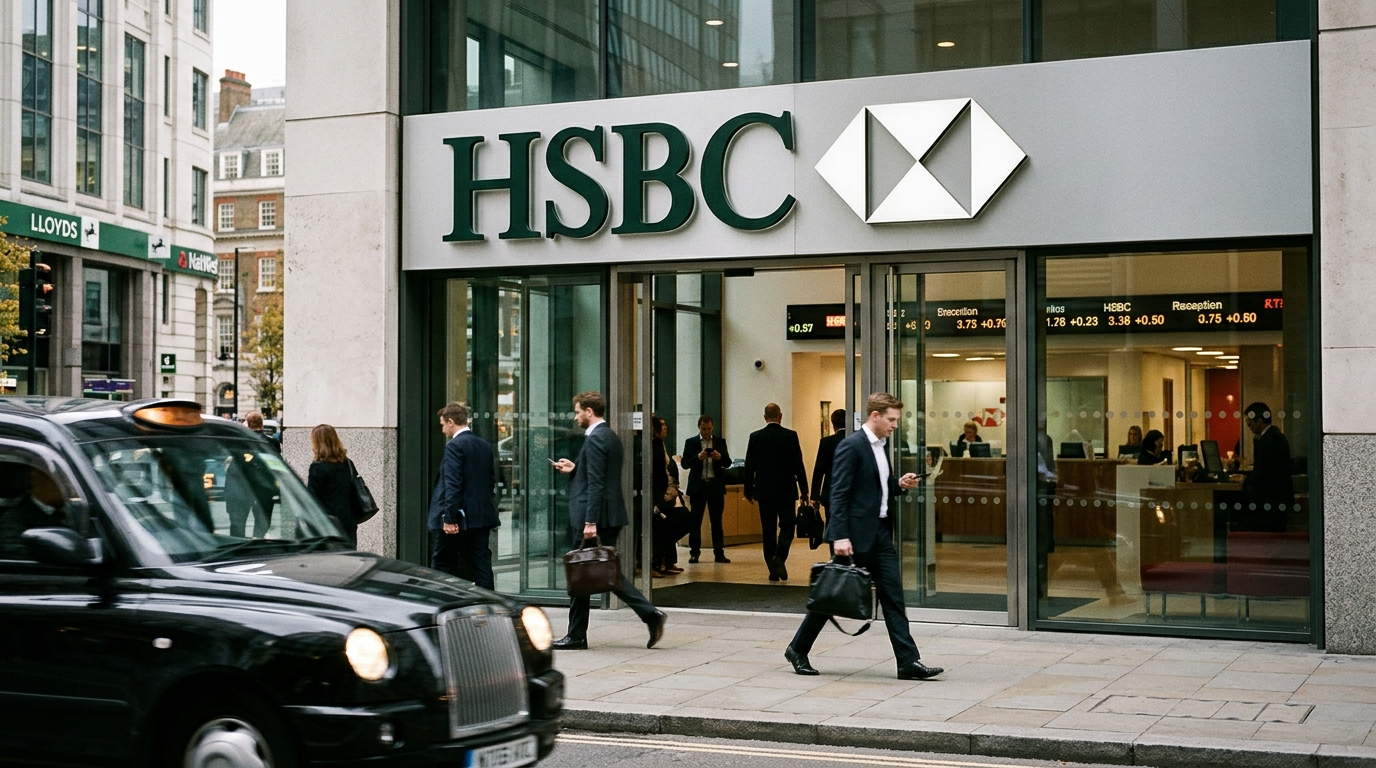
Income investors woke up this morning to a clean set of numbers from HSBC. Pre-tax profit rose 32% year-on-year to $9.63 billion in the third quarter. Revenue climbed to $18.6 billion from $17.8 billion a year ago, driven by a 6% rise in net interest income to $9.3 billion and higher fees from corporate banking and wealth management. The bank approved a third interim dividend of $0.10 per share and announced a further buyback of up to $1 billion, expected to complete by the 2026 full-year results announcement.
The timing is pointed. Lloyds Banking Group and NatWest are both due to report third-quarter results this week, with Chancellor John Healey’s autumn Budget arriving on Wednesday October 28. Banks are widely speculated to be a target, with Healey reported to be considering raising the surcharge on profits from 3% to 8%, reversing a cut made under former Conservative Chancellor Jeremy Hunt. For income investors holding or considering positions across the UK bank cluster, the surcharge question matters enormously for how reliable those dividends actually are.
Geography Is the Deciding Factor
The key variable is where each bank earns its money. Because the surcharge targets UK banking profits, domestically focused lenders face a disproportionately heavy burden. NatWest and Lloyds derive the vast majority of their earnings from British operations, while HSBC generates most of its earnings outside the UK. That structural difference goes a long way toward ranking these three for payout reliability if the surcharge rises.
Goldman Sachs estimates that restoring the surcharge to 8% would trim Barclays’ net profit by 2% to 3% but cut Lloyds and NatWest by 6% to 7%. HSBC, with its Asia-heavy income base, sits closer to the Barclays end of that spectrum. HSBC’s annualised return on average tangible equity for the first nine months of 2026 reached 18.8% excluding notable items, and the bank maintains a 50% dividend payout ratio target for 2026 through 2028. That combination of geographic insulation and an explicit multi-year payout commitment puts HSBC first on the reliability ranking today.
NatWest Before Lloyds Among the Domestic Pair
Among the two banks still to report this week, NatWest edges ahead of Lloyds for income purposes. NatWest carries a trailing dividend yield of 5.1% against approximately 3.6% at Lloyds. Lloyds has delivered dividend growth at double-digit rates and trades at roughly 8.8 times next year’s forecast earnings, but NatWest’s forecast yield of around 6% runs well ahead of both Lloyds and the FTSE 100 average.
Both domestic banks carry real Budget risk. Because the surcharge focuses on UK profits, domestic lenders would be hit hardest, and Lloyds and NatWest generate the vast majority of their profits in the UK. Lloyds carries an additional complication: a motor finance Upper Tribunal hearing is set for 16 February to 3 March 2027, leaving the final cost still an open question. That open liability weighs on the dividend picture in a way that NatWest does not share to the same degree.
The Wealth Takeaway
HSBC’s $0.10 dividend and new $1 billion buyback today reflect a bank that generates most of its earnings beyond the reach of Healey’s surcharge. Basel 3.1 implementation starting January 2027 adds further flexibility, though the capital impact is bank-specific and the exact benefit is uncertain. For income investors ranking payout reliability across the UK bank reporting season, the order looks like this: HSBC first for geographic insulation and a locked-in 50% payout ratio, NatWest second for yield advantage over its domestic peer, and Lloyds third given the combination of surcharge exposure and unresolved motor finance costs. Wednesday’s Budget will test that ranking. If the surcharge lands below the feared 8%, the gap narrows. If it hits the top end, HSBC’s global footprint looks more valuable still.