Jeff Brown is the former tech executive who called the rise of Bitcoin, Tesla, and Nvidia years in advance. He’s now predicting Elon Musk is about to open a new wealth window by October 30. Click here to see the details or read more below because the last three times this window opened, those who acted had a chance to walk away with generational wealth.
Dear Reader,
Have you seen this Elon Musk new project?
He called it “the most epic AI project in history…”
Because it could help him secure 50 times MORE computing power than the entire rest of the world.
This is all part of Elon Musk’s $320 trillion masterplan…
A blueprint to completely dominate the entire AI industry.
And I’m pretty sure this is keeping executives at Amazon, Microsoft, and Google up at night.
But what does this mean for you?
Well, Elon is predicting this could be 180 times bigger than the SpaceX IPO.
That IPO minted 4,400 millionaires overnight.
If this is 180 times bigger…
Just imagine how many more Americans will become millionaires.
Will you be one of them?
Or will you just watch others get rich from the sidelines?
Click here to see the details and decide for yourself.
We have so much to look forward to,
Jeff Brown
Founder & CEO, Brownstone Research
Cummins Is Retreating From Hydrogen While the Market Bets It Will Lead
The investment case for Cummins as the company that permanently replaces diesel in long-haul freight with hydrogen fuel cells runs into a concrete problem: Cummins itself does not appear to believe it.
In Q1 2026, Cummins booked $199 million in charges tied to the sale of its low-pressure hydrogen fuel cell business, completed March 31. The buyer was undisclosed. The company paid a net $175 million to the customer to cancel future commitments and resolve related claims. That is not a divestiture that crystallizes value. That is an exit where the seller pays to leave.
The charge follows a brutal write-down cycle. In Q3 2025, Cummins recorded $210 million in non-cash goodwill impairment and $30 million in inventory write-downs inside its Accelera zero-emissions segment. Q4 2025 added $218 million more. Then, with full-year 2025 results reported in February 2026, Cummins disclosed $458 million of charges tied to its electrolyzer business strategic review and said it intended to stop new commercial activity in electrolyzers while continuing to fulfill existing customer commitments. Total absorbed across those cited items: roughly $1.1 billion.
CEO Jennifer Rumsey said explicitly in Q1 2026 results that the fuel cell sale reflected “lower hydrogen adoption expectations.” That language is management guiding expectations down, not signaling a pivot to high-pressure fuel cells for trucks.
What is actually working at Cummins is diesel and data centers. The Power Systems segment hit a record in Q1 2026, driven by demand for backup generation tied to data center expansion. North American truck markets were described as recovering from a cyclical low. Management raised its full-year revenue outlook to growth of 8% to 11%, with EBITDA margins between 17.75% and 18.50%, stripped of the fuel cell sale charges. The core business is fine. The zero-emissions ambition is being surgically reduced.
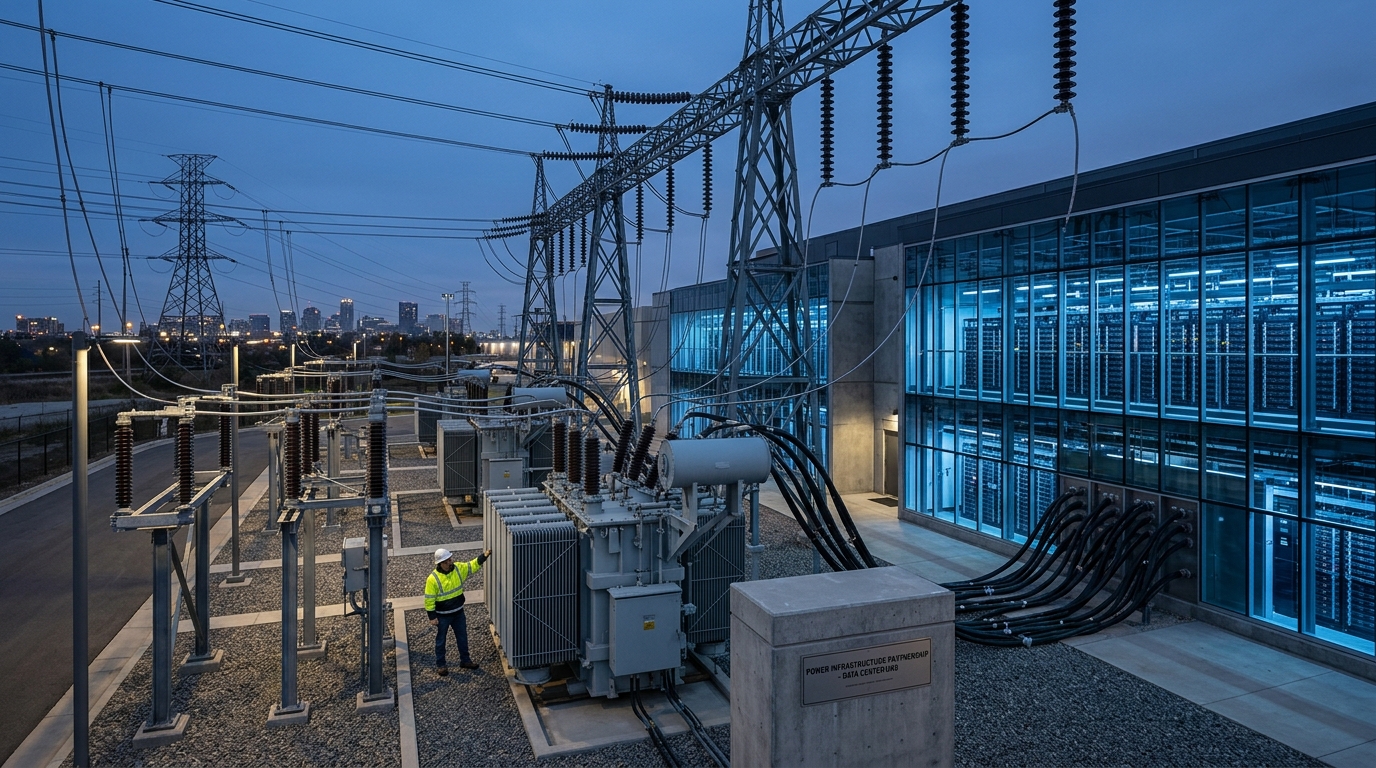
The data center demand driving Cummins Power Systems to a record quarter is the same force reshaping utility capital allocation. Regulated utilities are now signing 20-year power agreements with hyperscalers, locking in the electricity demand that makes diesel backup generation a durable business.
The broader heavy-duty hydrogen market is not collapsing. Toyota and Hyroad Energy announced on May 4, 2026 that they plan to deploy 40 hydrogen fuel cell Class 8 trucks across Southern California, one of the larger announced commercial FCEV rollouts in the U.S. Cummins’ Accelera technology has also been showcased in high-profile demonstrations, including the DOE-highlighted H2Rescue prototype that set a 1,806-mile single-fill record in late 2024. The technology functions.
The problem is economics. Public estimates for green hydrogen production costs and delivered prices still sit well above what fleets need for broad, unsubsidized adoption, and heavy-duty fueling infrastructure remains limited and uneven. A Class 8 hydrogen truck also generally carries a meaningfully higher upfront price than a comparable diesel tractor.
That cost gap is the reason Cummins is cutting, not scaling. The company that Wall Street wants to own as the diesel-replacement trade is the same company that just paid $175 million to exit its fuel cell customer commitments.
Stocks to Watch
- Cummins (CMI): Core diesel and power generation businesses are performing. The hydrogen thesis deserves skepticism until Accelera’s remaining fuel cell program shows commercial traction, not demonstration miles.
- Ballard Power Systems (BLDP): Acquiring GeoPura to vertically integrate hydrogen production and fuel cells. More committed to the sector than Cummins, but exposed to the same infrastructure constraints.
- Air Products (APD): Green hydrogen production cost is the fulcrum. If APD and peers cannot bring costs down enough for competitive dispensed pricing, heavy-duty FCEV adoption timelines slip regardless of powertrain progress.