
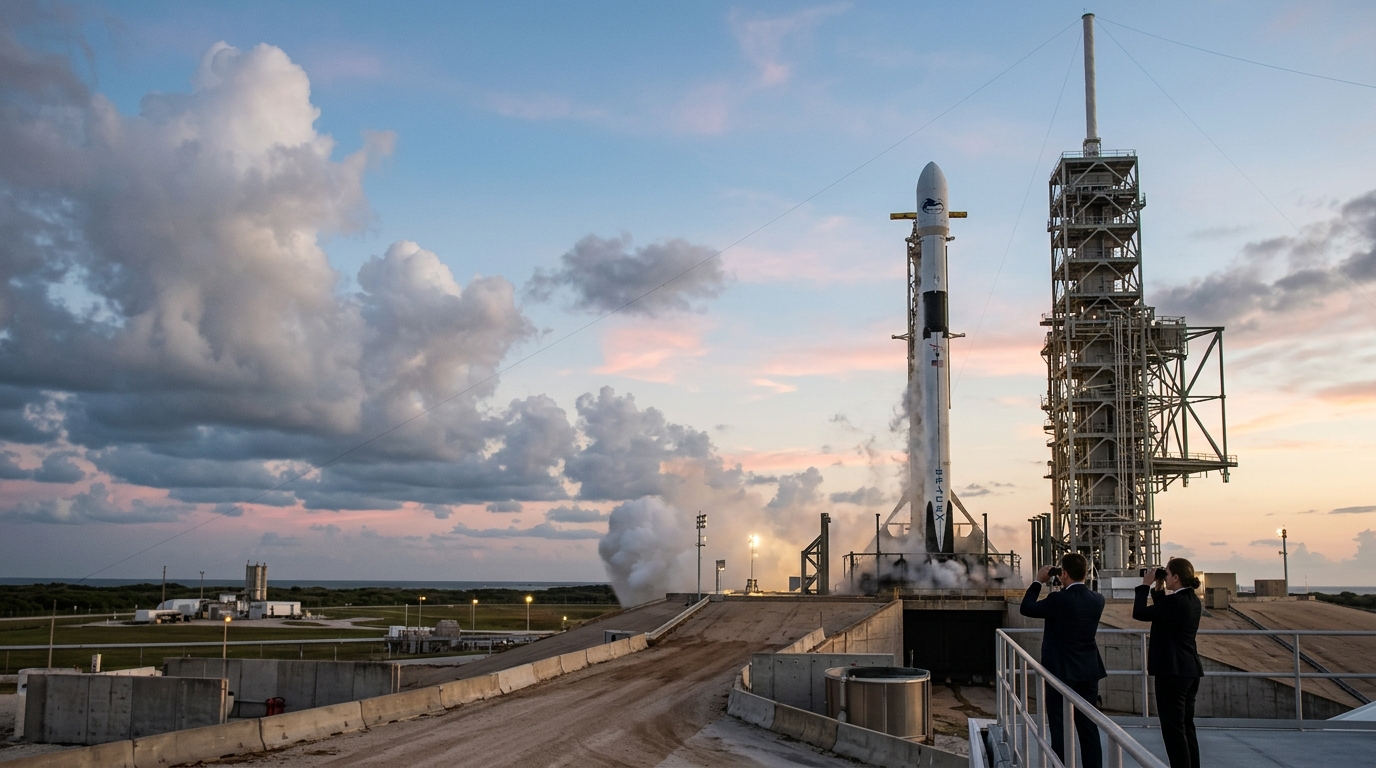
July 26, 2026
SpaceX: Priced for Perfection?
HSBC just said the stock is fully valued. The smartest bulls disagree.
First a note from Mode Mobile
Breaking news.
SpaceX told investors it plans to launch a Starlink mobile service for U.S. consumers.
That’s a direct shot at Big Telecom and would put SpaceX head-to-head with Verizon, AT&T, and T-Mobile in a $1.6T market.
For most investors, that sounds like a telecom shakeup.
For Mode Mobile, it could be much bigger.
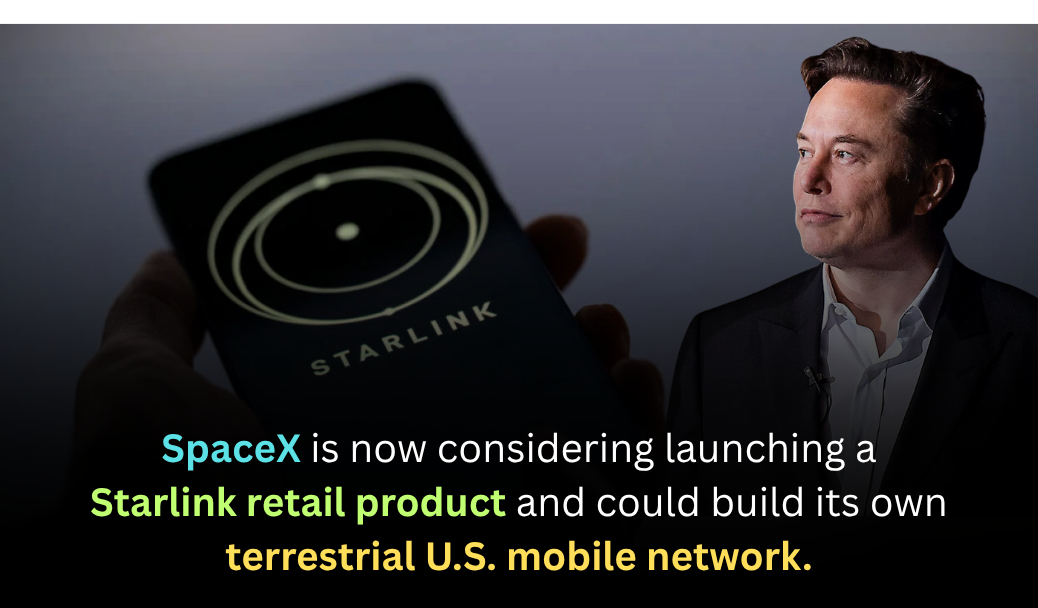
Mode built a platform that rewards users for everyday smartphone activity like browsing, listening, using apps, and charging.
If Starlink brings internet access to places cell towers can’t reach, it could significantly expand Mode’s addressable market.
More connected phones.
More active users.
More ways for people to earn from the device already in their pocket.
Mode has already reached 490M+ users, helped users earn and save over $1B, and generated $115M+ in cumulative revenue.
But the bigger story is what happens next.
If global connectivity keeps expanding, that model could reach more people, in more markets, with fewer barriers than ever before.
That’s why 60,000+ shareholders are already watching Mode ahead of a potential IPO.
With their Nasdaq ticker secured and more than $90M invested, Mode’s pre-IPO shares are still available at $0.52 for a limited time.
Click here to see why investors are piling in before Mode’s pre-IPO window closes.
SpaceX: Priced for Perfection?
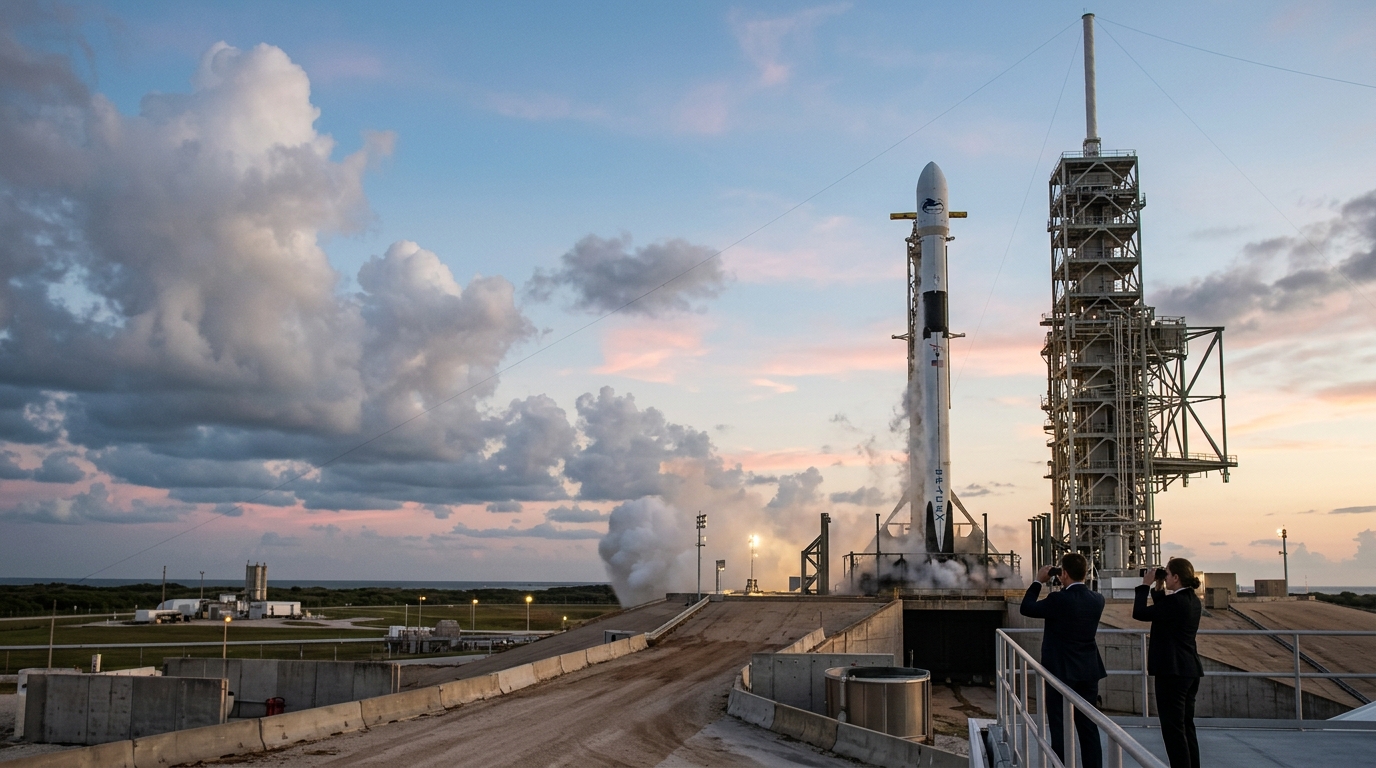
The Big Question
Here’s the question sitting at every serious investment committee meeting right now: Is SpaceX the most important publicly traded company of the next decade, or is it a trillion-dollar bet on ideas that may never pay off within a reasonable investment horizon?
That’s not a rhetorical question. It is the actual debate.
On July 24, HSBC initiated coverage of SpaceX (NASDAQ: SPCX) with a Hold rating and a $115 price target. That number sits below the $135 IPO price and below where the stock was trading at initiation. The bank’s message was measured but pointed: SpaceX is a dominant business with real execution risks, and at current valuations, those risks are not priced in.
Why Wall Street Cares
SpaceX went public in June 2026 in what became the largest IPO in history, raising roughly $85 billion and debuting at a valuation approaching $1.8 trillion. The stock opened at $150, surged to an intraday high of $225.64 within days, and has since shed nearly half its peak value. As of July 23, shares closed at $115.26, putting them nearly 15% below the IPO price.
That kind of move — from historic IPO to below offering price in under seven weeks — demands explanation. And the explanation is not simple.
Institutional investors are staring at a company trading at roughly 90 times trailing revenue while posting a $4.9 billion GAAP net loss in 2025 and a $4.28 billion loss in Q1 2026 alone. The valuation math only works if you believe the moonshot businesses — orbital AI data centers, xAI, Terafab chip fabrication — eventually justify a multiple that no company in modern history has grown into at this pace. And yet, roughly 80% of the sell side rates the stock a Buy or Strong Buy, with a median price target near $226. The spread between the most bullish analyst (Raymond James at $800) and the most bearish (Morningstar at $62) may be the widest in the history of major-cap coverage.
Elon Musk: Buy Alert
The world’s richest man just launched a new $480 trillion disruption, which could make you massive gains this summer. It has nothing to do with space, robots or AI. It’s much, much bigger.
The Bull Case
Start with what actually works today. Starlink is one of the most profitable broadband operations on the planet by margin. The satellite internet division generated $11.4 billion in revenue in 2025 — 61% of SpaceX’s total — and $4.4 billion in segment operating income, with margins doubling year over year. In Q1 2026 alone, Starlink produced $1.2 billion in operating profit at an adjusted EBITDA margin of 63%, serving 10.3 million subscribers across 164 countries.
That subscriber count is compounding fast. It has more than doubled from 4.6 million at the end of 2024.
Then there is the longer arc. HSBC itself forecasts SpaceX revenue more than doubling — from $18.7 billion in 2025 to $38.2 billion in 2026 — driven by AI businesses and expanding Starlink operations. The launch business is so capacity-constrained that SpaceX has reportedly begun turning away satellite operators seeking dedicated Falcon 9 launches beyond 2028. That is not the behavior of a struggling company; it is the behavior of a monopolist managing its order book.
The blue-sky scenario matters too. HSBC’s own most optimistic valuation places SpaceX at $293 per share, assuming Starship achieves commercial viability beginning in 2027, launch capacity doubles, and AI assets command richer multiples. Anthropic has contracted to pay $1.25 billion per month through May 2029 for access to xAI’s Colossus 1 data center. Google has committed $920 million per month for 32 months. That is not speculative revenue — those are contracts.
The Bear Case
HSBC’s concern is not with Starlink. It is with everything else.
The bank argues that xAI trails leading AI developers in enterprise adoption and compute scale, and requires substantial capital spending to compete with hyperscalers. In 2025, the AI division posted a $6.36 billion operating loss. In Q1 2026, it burned $7.7 billion in capital expenditure in a single quarter — an annualized run rate above $30 billion. HSBC expects SpaceX to remain loss-making on a GAAP basis through 2027, with free cash flow not turning positive until 2030 after roughly $106 billion in cumulative cash usage.
Morningstar’s view is more severe. Analyst Nicolas Owens placed SpaceX’s fair value at $62 per share and described the xAI division as posing “a material threat of value destruction.” AJ Bell’s head of markets noted that a $1.75 trillion valuation put SpaceX at 67 times sales, three times Nvidia’s comparable ratio.
And then there is the lock-up cliff. On August 6 — two days after SpaceX’s first-ever public earnings report on August 4 — the first major tranche of insider shares becomes eligible for sale. Up to 911.5 million shares, representing roughly $116 billion in stock at recent prices, could theoretically hit the market. The stock has already broken below its IPO price before that unlock window even opens, which historically is not a reassuring sign. Short interest has surged to a record 32% of the free float.
The Billionaire Who Saved SpaceX Just Made a New Bet
He once rescued SpaceX from bankruptcy. He also helped launch Facebook, Airbnb, YouTube, and Spotify. And now he’s making a new bet – he’s just sold every single share of the Mag 7 companies in his portfolio. And he’s using that money to buy a shocking new kind of company instead. You should mirror his moves. And now you can, for as little as $50 a share.
The Mavens’ View
What’s interesting is that the disagreement among professional investors is not really about Starlink. Almost everyone agrees the satellite internet business is exceptional. The disagreement is about what you are buying when you own SPCX stock — a subscription business with a monopoly in low-Earth orbit connectivity, or a bet on orbital AI data centers that may not be economically viable within this decade.
Cathie Wood and ARK Invest are buyers of the dip, projecting SpaceX could reach $2.5 trillion enterprise value by 2030. Ron Baron’s Baron Capital has been long since before the IPO. On the other side, SoftBank’s Masayoshi Son publicly argued that chip costs, launch prices, and inter-satellite latency make SpaceX’s orbital compute vision irrelevant to the AI race’s decisive years. Sam Altman of OpenAI has echoed similar skepticism about orbital compute economics.
Here’s the complicating factor: every prominent voice rejecting orbital AI compute — Son, Altman, Amazon Web Services CEO Matt Garman — also has enormous financial stakes in terrestrial AI infrastructure winning that argument. There are, as has been noted, no disinterested parties in this debate.
HSBC lands in the middle. The bank acknowledges SpaceX as the clear leader in commercial launch and believes Starlink is well positioned to benefit from growing demand. But it draws the line at giving full credit to orbital data centers, Terafab, and a lunar economy that may not generate meaningful revenue within a foreseeable investment window. That is a reasonable place to land — not pessimistic, just disciplined.
What Investors Are Missing
The conversation is dominated by the valuation debate. Almost nobody is focused on a more immediate structural problem: Starlink’s average revenue per user is falling.
In Q1 2026, Starlink’s ARPU slipped from $99 to $66. That compression matters because the bull case depends not just on subscriber growth but on pricing power. If SpaceX is growing its subscriber base by competing on price rather than winning on value, the margin profile of the world’s most profitable broadband operation becomes a lot less impressive over time. Subscriber count says the business is growing. ARPU says the unit economics may be softening. Both things can be true simultaneously, and the market has not fully engaged with what that means at scale.
Slight tangent, but it matters: the Terafab partnership involves Intel contributing its next-generation 14A manufacturing process. Intel’s own struggles in advanced manufacturing over the past several years raise a real question about whether that chip supply chain can be de-risked on the timeline Musk is projecting. That’s an execution dependency that deserves more attention than it has received.
Stocks to Watch
- SpaceX (SPCX): The center of the debate. August 4 earnings and the August 6 lock-up unlock are the two most important near-term events. Short interest at 32% of the float means the positioning is extreme in both directions. The stock does not need to be a buy or a sell right now — it needs to be understood.
- AST SpaceMobile (ASTS): The direct-to-cell satellite competitor that benefits from any validation of low-Earth orbit connectivity economics. If Starlink’s market is smaller than SpaceX claims, AST’s own addressable market shrinks. If it is larger, AST rides that wave too.
- Intel (INTC): Brought in as a Terafab manufacturing partner in April 2026, contributing its 14A process technology to SpaceX’s orbital compute ambitions. Intel’s ability to execute on advanced manufacturing — a track record that has been genuinely mixed — becomes a material variable in SpaceX’s AI infrastructure timeline.
- Viasat (VSAT): The legacy satellite broadband operator most directly disrupted by Starlink’s expansion. As Starlink’s ARPU compresses, it signals aggressive pricing that likely reflects competitive pressure Viasat is feeling across its enterprise and government segments.
- Amazon (AMZN): Project Kuiper, Amazon’s competing satellite constellation, becomes more interesting if SpaceX’s market is proven out and its own ARPU dynamics suggest room for a premium-priced alternative. Bezos has said orbital data centers are “very realistic.” Amazon is building toward that argument from a very different financial position.
The World’s #1 Ranked Stock Picker of 2020 Just Revealed His Biggest Call Yet
He called Nvidia, Tesla, AMD and Palantir before they soared thousands of percent. Now, he says the OpenAI and Anthropic IPOs are about to create the opportunity of the decade. But not in the way most folks expect.
The honest assessment is this: SpaceX is simultaneously one of the most operationally impressive companies ever to go public and one of the most difficult to value. HSBC is not wrong to be cautious. The bulls are not wrong to be excited. What nobody should be is certain. August 4 is when the first real data arrives. Until then, the stock is trading on conviction, not clarity.
— Wall St. Mavens Editorial Desk