
My name is Larry Benedict, founder of The Opportunistic Trader.
More than $3 billion flows through this market every single week.
It’s grown 100X in two years. And Bernstein projects it hits $1 trillion by 2030.
Here’s why you should watch my briefing on it.
You don’t need to be a trader to get started. You don’t need any experience. And you don’t need a lot of money.
Seriously – you can trade for less than a dollar. It’s called a prediction market: you’re simply taking a position on whether a real-world event will happen, yes or no.
A market this big. An entry this small.
In my team’s real-money test, 63 of 77 trades won.
I walk through all of it in my briefing – including a live demonstration. Watch it before Wall Street crowds in.
Larry Benedict
Founder, The Opportunistic Trader
P.S. This isn’t like anything else out there. In the briefing, I pull up a live dashboard and walk through it in real time. It’s one thing to hear about it – it’s another to SEE how simple it is. Even if you decide it’s not for you, that walkthrough alone is worth a few minutes of your time. Watch it now.
China’s State Council Pledged Market Support. Investors Bought Samsung Instead.
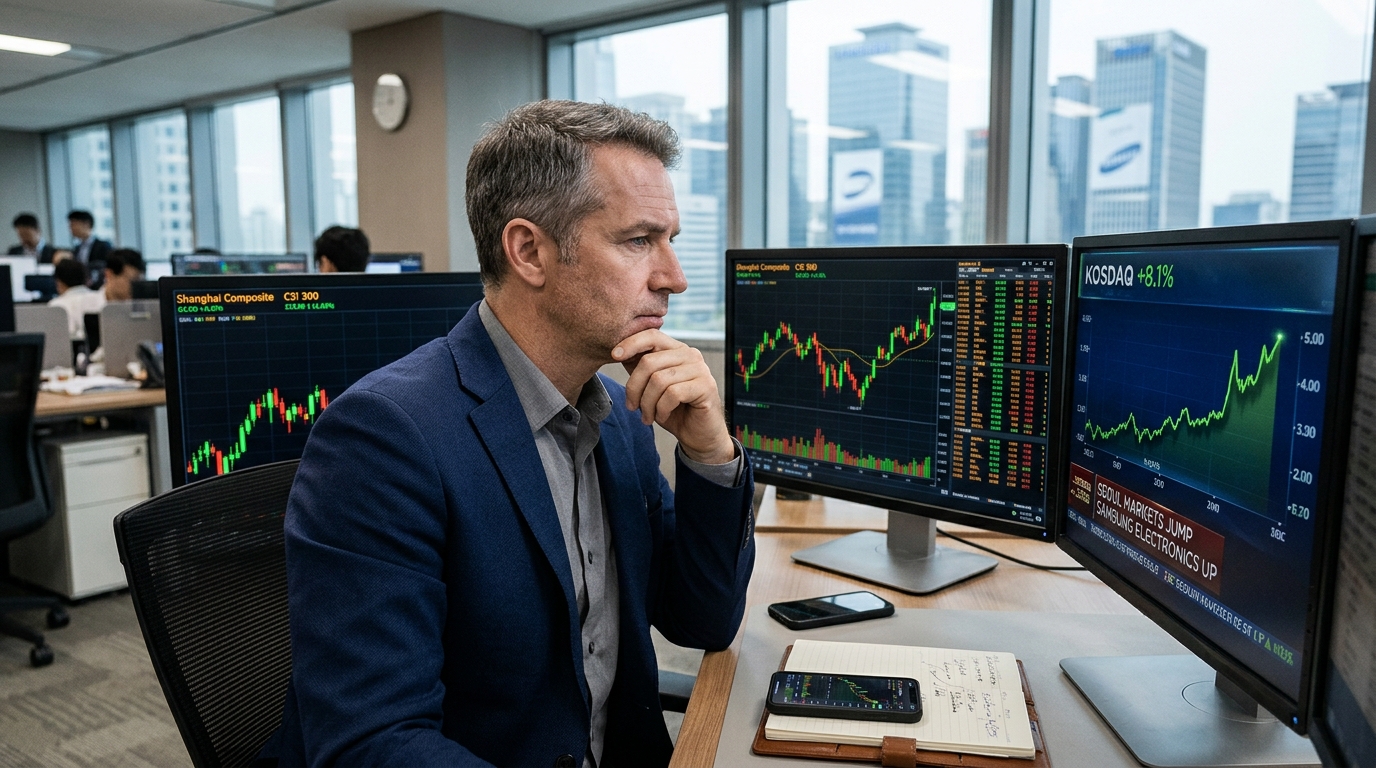
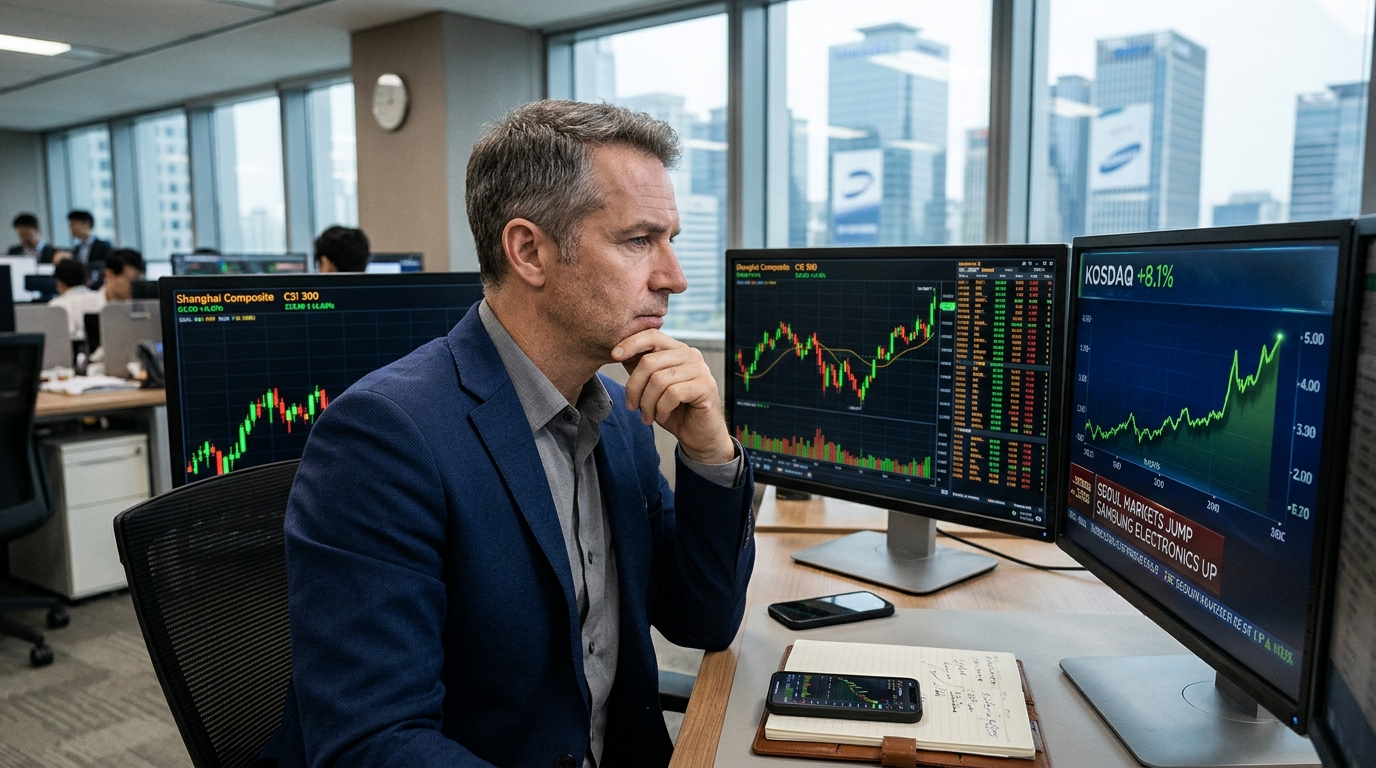
When China’s State Council issued a rare midday statement on Friday pledging to shore up its stock market, the initial response was exactly what Beijing wanted. The Shanghai Composite ended 3.7% higher, while the CSI 300 rose about 4.2%, both among their biggest daily gains since October 2024. State media framed the message as five clear signals. The market cheered.
Then look at what professional investors actually did. Samsung Electronics rose 4.55% to 179,100 won and SK hynix gained 5.41% to 1.11 million won. The Kospi surged 4.34% in Seoul while the tech-heavy Kosdaq jumped 8.13% to close at 708.99 and reclaim the 700 mark for the first time in 12 trading sessions. Those are Korean stocks, not Chinese ones. The question that matters for portfolio managers today is why the cleaner trade was in Seoul.
The Big Problem With Five Signals
The State Council pledged to implement existing policies, plan new incremental measures, strengthen the state-backed national team, push listed companies to raise dividends and buybacks, and guard against imported risks. The statement disclosed neither the scale nor the timing of any new measures. That is not a plan. It is an intention.
The explicit reference to the national team was described as unusual by market commentary in the immediate aftermath. That novelty matters, and markets reset for it. But novelty is not the same as commitment. Previous rounds of verbal support have often lifted Chinese shares in the short term, but sustained gains have usually depended on concrete funding commitments and evidence of stronger growth. Previous measures and state fund activity in October, aimed at reviving investor confidence, were largely viewed as stemming losses rather than engineering a recovery.
Strategists have made the same point repeatedly: authorities have shown determination to halt the decline, but more substantive support measures are needed for a medium- to long-term market rally. Even with Friday’s gain, several market reports put the CSI 300 down about 13% for 2026, on track for its worst year since 2022.
Why Seoul, Why Now
The Korean trade looks reflexive. It was not. Financial authorities have said they are preparing to activate the stock market stabilization fund and have left open an expansion beyond its roughly 10.76 trillion won size. South Korean media have also reported that financial authorities are expected to hold an emergency market stabilization meeting on November 30 to discuss expanding and activating the fund. Unlike Beijing’s statement, Seoul’s fund has a number attached. That specificity is what institutional buyers respond to.
The gains came as foreign and institutional investors turned net buyers in both markets amid expectations of an expansion of the market stabilization fund. Retail investors, by contrast, were net sellers. This was not a panic-driven squeeze. It was selective allocation.
The rebound in Korean chip names also carried a separate catalyst: fresh U.S. trade steps aimed at Taiwanese goods under a Section 301 process tied to structural excess capacity, with proposed exemptions for certain products. Samsung and SK hynix sit outside that direct line of competitive pressure. That made them the cleaner beneficiary of a falling tariff risk premium, independent of anything Beijing said.
The tariff relief for Korean chipmakers sharpens a contrast that runs deeper than one trade ruling. Chinese consumer names face a structural spending ceiling that no stimulus package has yet been able to lift.
What Investors Are Missing
The reflexive question today is whether Beijing will follow through with hard numbers. The more important one is structural. State-directed buying can steady prices in the short term, but it does not by itself address weak consumer demand or the property downturn that investors cite as drags on earnings. Until those two inputs improve, the CSI 300 will keep producing rallies that fade inside a month.
Seoul’s stabilization fund, by contrast, is being positioned for a market that peaked in June and has since lost nearly half its value, according to Korean financial authorities and local reporting. Korean stocks carry a credible valuation floor that Chinese markets, still awaiting a number, do not yet have.
Stocks to Watch
Samsung Electronics (005930.KS / EWY weight). The 4.55% close is a floor test, not a breakout. One recent Hanwha Investment & Securities strategy note has pointed to a 300,000 won valuation for Samsung against Friday’s 179,100 won close. The gap is wide enough to absorb another round of macro volatility.
SK hynix (000660.KS). On its third-quarter 2026 earnings call, the company said it had completed long-term agreement signings with 14 major customers and that the secured volume corresponds to more than half of total capacity in 2027 and 2028, giving it forward revenue visibility that Samsung currently lacks. Some Korea-based commentary has favored SK hynix over Samsung, citing its lead on shareholder returns.
FXI (iShares China Large-Cap ETF). Friday’s rally will attract flow. The risk is that the CSI 300’s gain fades once the market demands specifics Beijing has not provided. FXI is a trade for a news cycle, not a position for a quarter.
EWY (iShares MSCI South Korea ETF). With the Kospi still roughly 48% below its June peak in local reporting, and a stabilization fund with an actual balance being prepared for activation and potentially expansion, EWY offers the more legible risk-reward of the two Asia support plays heading into next week’s emergency meeting.