
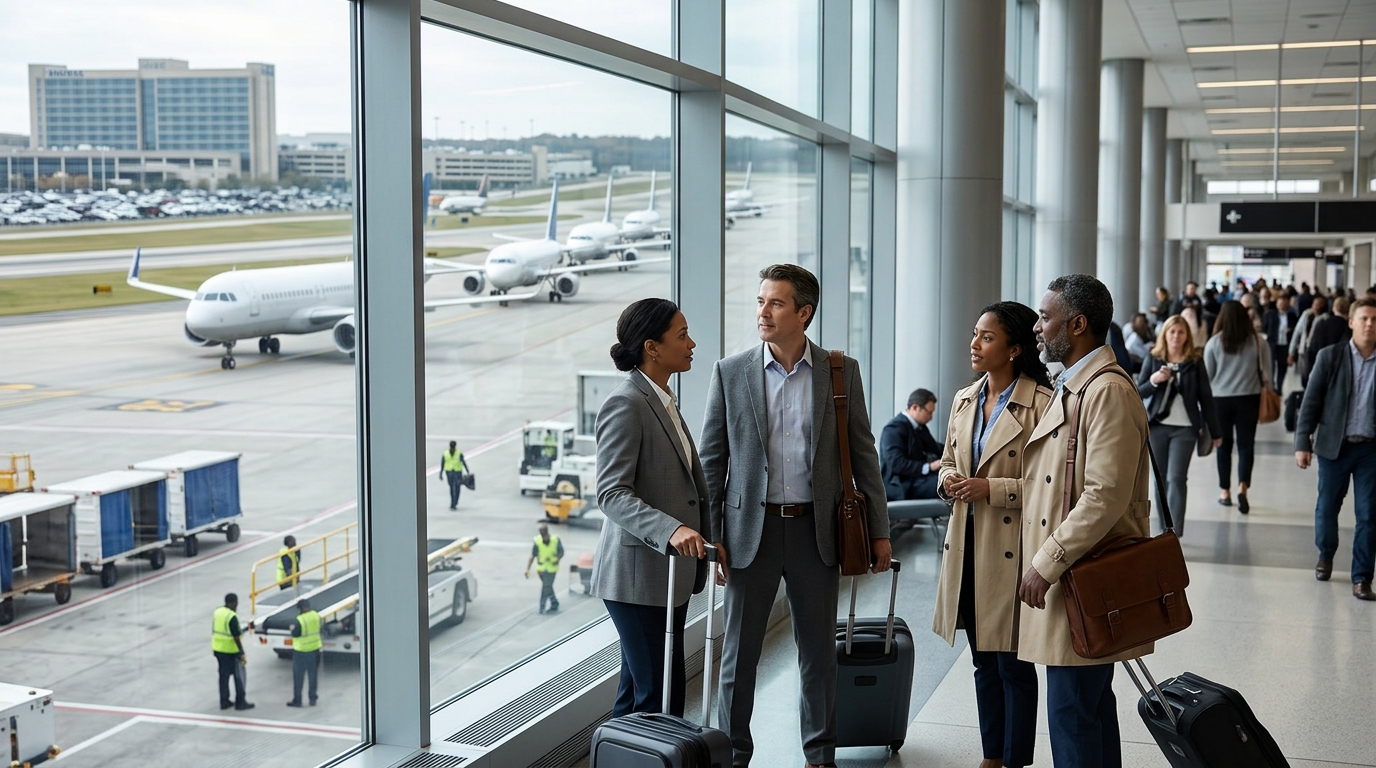
Today is the single busiest flying day of the year. More than 417,000 flights are forecast over the nine-day holiday period, and Tuesday, November 24, is expected to be the busiest single day, with more than 52,000 flights. The FAA calls it the busiest holiday skies in 16 years.
All of that activity lands with fresh bruises on the industry’s reputation. An automated weight-and-balance system failure at Delta Air Lines delayed about 2,000 flights on Sunday, November 22, stalling early Thanksgiving travel nationwide. The incident followed a separate United Airlines technology outage on Monday, November 16, that also centered on access to vital aircraft weight data. Two major carriers, two system failures, ten days apart, in what is supposed to be their most profitable stretch of the year.
That tension gets to the heart of the investing angle. According to AAA booking data, roundtrip domestic flights are averaging $800, up 17% from last Thanksgiving. AAA projects 81.5 million Americans will travel at least 50 miles from home during the seven-day period from Tuesday, November 24, through Monday, November 30. Those numbers suggest a booming travel economy. But the airlines running the show are operationally fragile, and the revenue gains are partly offset by jet fuel, labor, and the kind of system failures that generate DOT complaints rather than loyalty.
The more durable opportunity sits one step removed. AAA projects 72.9 million Americans will travel by car for Thanksgiving. That is about twelve times the number taking to the air. Every one of those road trippers needs somewhere to sleep, something to eat, and in many cases a vehicle they did not drive from home. Marriott expects revenue per available room growth of 4.5% to 5% in the fourth quarter, and management raised its full-year forecast accordingly. Marriott doesn’t own most of its hotels; it collects fees from owners who use its brands, so fuller, pricier rooms mean bigger fee checks. In the third quarter, revenue per available room rose 6.5% worldwide and 7.4% in the U.S. and Canada.
The asset-light model is the key distinction. When Delta’s load system crashes or American scrambles to cover its largest single day of flying since the pandemic, 7,021 flights on Sunday, November 29, the operational exposure lands entirely on the airline. Marriott, Hilton, and Hyatt largely pass that exposure to property owners. They earn their management and franchise fees whether a flight is delayed or not.
Hilton expects group demand to strengthen, with forward bookings improving, and management has pointed to limited industry supply growth as a tailwind for RevPAR. Hyatt’s revenue and region-by-region occupancy figures vary by period and reporting basis, and the specific first-half 2026 numbers cited here could not be verified. These are not explosive growth stories. They are consistent fee collectors tied to the same travel wave that is filling runways today.
Rental car demand tells a similar story. AAA states that roundtrip domestic flights are 17% more expensive, averaging $800 per ticket, which nudges more travelers toward driving and renting. Hertz Global Holdings and Avis Budget Group benefit directly from that mobility demand.
Risks to Monitor
The core risk is a consumer pullback. Thanksgiving travel is down 0.1% from last year, ending a three-year streak of record volumes, and affordability pressures are contributing to a leveling off. If fare increases and fuel costs continue compressing discretionary budgets into 2027, hotel RevPAR growth could stall faster than current forecasts suggest. A recession scenario hits all travel names indiscriminately, asset-light or not.
Daily Wealth Takeaway
When a sector is running at record volume but posting repeated operational failures, the smarter position is usually upstream in the spending chain. Airlines move the people. Hotels, rental car companies, and booking platforms collect the margin from where those people land. Today’s 52,000 flights are a demand signal. What matters for long-term wealth is finding who captures that demand with the least risk of a system going down at 6 a.m. on the busiest travel morning of the year.