Strip away the geopolitical excitement and the Swarmer (SWMR) acquisition of Ratel Robotics presents one of the starkest mismatches in defense M&A this year: a U.S. autonomy software firm reporting $25,554 in third-quarter revenue is absorbing a Ukrainian ground-robotics manufacturer that booked $32.5 million in that same quarter alone.
That is not a knock on the deal’s logic. It is precisely what professional investors should be interrogating before the transaction closes.
What Ratel Actually Brings
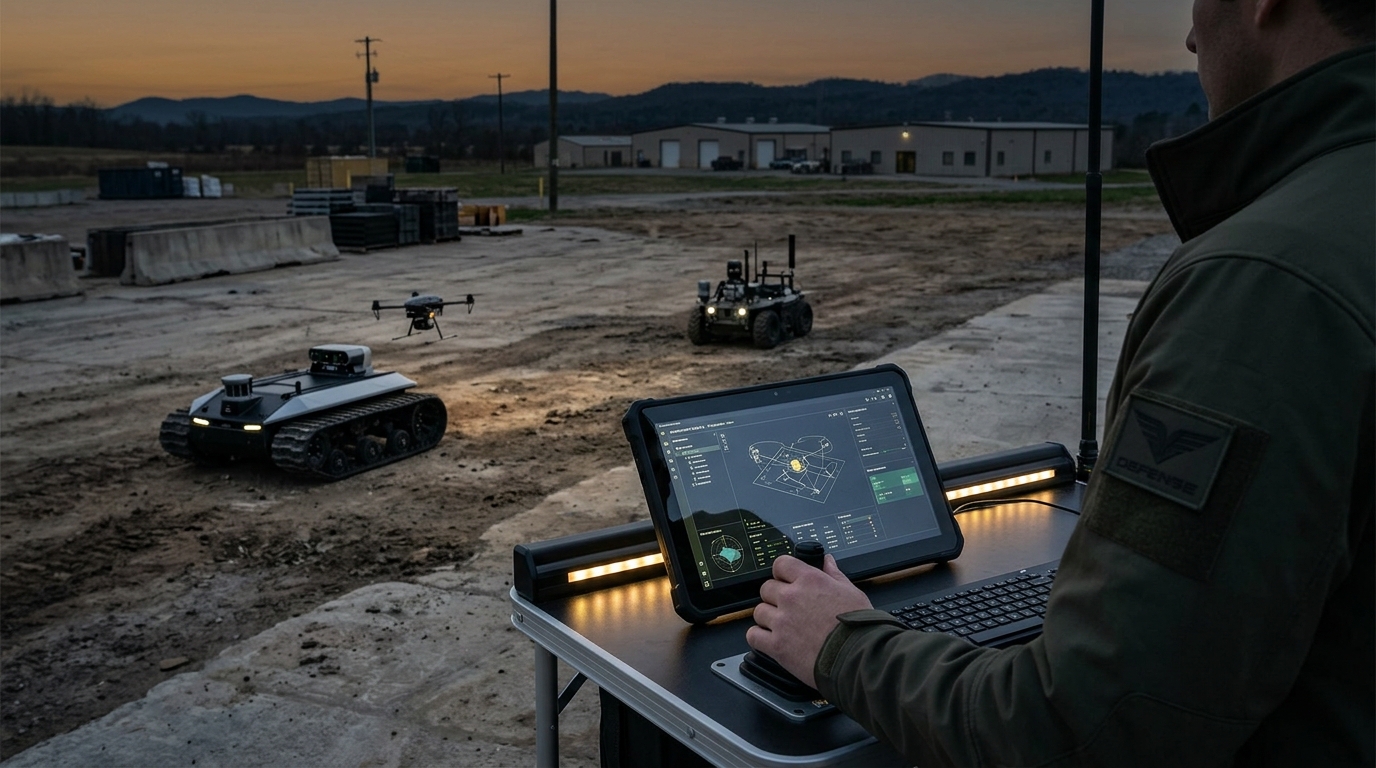
Acquiring Ratel Robotics brings unmanned ground vehicles and an existing government contract backlog into the business. If the acquisition closes, it would materially alter Swarmer’s revenue profile given Ratel’s $32.5 million in third-quarter revenue and its $35 million to $40 million fourth-quarter outlook. That is a company buying its way into relevance, which is a legitimate strategy in a sector consolidating fast.
The battlefield rationale is real. Ratel’s products accounted for approximately 37% of the Ukrainian Defense Procurement Agency’s spending on UGV procurement contracts from January 1 to April 18, 2026. Ukraine’s military recorded 31,398 logistics and evacuation missions involving unmanned ground vehicles in October 2026, more than four times the number reported in January. Ratel is not a startup with a promising slide deck. It is a supplier to a customer running live combat operations at industrial scale.
The Strategic Bet Beyond Ukraine
Swarmer announced a pivot from selling software to corporate drone makers toward manufacturing end-to-end defense hardware directly for government buyers. The deal would expand Swarmer from aerial-drone software into unmanned ground vehicles, enabling potential mobile launch platforms for large-scale drone deployments, logistics, medical evacuations, and air-defense systems.
The Pentagon is moving in the same direction. Swarmer, with Ratel’s combat-proven hardware under its umbrella, is positioning to compete for that spending. That is the bull case.
The incumbents Swarmer would eventually compete against are already locking in that Pentagon demand. RTX’s multiyear AMRAAM contract shows how established defense primes are capturing the same air-defense spending Swarmer is positioning toward.
What the Market Is Not Pricing
The bear case is execution, not technology. Shareholders approved the related issuance of common stock on November 2, 2026, and Swarmer expects the acquisition to close in November 2026, subject to remaining closing conditions. Once it does, Swarmer will be integrating a 300-plus person Ukrainian manufacturer while simultaneously pursuing IP from Vataga Drone and building out an air-defense partnership with Vectus. That is three parallel integration tracks for a company that did not exist as a hardware business ninety days ago.
The deal includes potential earn-out payments tied to Ratel’s revenue and operating income performance during 2026, 2027, and 2028, which ties Swarmer’s dilution exposure directly to whether Ratel sustains its growth rate outside a wartime procurement surge. If Ukrainian UGV contracting normalizes, those earn-outs compress. If NATO allies accelerate their own programs, they expand.
The question is not whether autonomous ground systems matter. That debate is settled on the battlefield. The question is whether a micro-cap software company can build an integrated defense platform fast enough to compete with firms that have been in hardware for decades. That answer will not be found in the proxy statement.