By Jihoon Lee, Youn Ah Moon and Yena Park
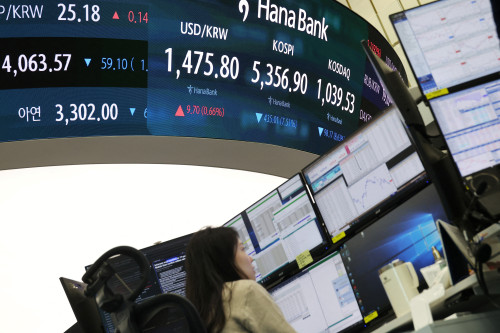
SEOUL, March 4 (Reuters) – South Korean shares sank 12% on Wednesday, posting the biggest drop in its 46-year history and wiping half a trillion dollars in value just this week, as fears the Iran war could cripple Asia’s fourth-largest economy sent the won to a 17-year low.
Israeli and U.S. forces pounded targets across Iran, prompting retaliatory attacks around the Gulf as the conflict spread to Lebanon, rattled global markets and sent oil prices sharply higher.
Losses in the country’s stocks far outweighed those seen elsewhere in Asia as the Iran conflict heightened risks for economies like South Korea, which are heavily reliant on Middle Eastern oil for their energy needs.
South Korea is the world’s fourth-largest buyer of oil and around 70% of its purchases come from the Middle East.
Korean equities had been Asia’s best performing, having doubled over the past year, making them particularly vulnerable to a capitulation, traders said.
The benchmark KOSPI fell 698.37 points, or 12.06%, to close at 5,093.54, marking the biggest daily percentage loss in its history dating back to 1980. It lost as much as 12.65% during the session.
On the index, circuit breakers were activated for the first time since August 2024, halting trading for 20 minutes. A separate trading curb was previously triggered for the second day in a row to halt programme trading for five minutes but failed to cap the decline.
The punishing selloff has wiped off 817.6 trillion won ($553.82 billion) in market capitalisation over the past two days. On Tuesday, the index fell 7.24%.
The losses marked an abrupt turn for a market that had rapidly outperformed global peers on a world-beating, artificial intelligence-driven rally.
“This looks more like a positioning unwind and risk reduction rather than a fundamental deterioration in earnings,” said Tareck Horchani, with Maybank Securities in Singapore, adding that positioning had been crowded in the world’s hottest market.
“When oil spikes and FX volatility jumps, especially for oil-importing markets like Korea and Japan, global funds tend to de-risk quickly from the most liquid index heavyweights,” Horchani said.
South Korea’s Financial Services Commission said near the end of the session that authorities would actively utilise market stabilising programmes if needed to respond to excessive volatility.
PSYCHOLOGICAL THRESHOLD FOR THE WON
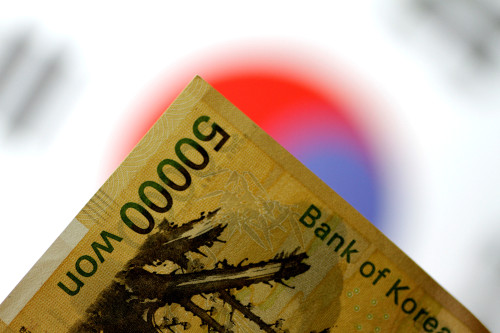
Overnight, the won briefly breached a psychological barrier of the 1,500 mark to hit its weakest level since March 2009 at 1,505.8 per dollar, before closing the session down 3.1% at 1,485.7. It was up 0.6% at 1,476.2 on Wednesday.
“The focus overnight was on South Korea and the KOSPI weakness linked to the country’s energy dependence on Gulf supply,” BNY Mellon economists said in a note.
Just last week, Bank of Korea Governor Rhee Chang-yong said the won was strengthening thanks to improving supply-demand conditions in the foreign exchange market. The currency had hit its strongest level since October 30, 2025.
“We will closely watch if won exchange rates and bond yields deviate excessively from domestic fundamentals even with external factors in consideration,” the Bank of Korea said in a statement soon after the market opened on Wednesday, as the central bank vowed to respond to herd-like behaviour.
Finance Minister Koo Yun-cheol also said authorities were watching the foreign exchange market closely.
“(Dollar-won) upside is now open for exchange rates with the 1,500 level breached,” a local currency trader said.
South Korean authorities have been rolling out measures to stabilise the currency market since late last year, with President Lee Jae Myung saying in rare comments in January that the won was expected to strengthen towards the 1,400 per dollar level after a month or two.
In the stock market, only 13 shares advanced, of the total 925 issues traded, while 911 declined. Chipmaker Samsung Electronics fell 11.7% and peer SK Hynix lost 9.6%, while Hyundai Motor dropped 15.8%.
Korean Air Lines fell 7.9%, after dropping 10.3% on Tuesday, the biggest since March 2020.
Foreigners turned net buyers of local shares near the session close with a net purchase of 231.7 billion won, snapping nine consecutive sessions of selloff.
($1 = 1,476.3000 won)
(Reporting by Jihoon Lee, Youn Ah Moon and Yena Park; Editing by Subhranshu Sahu and Shri Navaratnam and Sam Holmes)